A screening package done in one day at a major Turkish hospital — from €450 for a focused programme such as heart health, from $750 for a full general check-up. You leave with a written report and a doctor who goes through it with you, in your language, before you fly home.
Every 2026 programme from our five partner networks, with each hospital's own price list to download. Below: what a check-up actually includes, how the day goes and what happens if something is found.
A check-up is a fixed set of tests, scans and specialist consultations carried out in a single visit on someone with no complaints. It is not treatment. Its job is to find what is still silent — a rising blood sugar, a thyroid nodule, a colon polyp, a heart rhythm that only misbehaves under load — while it is still cheap and simple to deal with.
Most of these tests exist at home too, but scattered: a referral here, a queue there, three months to collect the set, and no one who reads all of it together. A Turkish hospital sells the whole set as one package, runs it in a morning, and gives you a single report signed by a physician who has seen every result.
Contents vary by network and tier, but every package is built from the same five blocks.
Full blood count, biochemistry, liver and kidney function, lipid profile, glucose and HbA1c, thyroid hormones, iron studies, vitamin D and B12, hepatitis serology, urinalysis, and tumour markers — PSA for men, CA 125 and CA 15-3 for women, AFP, CA 19-9 and CEA for both.
Abdominal and thyroid ultrasound, chest X-ray or low-dose CT, breast ultrasound under 40 and mammography over 40, bone densitometry, panoramic dental X-ray. Upper tiers add brain MRI and, at the top, whole-body MRI.
Resting ECG, echocardiography and a treadmill stress test — the combination that catches what a resting ECG alone misses.
Gastroscopy and colonoscopy under sedation, with biopsies and an H. pylori test. Present only in the premium tiers, and the single biggest reason to choose one.
Internist, cardiologist, gynaecologist or urologist, ophthalmologist and dietitian at every tier; dermatologist, neurologist, ENT, gastroenterologist and dentist higher up. The closing consultation, where a physician reads the whole file back to you, is what makes the rest useful.
All five are large private hospital groups we work with directly. The difference is not the equipment — it is where each one draws the line between tiers, and how far down the price list you go before endoscopy and MRI appear.
Network
Tiers
What sets it apart
From
Medipol
Standard, Extended, VIP, paediatric
The lowest entry price of the five. Gastroscopy and colonoscopy with biopsy appear at VIP level, along with head and lumbar MRI.
$750 · paediatric $550
Acıbadem
Classic, Gold, Premium, Executive, 40+
The widest ladder. Whole-body MRI from Premium; Executive adds sleep polysomnography, audiometry, pulmonary function tests and endoscopy. Every program includes a year of follow-up with a personal health manager.
$900
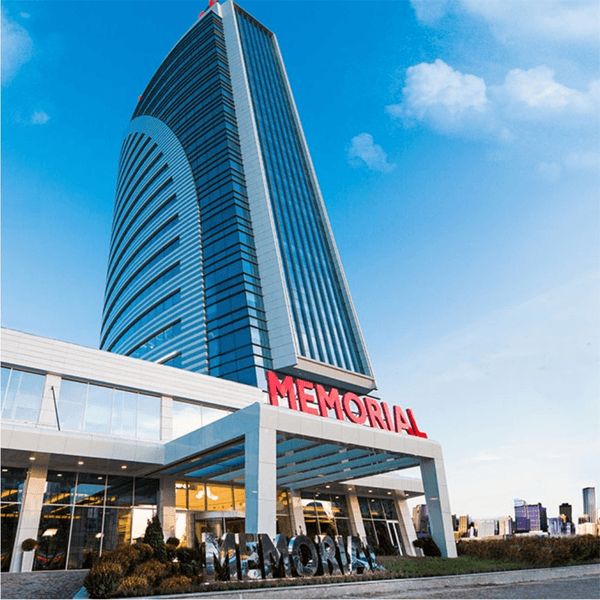
Memorial
Basic, Extended, Premium — plus a separate cancer-screening line
The only network with a dedicated oncology screening range, including a hereditary panel that sequences 151 high- and moderate-risk genes with genetic counselling.
$1,000
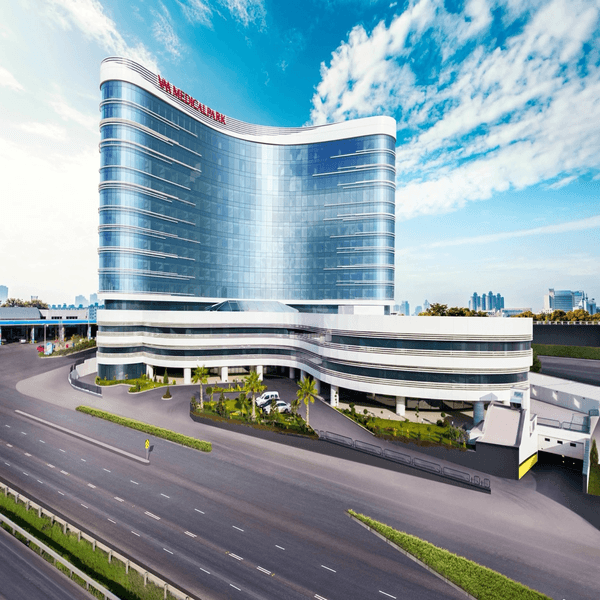
Medical Park
Health for All, under 40, over 40, Executive, Premium, cancer prevention, paediatric
The most granular price list, and the only one that sells individual modules — useful when you want a targeted addition rather than the next tier up.
€800 · paediatric €500
Liv Hospital
Comprehensive, Executive, Premium, Plus Digestion
Spirometry and audiometry are already in the Premium package; the separate Digestion package is built entirely around endoscopy and colonoscopy.
$1,500
Prices come from the hospitals’ current 2026 price lists. Medical Park publishes in euros, the other four in US dollars — shown here as each network quotes them. Figures change; we confirm the exact amount with a hospital invoice before you travel.
A general check-up looks at everything a little. If cancer is the actual worry — because of family history, an earlier finding, or an age at which screening simply becomes due — two networks sell programs built for that alone, and they are worth comparing against each other rather than against a standard package.
Basic screening at $1,000: oncologist, surgeon, gynaecologist or urologist, dermatologist with digital dermatoscopy, chest CT, abdominal, thyroid and breast imaging, cytology and HPV, and the full tumour-marker panel. Hereditary screening at $1,500 adds a geneticist and next-generation sequencing of 151 high- and moderate-risk genes, with counselling and results in about three weeks. Full screening at $3,000 adds gastroscopy and colonoscopy with biopsies under sedation, plus brain MRI. The longevity program at $5,500 layers whole-body MRI, cardiology and dentistry on top of all of it.
A PET/CT package at €750: the scan itself with assessment of results, two nights, and airport-to-hotel-to-clinic transfers. The point of it is speed — it answers one question quickly rather than surveying everything.
A full oncology diagnosis and treatment-planning package at €2,000 over three nights: oncologist consultation, laboratory work including tumour markers, PET-CT with assessment, CT or MRI of one region, review of existing pathology blocks, and an individual treatment plan. The pathology review matters more than it sounds — it is a second opinion on the slides a diagnosis was already made from.
Note that Medipol prices these two in euros while its general check-ups are quoted in dollars. Polyp removal, if a colonoscopy finds any, is billed separately at Memorial: $600 for one to three, $100 for each additional.
Medical Park sells its blocks separately, which is often the cheaper answer when a standard package already covers almost everything you need.
Plan one day for a standard package. Plan two if it includes endoscopy, whole-body MRI or a genetic panel.
This is the fear that stops most people booking, so it is worth being plain about it. A finding does not trap you in Turkey. The report states what was found and what it recommends; if a clarifying test is needed it can usually be added within the same days, because the whole hospital sits in one building.
Treatment is a separate decision and a separate quote. You are free to go home with the file and decide there — and if you want a second opinion first, we will arrange it, including with a doctor outside the network that did the screening.
How much does a check-up in Turkey cost?
Focused programmes start lower than full ones: Medical Park's heart package is €450. A full general adult check-up starts at $750 and a paediatric one at $550, and the most complete oncology and longevity programs reach $5,500. Most people choose something between $900 and $2,200.
How many days should I plan for?
One day for a standard package. Two if it includes endoscopy, whole-body MRI or genetic testing. Add a day either side for travel and it is a comfortable trip.
Do I have to fast?
Yes — ten to twelve hours with no food. Water is allowed. Regular medication needs to be discussed in advance, particularly blood thinners and diabetes treatment.
What language is the report in?
English or Russian, and a coordinator is with you throughout. We translate into Macedonian on request.
Do I need a special visa?
No. A check-up is done on an ordinary tourist entry — there is no separate medical visa to arrange. Entry rules depend on your citizenship; tell us your passport and we will confirm.
Can my partner or parents come with me?
Yes, and it is usually cheaper done together. Several networks price couple and paediatric programs separately.
Should I bring my old test results?
Bring everything you have. A single value tells a doctor far less than the same value next to last year’s.
Is treatment included in the price?
No. A check-up package covers diagnosis only. Anything found is quoted separately, and nothing is booked without your agreement.
Tell us your age and what worries you. We will point at one program and explain why — free, in your language, with no obligation.
Ask usThis page is general information, not medical advice. Package contents and prices are set by the hospitals and change; the final amount is confirmed by a hospital invoice before travel.