Hair transplant in Turkey from €2,000 — FUE/DHI in vetted clinics, all-inclusive packages and full coordination with MedAgent.
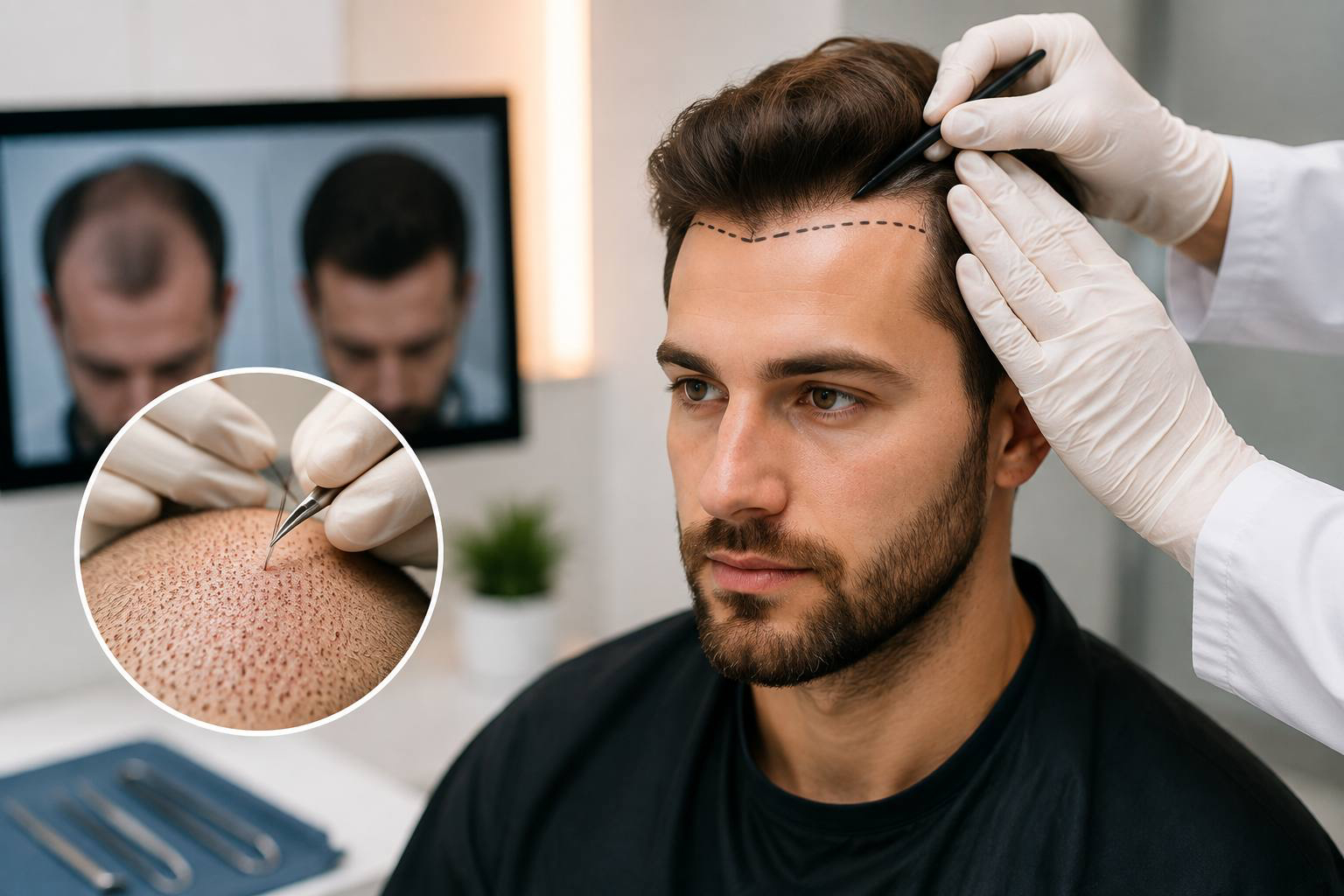
Turkey performs more hair transplants than any other country, and the reason is not only price. Clinics here run several procedures a day, every day, which is how their teams accumulate the volume of cases that a surgeon in London or Berlin sees in years. MedAgent coordinates the whole trip — choosing the clinic, agreeing the graft count, the hotel, the transfers and the follow-up after you fly home.
Price: from €2,000 for an all-inclusive package. The final quote depends on the number of grafts and the technique, and is confirmed after a free assessment of your photos.
Two quotes for “a hair transplant in Turkey” can differ threefold, and the difference is rarely the surgeon's skill alone. What moves the number:
FUE (Follicular Unit Extraction) removes follicles one by one from the donor area at the back of the head, then places them into channels opened in the thinning area. DHI (Direct Hair Implantation) uses a Choi implanter pen that opens the channel and places the follicle in one movement, which allows denser packing and, in many cases, work without shaving the recipient area.
DHI is not automatically better. It is slower, so for large areas it can mean two days or a higher price; FUE remains the workhorse for extensive coverage. The surgeon should recommend one based on your donor density and the area to be covered — not on what the clinic is promoting this month.
Two guides go deeper on what follows from that plan: how many grafts your case actually needs and how recovery unfolds week by week.
Around weeks two to six the transplanted hairs shed. This is expected — the follicle stays, the shaft falls out — and it is the point at which people panic and write to us. Growth restarts at month three or four, thickens through months six to nine, and the honest assessment of the result is at twelve months.
Hair loss itself continues. A transplant redistributes hair, it does not cure androgenetic alopecia, which is why surgeons often keep patients on medication to protect the native hair around the transplanted zone.
Hair transplants in Turkey are sold by hospitals, by standalone clinics and by agencies, and the differences matter more here than in most procedures — this is the field with the most brokers. Before you pay a deposit, check the clinic's authorisation and get the surgeon's name in writing: our guide on verifying a Turkish clinic walks through it, and who you are actually buying from explains why the name on the invoice decides who answers if something goes wrong. You can also see our partner hospitals.
How many grafts will I need?
It depends on your hair-loss pattern and donor density. A hairline usually takes 2,000–2,500 grafts, a crown 1,500–2,500, a full restoration 4,000 or more. The surgeon confirms the number after seeing your photos.
How much does it cost in total?
From €2,000 for an all-inclusive package. Add flights and, if recommended, PRP sessions. We send one written quote with the graft count stated — no “final price on arrival”.
Is it painful?
The procedure is done under local anaesthesia. The injections themselves are the uncomfortable part; the hours that follow are tedious rather than painful. Most patients take a simple painkiller the first night.
Do I have to shave my head?
The donor area is shaved. The recipient area can often be left unshaved with DHI, which matters if you are going back to work immediately.
How long do I stay in Turkey?
Two to three nights covers the procedure and the first wash. Flying the day after the procedure is possible but not ideal.
When can I go back to work?
Desk work: three to five days, accepting that the scalp looks obviously operated on for about ten days. Physical work, gym and swimming: two to four weeks, on the surgeon's instruction.
What if the result is thin?
Density is judged at twelve months, not before. Reputable clinics state a touch-up policy in writing — ask for it before you book, not after.
Related reading
Hair transplant recovery week by week
Turkey vs UK/USA: full cost comparison
How to choose a clinic in Turkey
This page is general information, not medical advice. Suitability, technique and results are determined individually by a licensed doctor.
Explore other treatments we help you arrange in Turkey.
Strabismus (crossed eyes) surgery in Turkey from €1,750 for one eye — realigns the eye muscles to correct misalignment.
Corneal transplant (keratoplasty) in Turkey from €11,000 for one eye — restores vision affected by corneal disease or scarring.