Rhinoplasty in Turkey from €3,250 — nose reshaping with experienced surgeons, 5-night hotel stay and full coordination with MedAgent.
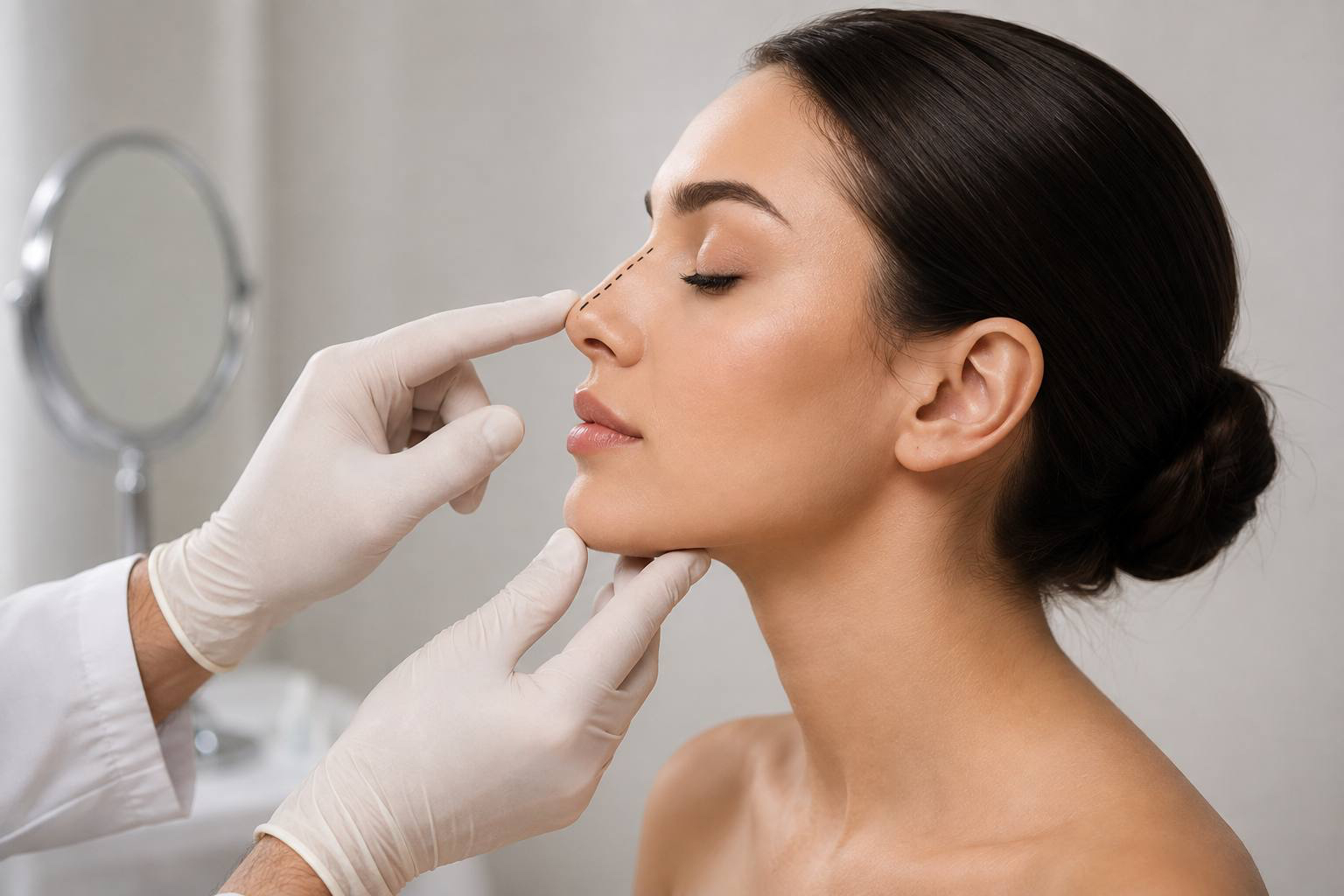
Rhinoplasty is one of the most requested operations in Turkey, and one of the most demanding in aesthetic surgery. It works on cartilage, bone and skin at the centre of the face, where small technical differences show. The surgeon you choose matters more here than the city or the hospital brochure. MedAgent coordinates the rest — hospital, hotel, transfers and interpreting.
Price: from €3,250 for primary rhinoplasty, typically including 1–2 nights in hospital and 5 nights in a hotel. Revision rhinoplasty with cartilage grafting starts from €6,000. The final quote depends on the complexity of your case and is confirmed after a free assessment of your photos — a realistic number, rather than a headline figure that changes once you land.
Two quotes for "rhinoplasty" can differ by thousands of euros and both be honest. What sits behind that:
Primary rhinoplasty reshapes a nose that has not been operated on before. It is planned from your photos and the examination on arrival, and recovery is usually the most straightforward of the three.
Revision rhinoplasty addresses the result of an earlier operation. Because tissue has been altered and cartilage may have been removed, grafting is common and surgery takes longer. Not every revision is possible immediately — surgeons generally want the previous result to have settled first, and a good one will say so if it is too early.
Functional surgery — septoplasty, or a combined septorhinoplasty — treats breathing. A deviated septum or a collapsing nasal valve is a medical problem, not a cosmetic preference: it affects sleep, exercise and daily comfort. If you cannot breathe well through one side, say so at the assessment stage — shape and airway are usually best corrected together.
That last point deserves attention rather than small print. Ask before you book what happens if something needs review after you fly home, and what a return trip would cost.
Before you fly. You send photos from several angles and describe what bothers you. The surgeon assesses them and we come back with a plan and a firm quote. Nothing is booked until you are satisfied.
Arrival. Transfer from the airport, then the in-person consultation and pre-operative tests.
Surgery day. The operation is done under general anaesthesia and normally takes a few hours, depending on what is planned.
Hospital. Typically 1–2 nights, with monitoring and the first dressing changes. After that you move to the hotel, rest with your head elevated and attend the checks arranged for you.
Around day 7. The splint comes off and the surgeon reviews the result so far.
Flying home. Only once the surgeon clears you. Do not book a tight return: if your surgeon wants an extra day or two, changing a rigid ticket is an expensive way to save nothing.
The splint usually comes off about a week after surgery. Bruising around the eyes fades over roughly two to three weeks, and most people feel presentable somewhere in the two-to-four-week range. Swelling is not over then. A nose keeps changing for twelve to eighteen months, and the tip is the last part to settle. Thick skin swells for longer than average; that is anatomy, not a sign something went wrong. Judging the result at six weeks is judging an unfinished thing. Our week-by-week rhinoplasty recovery timeline sets out what each stage actually looks like.
Rhinoplasty carries the risks of any surgery under general anaesthesia, plus its own: bleeding, infection, breathing changes, asymmetry, and results that do not settle as planned. Revision rates in rhinoplasty are among the highest in aesthetic surgery — figures vary between surgeons and between published studies, and anyone quoting a precise number is more confident than the evidence allows.
Ask directly, before you book: what is this surgeon's revision policy, how long do they wait before reoperating, and what does a revision cost? A surgeon who answers plainly is telling you something useful about how they work.
Every portfolio shows its five best results. Those tell you a surgeon can operate well on a favourable nose; they tell you nothing about yours. Ask instead for cases like your own — a similar starting shape, similar skin thickness, a similar ethnic background if that shapes your goals, or previous revisions if you are having one. Ask for the same angles before and after, and for results photographed a year on rather than at splint removal. If a clinic cannot show you cases like yours, that is information too. Our clinics page sets out who we work with.
How long do I need to stay in Turkey? Plan for the 1–2 hospital nights plus 5 hotel nights in the package, and keep the return flexible.
Is it painful? Most patients describe pressure and congestion rather than sharp pain. Prescribed pain relief is normally enough.
Will I have packing in my nose? That depends on the surgeon and the technique; many now use soft internal splints rather than traditional packing.
Can shape and breathing be corrected at the same time? Often yes, as a combined septorhinoplasty. It is decided after examination.
When can I exercise? Light walking early; anything strenuous, contact sports or swimming only when your surgeon allows it.
When can I wear glasses again? Glasses press on healing bone, so your surgeon will tell you when and how — plan for contact lenses meanwhile.
Is a revision covered if I need one? Not automatically, and not by the package. Ask the surgeon their policy before booking.
This page is general information, not medical advice. Suitability, technique, risks and results are determined individually by a licensed surgeon after examination.
Explore other treatments we help you arrange in Turkey.
Strabismus (crossed eyes) surgery in Turkey from €1,750 for one eye — realigns the eye muscles to correct misalignment.
Corneal transplant (keratoplasty) in Turkey from €11,000 for one eye — restores vision affected by corneal disease or scarring.