IVF package in Turkey from €4,000 — full retrieval and transfer cycle with EmbryoScope monitoring and personal coordination by MedAgent.
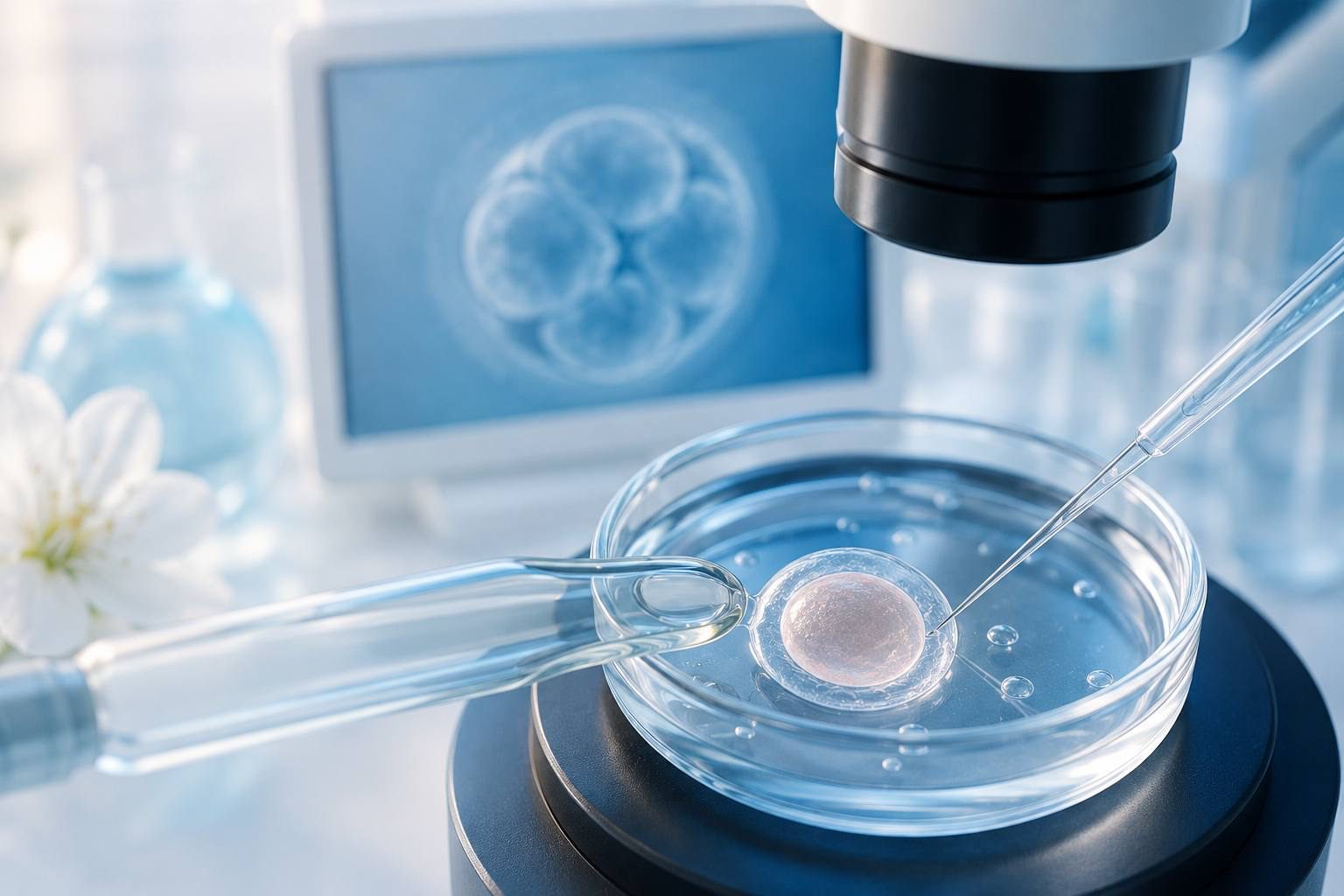
Turkey is one of the more practical places in Europe to have IVF: purpose-built fertility centres, embryology teams running a high volume of cycles each year, and a cycle costing a fraction of the same protocol in the UK or the United States. For many couples that difference is what makes a second attempt possible.
MedAgent handles the practical side: matching you to a licensed clinic, putting your results in front of a doctor before you book a flight, arranging appointments around your cycle dates, and staying reachable in your own language. Below is what the package includes, what it does not, and what Turkish law permits.
IVF Package – First Attempt: €4,000. The price covers monitoring and the full oocyte retrieval and embryo transfer cycle at one of our partner clinics. IVF medications and most of the additional procedures listed below are billed separately.
Important: medical examinations performed before the scheduled date of treatment initiation are not included in the IVF package and are charged separately.
This matters more than the price list. Under Turkish law, IVF may be performed only with the couple's own eggs and the couple's own sperm. Donor eggs, donor sperm and surrogacy are prohibited in Turkey, and a marriage certificate is normally required before treatment may begin. No licensed clinic makes exceptions, and one that offers to is not a clinic to trust.
If your plan needs a donor cycle, Turkey is not the place for it. Those cases are treated in Northern Cyprus, where the legal framework is different and donor programmes are permitted. Write to us and describe your situation, and we will route the case to the right jurisdiction from the start, rather than let you book flights to a country that cannot legally treat you. Prices there depend on your file.
Down-regulation and stimulation. Depending on the protocol, the cycle may open with a short down-regulation phase. Stimulation is roughly ten to twelve days of daily injections, with ultrasound scans and blood tests to see how the follicles respond and adjust the dose.
Trigger. When the follicles reach the right size you take a trigger injection at a precisely specified time. That timing is not flexible — retrieval is scheduled from it.
Oocyte retrieval (OPU). A short procedure under anaesthesia, performed transvaginally with ultrasound guidance. You are at the clinic for the morning. Your partner gives a sperm sample the same day.
Fertilisation and embryo culture. The eggs are fertilised in the laboratory and the embryos cultured for three to five days, the clinic reporting the numbers daily.
Transfer. The embryo is transferred in the same cycle (fresh) or a later one after freezing (frozen), depending on your hormone levels, the number and quality of embryos, and whether genetic testing is planned. It takes minutes and needs no anaesthesia.
Beta-hCG. A blood test about twelve days after transfer tells you whether the cycle worked. Home tests before that date are unreliable.
For the same stages described from the patient's side, see our guide to what to expect during an IVF cycle.
For one continuous trip, plan on being in Turkey from most of the stimulation phase through to the transfer — around two to three weeks, with the clinic confirming exact dates once the protocol is set.
The trip can often be split. Many patients complete stimulation at home, monitored by a local gynaecologist who sends the scans and blood results to the Turkish clinic, then fly in a few days before retrieval and stay through the transfer. This works only if your local doctor cooperates and the clinic agrees in advance, so decide before you book. A frozen transfer is a separate, shorter trip later.
Age is the dominant factor by a wide margin: it shapes both the number of eggs retrieved and the proportion of embryos that are chromosomally normal. After it come ovarian reserve, sperm parameters, the condition of the uterus, previous cycles, body weight, smoking and endometriosis.
What no clinic anywhere can do is guarantee a pregnancy. IVF often takes more than one attempt, and a cycle that does not work is not a verdict — it is information the doctor and embryologist use to change the approach next time. Better to travel with an accurate picture than an optimistic one.
Check that the clinic holds a current Turkish Ministry of Health licence for assisted reproduction — verifiable, and we verify it. Ask who your embryologist will be, ask for the whole cost in writing including a medication estimate, and ask what is refunded if the cycle is cancelled before retrieval.
Do we need to be married? Normally yes. Clinics generally require a marriage certificate, often translated and apostilled. Tell us which documents you hold and we will confirm what is needed.
Can we use a donor egg or donor sperm in Turkey? No — it is prohibited by law, as is surrogacy. Donor cycles are handled in Northern Cyprus instead. Write to us and we will route your case correctly.
Does my partner need to stay the whole time? He must be there on the day of retrieval to give a sample. Some clinics can work with a sample frozen in advance, so ask rather than assume.
Is €4,000 the total we will pay? No. Medication is paid at the pharmacy, and anything on the additional list applies only if you need it. We put a realistic total in writing before you travel.
What happens to embryos we do not use? They can be frozen — €1,400, including five years of storage — and transferred in a later cycle without repeating stimulation and retrieval.
Do we need genetic testing? Not everyone does. It is usually discussed where there is a known genetic condition, recurrent pregnancy loss, repeated unsuccessful cycles or advanced maternal age.
This page is general information, not medical advice. Suitability, protocol and outcomes are determined individually by a licensed fertility specialist.
Explore other treatments we help you arrange in Turkey.

Strabismus (crossed eyes) surgery in Turkey from €1,750 for one eye — realigns the eye muscles to correct misalignment.
Corneal transplant (keratoplasty) in Turkey from €11,000 for one eye — restores vision affected by corneal disease or scarring.