A stage-by-stage guide to dental implant and veneer treatment in Turkey, from the first assessment through healing to the final fitting.
22.08.2026
Dental work in Turkey is often described as a few days in the chair and a new smile on the flight home. For veneers and crowns that is frequently true. For implants it is not: bone needs months to fuse around the post before a permanent tooth can sit on top of it. Most patients we coordinate are doing one of these two things, and the timelines look nothing alike. That is why our coordinated veneer and implant care in Turkey is scheduled around the healing a case actually needs rather than a fixed number of days. Here is what actually happens, stage by stage, from your first assessment to the day your final teeth go in.
Everything starts with photos or a panoramic X-ray sent from home. The dentist uses them to judge bone volume, gum health and how many teeth are involved, then prepares a personalised plan and quote — this is why dental pricing is given on request rather than as a fixed number. This stage matters more than people expect: it determines whether you need one visit or two, how many days to book, and whether preparatory work such as an extraction or a sinus lift will be needed first. Getting it right at this point is what prevents surprises in the chair.
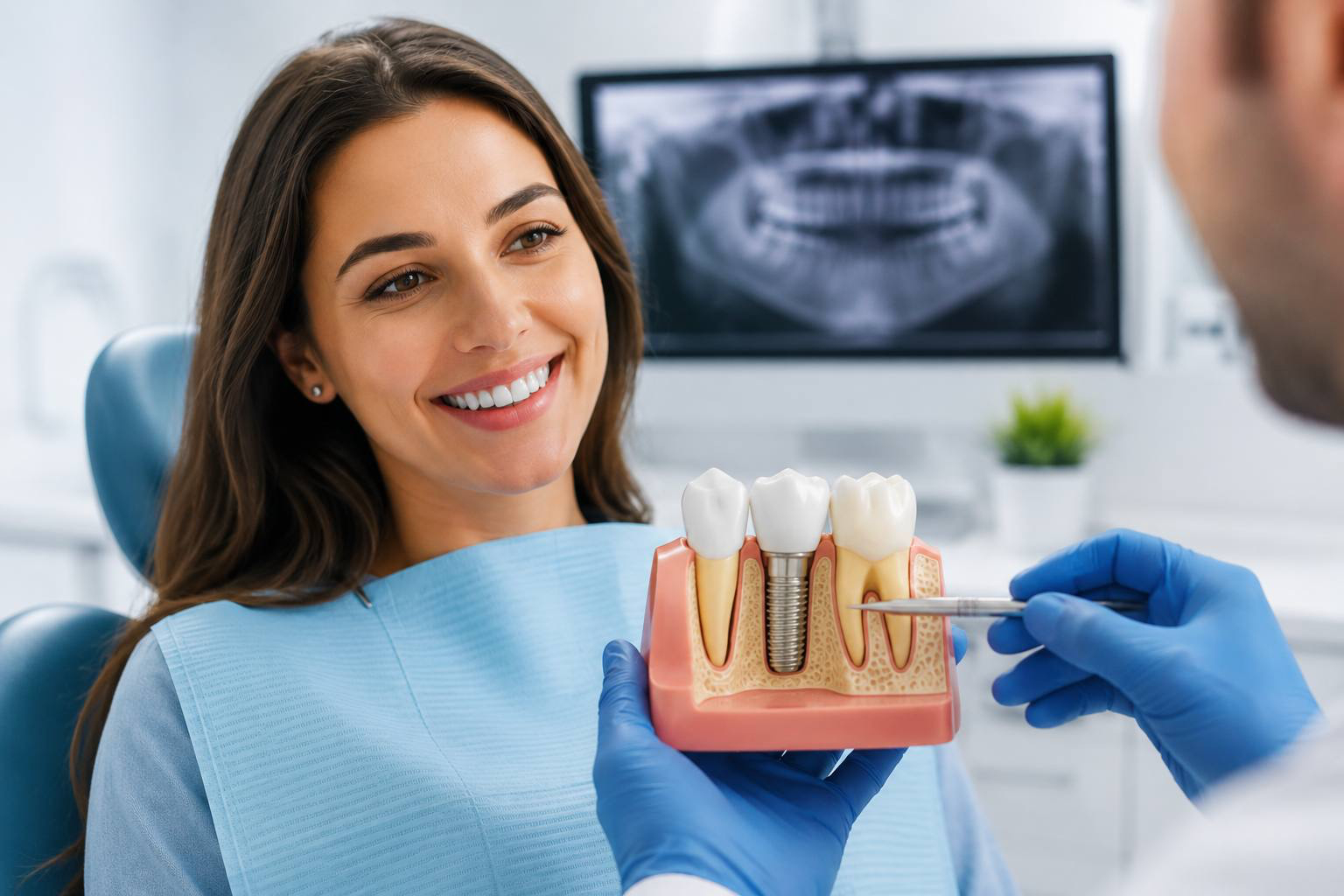
Your first appointment repeats the assessment in person, with a fresh 3D scan or X-ray. For veneers and crowns, the dentist confirms shade and shape with you before any work begins — a step worth taking seriously, because the colour you choose is the colour you live with. Teeth are then minimally prepared and impressions or digital scans are taken. For implants, day one is usually surgical: the titanium post is placed under local anaesthetic, a procedure that takes roughly 30 to 60 minutes per implant.
Expect some swelling of the cheek and gum, mild bleeding on the first day, and soreness that responds well to prescribed painkillers. Cold compresses on the outside of the face help in the first 24 hours. Eat soft, cool food, avoid rinsing vigorously, and do not smoke — smoking is the single biggest risk factor for early implant failure. Most people are comfortable enough to walk around Antalya the next day. Veneer patients have a much gentler experience: temporary crowns feel bulky and teeth may be briefly sensitive to hot and cold, but there is no surgical recovery.
This is where most single-visit treatment is completed. Veneers and crowns come back from the lab, are tried in, adjusted for bite and fit, and then permanently bonded — typically within four to seven days of your first appointment. Implant patients have their sutures checked and, in many cases, receive a temporary tooth so they are not travelling home with a gap. Both groups usually fly home at the end of this window; there is no flight restriction after routine dental work, though it is sensible to wait 24 hours after implant surgery before boarding.
Osseointegration — bone growing around and locking onto the implant — is the part no clinic can accelerate. It takes about three months in the lower jaw and up to six in the upper jaw, where bone is softer. You spend it at home, living normally, on soft-ish food only for the first couple of weeks. This is why implant treatment realistically means two visits: you return to Turkey for a few days at the end of this period to have the abutment and permanent crown fitted. We keep in touch remotely between the two trips and can pass questions to your dentist.
Bonded veneers and crowns look and function like finished teeth immediately; any minor sensitivity settles within a week or two. A completed implant, once crowned, chews like a natural tooth and is designed to last decades. Longevity is mostly down to you: brushing twice daily, flossing or using interdental brushes around implants, avoiding using front veneers to bite hard objects, and a professional clean once or twice a year. Night grinding is worth mentioning to your dentist — a guard protects the work.
Contact your coordinator or a local dentist if you have pain that increases rather than decreases after the third day, swelling that worsens after 72 hours, fever, a bad taste or discharge around an implant site, an implant or crown that feels loose or mobile, or bleeding that does not stop with gentle pressure. These are uncommon, but they are all treatable when caught early — and much harder to manage if left for weeks.
Can I really get implants finished in one trip?
Only in specific cases where immediate loading is possible. For most people, plan on two visits separated by three to six months of healing.
How long should I book for veneers?
Around five to seven days is typical for a full set, allowing for preparation, lab time and the final fitting.
Does it hurt?
The procedures themselves are done under local anaesthetic and are not painful. Afterwards, implant patients report soreness rather than sharp pain, usually well controlled for two to three days.
What does a dental treatment package actually include?
The clinical stages set out in your plan plus the arrangements around them: consultation and imaging, hotel accommodation, airport and clinic transfers, and an interpreter and coordinator with you throughout. For implants the point to confirm is whether both visits are covered or only the first, so ask for the stages to be listed in writing — our dental treatment page sets out what a MedAgent package includes.
This page is general information, not medical advice. Suitability, treatment and results are determined individually by a licensed dentist.
Send us what you already have — the pathology report, imaging on disc, discharge summaries. A specialist at a partner hospital will review it and tell you what is realistic in your case and how quickly treatment could begin. Reviewing your documents costs nothing and commits you to nothing.
Send your documentsUnhappy with a surgery result abroad? How to tell unfinished healing from a real problem, what a revision involves, who pays, and where to go next.
Silicone oil removal after vitrectomy: why the oil is used, how long it stays, how the second operation works and what vision does afterwards.
How children treatment in Turkey actually works: the accompanying parent, documents for a minor, school, language, paediatric specialties and what to send.