A week-by-week guide to face and neck lift recovery in Turkey — how long swelling and bruising last, when you can fly home and when the final result appears.
16.08.2026
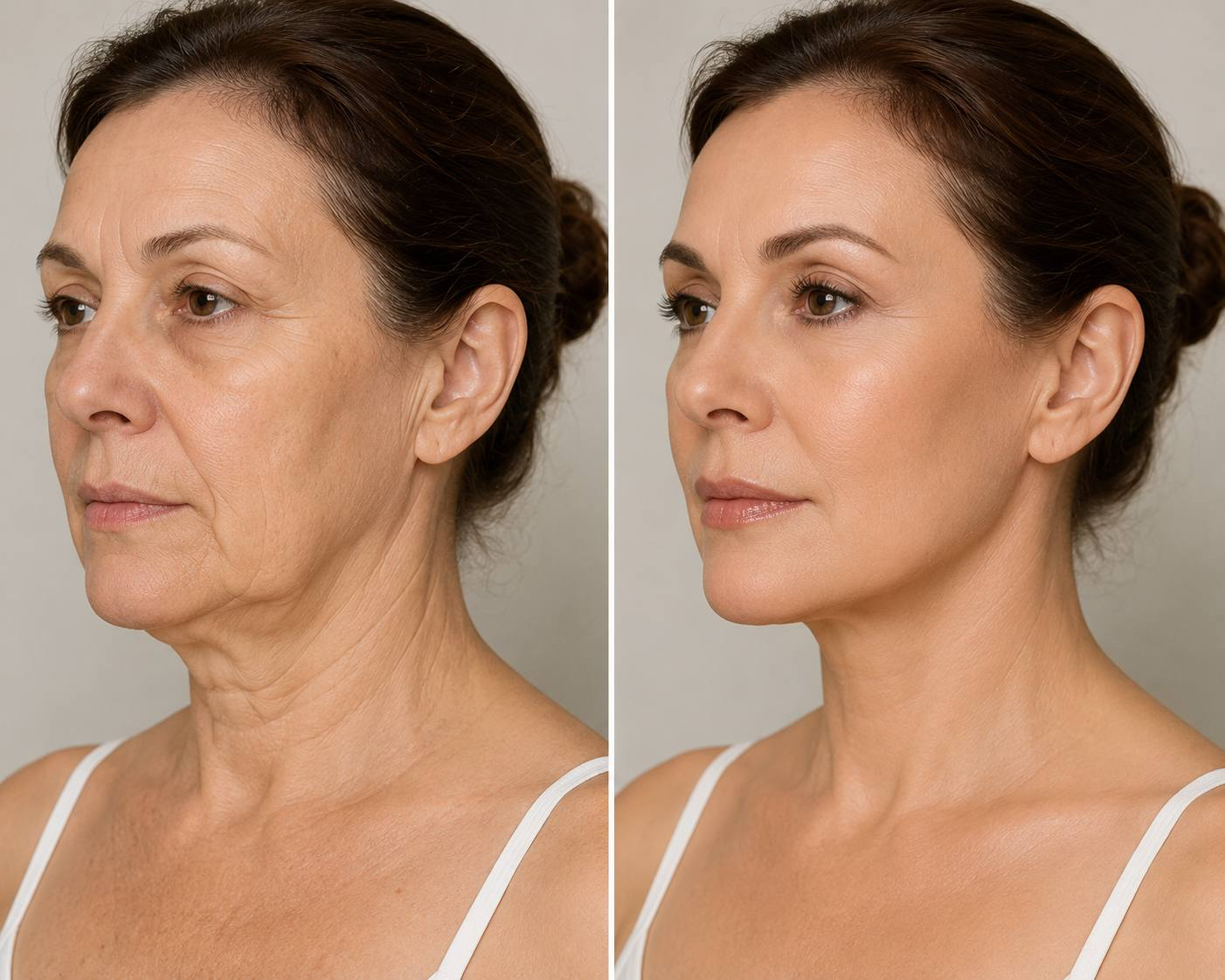
Almost every patient is surprised by the same thing: the face in the mirror on day three is puffy, bruised and asymmetric, and it looks nothing like the outcome they were promised. That is normal. A face or neck lift repositions deep tissue, and tissue that has been lifted swells before it settles. Knowing what each stage is supposed to look like is the difference between a calm recovery and two weeks of unnecessary worry. Here is the realistic timeline for a face lift, neck lift or combined face-and-neck lift performed in Turkey, where a face and neck lift starts from €4,500, and how it fits around a typical seven-night stay.
You will usually spend two nights in hospital. Your head will be wrapped in a supportive dressing and small drains may be placed behind the ears to clear fluid; these are typically removed the next morning. Expect a strong sensation of tightness rather than sharp pain — discomfort is generally described as moderate and is well controlled with prescribed medication. You will be encouraged to sleep with your head elevated on two pillows and to avoid turning your neck sharply. Swelling is only beginning at this point.
Swelling usually peaks around day three and then starts to reverse. Bruising spreads downward with gravity — it is common to see discolouration along the jawline, neck and even the upper chest, and it often turns yellow-green before it fades. You will be in your hotel for around four nights, walking gently, sleeping elevated and applying cold compresses as instructed. Numbness around the ears and cheeks is expected and comes from nerve endings that were disturbed during surgery; sensation returns gradually over weeks to months. Sutures are usually removed around days 5–7, which is why the follow-up visit is scheduled before you leave.
This is when most patients feel the recovery turn a corner. Visible swelling and bruising typically resolve within two to three weeks, and by the end of week three most people are comfortable in normal social settings, sometimes with light makeup over any remaining discolouration. Incisions placed along the hairline and behind the ears are already discreet at this stage. You can generally return to desk work and light daily activity, but heavy lifting, intense exercise, saunas and anything that raises blood pressure in the head remain off-limits.
The standard plan is around seven nights in Turkey — two in hospital and roughly four to five in a hotel — so that your surgeon can check the wounds and remove sutures before you travel. Flying is normally cleared at that point. On the flight, keep hydrated, walk the aisle when you can, and avoid sleeping with your chin pressed to your chest. MedAgent arranges your transfers and stays in contact after you return, so your follow-up questions do not end when the plane lands.
By week four to six you will look like yourself again, but residual deep swelling can still soften the jawline definition, and this is the phase where patients wrongly conclude the result is underwhelming. Final results settle over a few months as swelling fully resolves, scars mature from pink to pale, and skin sensation normalises. Scars continue to improve for up to a year. Sun protection over the incision lines during this period makes a visible difference to how they heal.
Contact your surgeon or the MedAgent coordinator promptly if you notice swelling that is rapidly increasing and one-sided, severe or escalating pain rather than tightness, fever, spreading redness, discharge or a bad odour from an incision, or skin around the incisions that turns dark or dusky. Sudden facial asymmetry when smiling or lifting the eyebrows also warrants a same-day call. These complications are uncommon, but they are far easier to manage when they are reported early rather than waited out.
How long is the recovery?
Visible swelling and bruising typically resolve within two to three weeks; the final result settles over a few months.
Will the scars be visible?
Incisions are placed along the hairline and behind the ears to keep them as discreet as possible, and they fade considerably over the first year.
How long do I need to stay in Turkey?
Typically around seven nights, including the follow-up visit and suture removal before you fly home.
What does a face and neck lift cost in Turkey?
At our partner hospitals it starts from €4,500, including the two hospital nights and the follow-up check before you fly. Full package details are here.
This page is general information, not medical advice. Suitability, technique and results are determined individually by a licensed surgeon.
Send us what you already have — the pathology report, imaging on disc, discharge summaries. A specialist at a partner hospital will review it and tell you what is realistic in your case and how quickly treatment could begin. Reviewing your documents costs nothing and commits you to nothing.
Send your documentsUnhappy with a surgery result abroad? How to tell unfinished healing from a real problem, what a revision involves, who pays, and where to go next.
Silicone oil removal after vitrectomy: why the oil is used, how long it stays, how the second operation works and what vision does afterwards.
How children treatment in Turkey actually works: the accompanying parent, documents for a minor, school, language, paediatric specialties and what to send.