A step-by-step guide to an IVF cycle in Turkey, from stimulation and egg retrieval to embryo transfer and the two-week wait.
23.08.2026
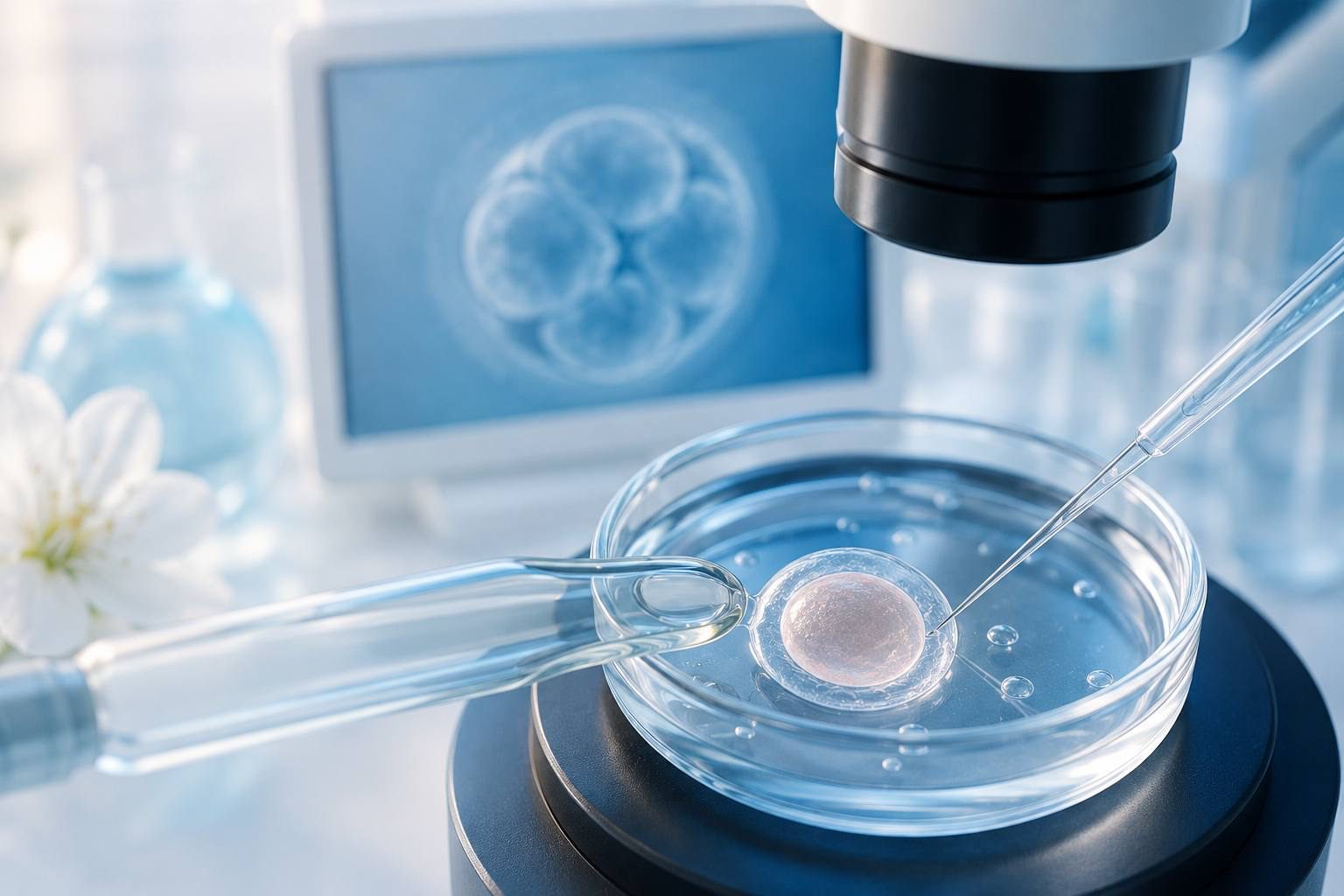
Most people arriving in Turkey for IVF imagine a single procedure. In practice a first cycle is a sequence: hormonal stimulation, egg retrieval, several days of embryo development in the laboratory, and transfer — followed by a wait that is often the hardest part. Knowing where each stage sits in the calendar makes the trip far easier to plan and far less stressful to live through. The budget is easier to plan too, with a full retrieval and transfer cycle from €4,000 including EmbryoScope monitoring. Here is what a standard cycle looks like from the patient's side.
Your clinic will want recent hormone results, an ultrasound and basic screening before it sets a start date, and a semen analysis for your partner if applicable. Some of these can be done at home and sent ahead; anything repeated in Turkey before your official treatment start date is billed separately from the package. Your protocol — the exact medications and doses — is chosen from these results, which is why two people can have very different schedules. Most patients plan a stay of around two to three weeks, timed to the beginning of a menstrual cycle rather than to a convenient flight date.
Stimulation medication is self-injected daily, usually into the abdomen, at the same time each evening. Every two to three days you return for a short scan and blood tests — estradiol, progesterone, LH and FSH — so the team can watch how many follicles are growing and adjust the dose. These visits take under an hour. Physically, expect bloating, tender breasts and some fatigue in the second week as the ovaries enlarge; it is uncomfortable rather than painful, and normal walking and light activity are fine. When the lead follicles reach the right size, you are given a precisely timed trigger injection — the hour matters, and retrieval is scheduled around 36 hours later.
Egg collection is done under short general anaesthesia in an operating theatre and takes about 15 to 20 minutes. Eggs are drawn through a fine needle guided by ultrasound, so there are no incisions and nothing to stitch. You wake in a private room, rest for a few hours, and go back to your accommodation the same day. Cramping similar to strong period pain and light spotting are expected for a day or two. Plan for a genuinely quiet 24 hours afterwards — no flights, no long excursions, plenty of fluids.
Fertilisation happens the same day, with sperm prepared and selected in the laboratory. From then on the embryos develop in an incubator, and clinics using EmbryoScope time-lapse monitoring can observe them continuously without disturbing the culture conditions. You will get a call on day one confirming how many eggs fertilised, and updates as embryos progress toward the blastocyst stage on day five. This is the stage where numbers usually drop, and being warned in advance helps: it is normal and expected for only a proportion of retrieved eggs to reach transfer quality. If genetic testing is planned, embryos are biopsied and frozen at this point and transfer moves to a later cycle.
Transfer is quick, done with a soft catheter, and usually needs no anaesthesia — most patients describe it as similar to a smear test. You rest briefly and can walk out afterwards. There is no evidence that strict bed rest improves outcomes; normal daily life, gentle movement and work are fine, while heavy lifting, hot baths and intense exercise are not. Progesterone support continues, and a beta-hCG blood test around ten to fourteen days later gives the first real answer. Home tests taken earlier are unreliable after a trigger injection and tend to cause unnecessary distress.
Contact your clinic immediately — not by waiting for the next scheduled call — if you have rapidly worsening abdominal swelling, sudden weight gain of more than two kilograms in a day, breathlessness, severe pain not relieved by prescribed painkillers, heavy bleeding, or a fever above 38°C. These can indicate ovarian hyperstimulation syndrome or infection, both of which are uncommon and both of which are far easier to manage early. Keep your coordinator's number accessible for the whole trip, and do not stop or change prescribed medication on your own.
How long do I actually need to stay in Turkey?
Around two to three weeks for a full retrieval and fresh transfer cycle. If embryos are frozen for genetic testing, the stay is shorter and you return later for the transfer.
Can I fly home between retrieval and transfer?
It is not advisable — the interval is only three to five days and the transfer date can shift. Most patients stay locally and use the time to rest.
What happens if the first cycle does not succeed?
Your clinic reviews the response and embryo quality to adjust the protocol. If embryos were frozen, a subsequent frozen embryo transfer avoids repeating stimulation and retrieval altogether.
What does IVF cost in Turkey?
At our partner hospitals it starts from €4,000 for a full retrieval and transfer cycle with EmbryoScope monitoring. Full package details are here.
This page is general information, not medical advice. Suitability, protocol and outcomes are determined individually by a licensed fertility specialist.
Send us what you already have — the pathology report, imaging on disc, discharge summaries. A specialist at a partner hospital will review it and tell you what is realistic in your case and how quickly treatment could begin. Reviewing your documents costs nothing and commits you to nothing.
Send your documentsUnhappy with a surgery result abroad? How to tell unfinished healing from a real problem, what a revision involves, who pays, and where to go next.
Silicone oil removal after vitrectomy: why the oil is used, how long it stays, how the second operation works and what vision does afterwards.
How children treatment in Turkey actually works: the accompanying parent, documents for a minor, school, language, paediatric specialties and what to send.