Nose swelling after rhinoplasty fades in stages over 12–18 months, and judging the result at six weeks means judging an unfinished nose.
12.10.2026
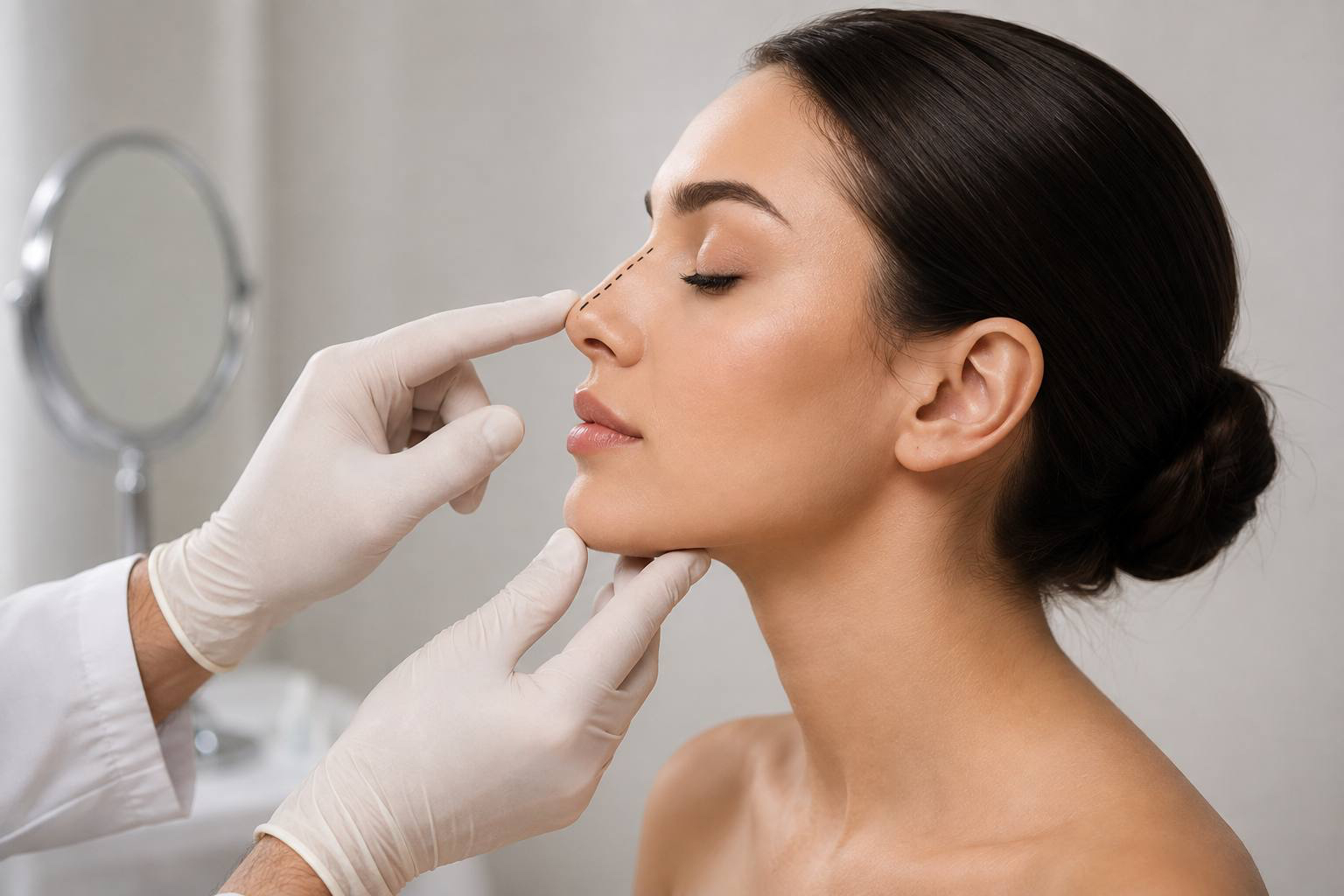
The most common worry after rhinoplasty is not pain, it is the mirror. The nose looks bigger, rounder or less defined than planned, and it is easy to wonder whether something went wrong. In almost every case it did not. Swelling in nasal surgery is slow, uneven and patient, and knowing its stages makes the first months far less stressful.
Swelling is at its highest in the first few days, and bruising around the eyes is common. You rest with your head elevated at the hotel after the 1–2 hospital nights. Around day 7 the splint comes off and the surgeon reviews the result so far. What you see at that point is a nose still full of fluid, so please do not judge the shape yet.
Bruising usually fades over roughly two to three weeks, and most people feel presentable somewhere in the two-to-four-week range. The nose is still swollen, mainly the tip and the area just above it, but the overall outline begins to look like the plan. This is also the stage when many patients fly home, and only once the surgeon has cleared you.
Most of the obvious swelling settles during this period, and the nose looks refined to other people. You, however, will still notice that it feels firm, that the tip looks slightly wide in some light, and that it changes from morning to evening. Swelling is typically worse in the morning and after a flight, a hot day or a salty meal.
A nose keeps changing for twelve to eighteen months, and the tip is always the last part to settle. Thick skin swells for longer than average. That is anatomy, not a sign that something went wrong. Judging the result at six weeks means judging an unfinished thing, which is why a good surgeon will ask to see photos at the one-year point rather than at splint removal.
Follow your surgeon's instructions on head elevation, sleeping position, avoiding blows to the nose and keeping glasses off the healing bridge, so plan on contact lenses meanwhile. Light walking is fine early, while strenuous exercise, contact sports and swimming wait until your surgeon allows them. Do not tape, massage or press the nose unless you were specifically told to, and do not judge progress by comparing day-to-day photos.
Contact your surgeon promptly for heavy bleeding that does not stop, a fever, spreading redness or pus, severe pain that pain relief does not ease, or a sudden one-sided blockage with one side clearly more swollen than the other. Persistent swelling on its own is rarely an emergency, but if you are worried, send a photo and ask. Before booking, also ask what happens if a review is needed after you fly home, because treatment of complications at home is not part of the package.
When will my nose look normal to other people?
Most patients feel presentable somewhere between two and four weeks, though the nose is still swelling and refining for much longer.
Why does the tip stay swollen the longest?
The skin and soft tissue at the tip are thicker and have less room for fluid to drain, so the tip is always the last part to settle.
Should I worry if one side looks more swollen than the other?
Mild asymmetry in swelling is common early on. If it is getting worse, or comes with pain, fever or blocked breathing, contact your surgeon.
This page is general information, not medical advice. Suitability, technique and results are determined individually by a licensed surgeon.
Send us what you already have — the pathology report, imaging on disc, discharge summaries. A specialist at a partner hospital will review it and tell you what is realistic in your case and how quickly treatment could begin. Reviewing your documents costs nothing and commits you to nothing.
Send your documents
A practical guide to the liquid, puree and soft-food stages after a gastric sleeve, plus the lifelong supplements and habits that protect your results.

Unhappy with a surgery result abroad? How to tell unfinished healing from a real problem, what a revision involves, who pays, and where to go next.
Silicone oil removal after vitrectomy: why the oil is used, how long it stays, how the second operation works and what vision does afterwards.