A realistic week-by-week guide to abdominoplasty recovery in Turkey — from the first hospital nights and compression garments to when you can fly home and when the final contour appears.
17.08.2026
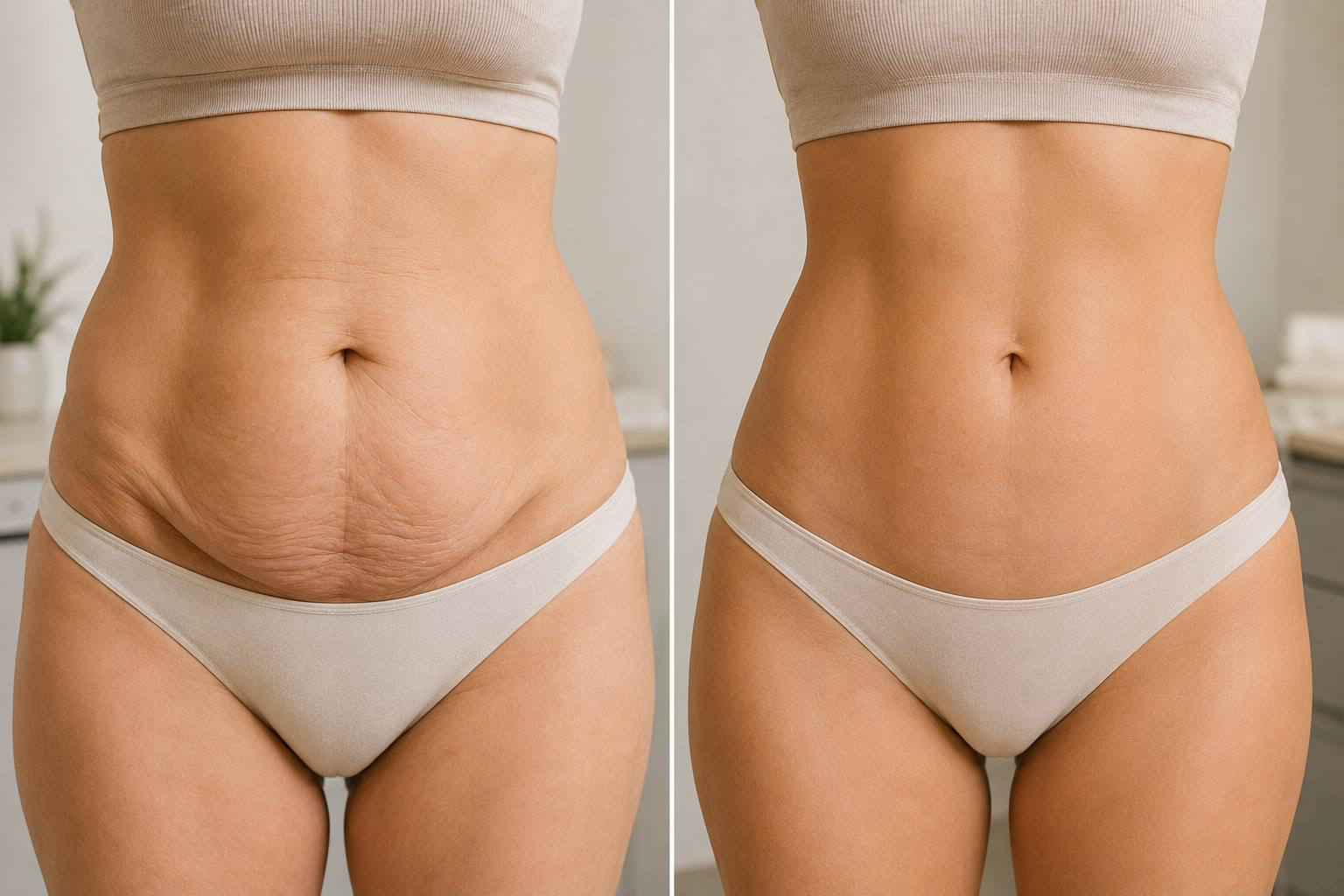
Abdominoplasty does two things at once: it removes excess skin and it stitches the abdominal muscles back together, which is why the healing feels different from a purely fat-removing procedure. At our partner hospitals a tummy tuck starts from €4,800, covering both the muscle repair and the skin removal. Most patients undergoing abdominoplasty in Turkey stay around 7–10 nights in the country, including roughly three nights in hospital and four in a hotel, and need 2–3 weeks before returning to normal daily activity. Knowing what each stage actually feels like makes the process far less unsettling.
You wake up with a compression garment already in place and, in most cases, small drains to remove fluid from under the skin. You will feel tight rather than sharply painful — the repaired muscle wall makes standing fully upright uncomfortable, so you walk slightly bent forward. Nurses will get you out of bed within the first day: short, slow walks are deliberately encouraged because they reduce the risk of blood clots. Pain is controlled with medication, and the hospital stay of about three nights exists precisely so this phase is supervised.
Drains usually come out within the first week, and you transfer to your hotel with your compression garment worn continuously, day and night. This is the week of small victories: getting in and out of bed independently, walking a little further each day, sleeping propped up with pillows under your knees. Swelling and bruising across the lower abdomen peak now. You are not expected to manage alone — MedAgent coordinates transfers, interpreting and your follow-up visits, and a companion is strongly recommended for this stage.
Somewhere in the second or third week most people find they can straighten fully without pulling. Desk-based work is often possible after about two to three weeks, and light walking becomes comfortable. The compression garment stays on for several weeks — usually six to eight, per your surgeon's instruction — because it controls swelling and helps the skin settle onto the new contour. Absolutely no lifting, core exercise or abdominal strain: the muscle repair is still knitting together.
Flying is typically approved once your drains are out, your incision is clean and your surgeon has done the final check — usually at the end of that 7–10 night window. On the flight, wear your compression garment and travel socks, drink water, and stand up and walk the aisle every hour or so. Book an aisle seat if you can. Anyone who cannot stay the full period should raise this before booking, not after, because the follow-up visits are part of the safety of the procedure.
By six to eight weeks most patients are cleared to resume exercise gradually, starting with cardio before any core work. The abdomen will still be firmer and more swollen than its final state — residual swelling can linger for three to six months, and the waistline you see at three months is not the finished one. The lower abdominal scar is initially red or pink and flattens and fades over roughly 12–18 months; its length depends on how much skin was removed and is discussed with your surgeon before surgery.
Contact your surgeon or MedAgent coordinator immediately if you have calf pain, swelling in one leg, chest pain or breathlessness; a fever above 38°C; sudden or one-sided swelling of the abdomen; increasing rather than decreasing pain; or discharge, spreading redness or a foul smell from the incision. These are uncommon, but they are all treatable when caught early — and after you return home we stay in contact, so you always have someone to send a photo or a question to.
How long before I can pick up my child?
Most surgeons ask patients to avoid lifting anything heavier than a few kilograms for six weeks. For parents of small children this is the hardest part of the recovery, and it is worth arranging help at home before you travel.
Does combining abdominoplasty with liposuction make recovery longer?
Combined procedures — from around €6,000 rather than €4,800 for abdominoplasty alone — usually mean more bruising and swelling in the treated areas, but the overall timeline is broadly similar. Your surgeon advises whether combining is appropriate for you.
Will the result be affected if I lose weight later?
Results are most stable at a weight you can maintain. Significant weight loss or a future pregnancy after abdominoplasty can stretch the repaired muscle and skin again, which is why surgeons usually advise completing your family and stabilising your weight first.
What does a tummy tuck cost in Turkey?
At our partner hospitals abdominoplasty starts from €4,800, covering the surgery, the anaesthesia and the hospital nights that follow it. Full package details are here.
This page is general information, not medical advice. Suitability, technique and results are determined individually by a licensed surgeon.
Send us what you already have — the pathology report, imaging on disc, discharge summaries. A specialist at a partner hospital will review it and tell you what is realistic in your case and how quickly treatment could begin. Reviewing your documents costs nothing and commits you to nothing.
Send your documentsUnhappy with a surgery result abroad? How to tell unfinished healing from a real problem, what a revision involves, who pays, and where to go next.
Silicone oil removal after vitrectomy: why the oil is used, how long it stays, how the second operation works and what vision does afterwards.
How children treatment in Turkey actually works: the accompanying parent, documents for a minor, school, language, paediatric specialties and what to send.