Whether a course started at home can be continued abroad, and what to do about drugs unavailable in your own country.
23.08.2026
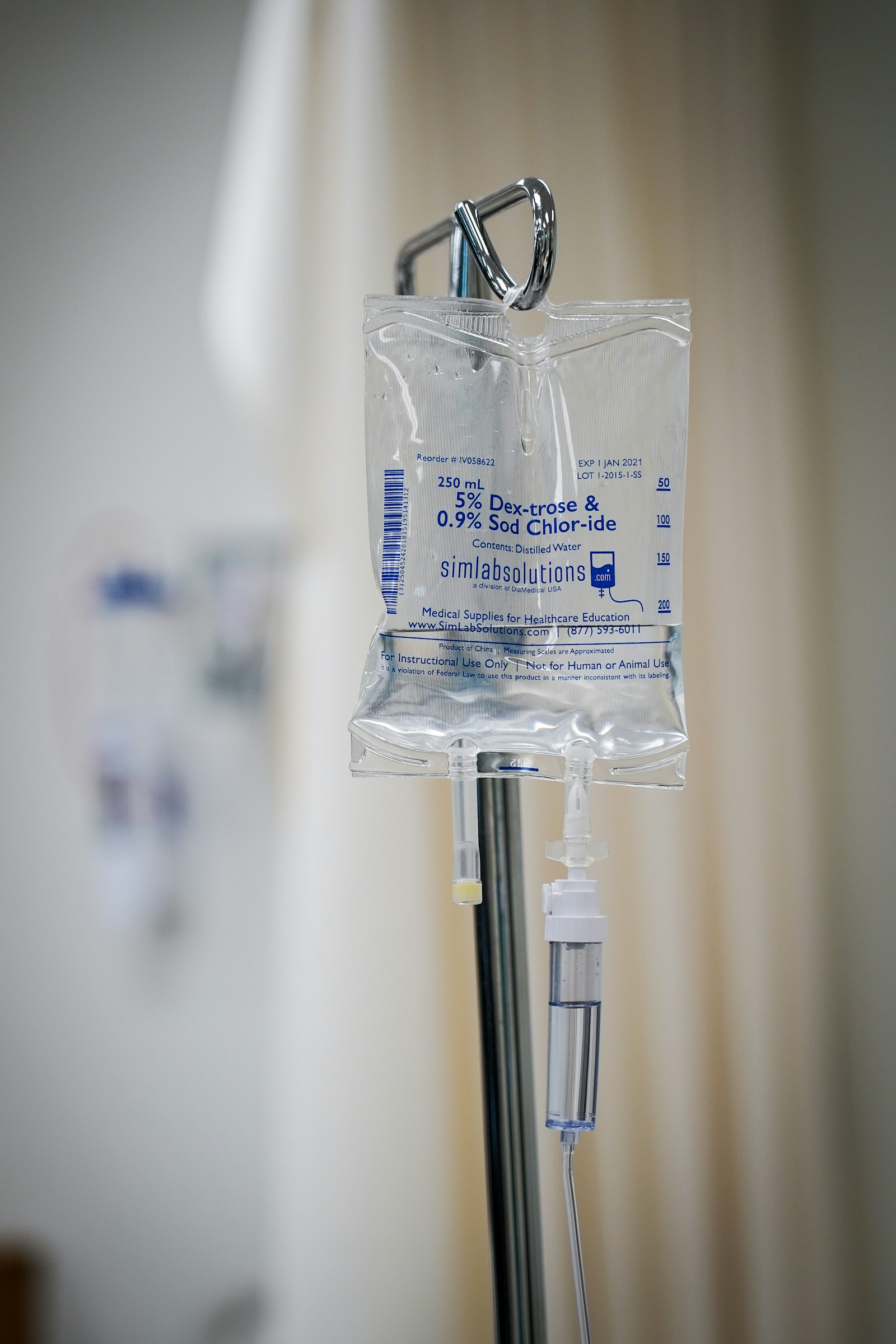
The typical situation is not a new diagnosis. It is a patient two or three cycles into treatment when a drug becomes unavailable, or the disease progresses on the current regimen, or the next stage requires equipment the local hospital does not have. The question is whether treatment can simply be picked up elsewhere. Usually it can — with conditions.
Chemotherapy regimens are not invented hospital by hospital. They are published protocols — named combinations at defined doses and intervals, derived from international trials. A patient on R-CHOP or FOLFOX or a standard paediatric leukaemia protocol is on a regimen any oncologist anywhere recognises immediately.
This is the mechanical reason continuity works. Your oncologist in Turkey is not reconstructing your treatment from scratch; they are reading a protocol they already know and identifying which cycle you are on.
The complete treatment record, and complete means complete: every drug by name, every dose actually administered, every date, and every dose reduction or delay with the reason. Cumulative dose matters enormously for certain agents — anthracyclines have a lifetime cardiac limit, and a team that does not know how much you have already received cannot safely give you more.
Also required: blood counts over time, the original histology and immunohistochemistry, imaging on disc, and details of any adverse reactions. A patient who reacted badly to a specific agent needs that documented, not remembered.
Expect imaging to be repeated before the next cycle is given. This is not duplication for its own sake — the point of restaging is to determine whether the current regimen is working. If the disease has progressed on a protocol, continuing it unchanged makes no sense, and the discussion becomes about switching lines rather than resuming.
This is the moment where a second opinion is worth its cost, because a change of line is a substantive decision.
This is the reason many patients from Central Asia and the Caucasus start looking abroad in the first place. Newer targeted agents and immunotherapies — checkpoint inhibitors, specific monoclonal antibodies — may not be registered, not funded, or simply not stocked locally.
Two honest cautions. First, a drug being newer does not make it better for your particular tumour; eligibility usually depends on molecular markers, and if you do not have the marker the drug will not work regardless of availability. Second, these agents are expensive, and where they represent the bulk of the treatment cost, that should be stated clearly in the quote rather than folded into a total.
Some patients travel for each cycle and return home in between. This is workable for regimens given every three weeks, and it keeps the patient at home for most of the treatment period. It is harder for weekly regimens and unrealistic for protocols requiring continuous inpatient monitoring.
The practical complications are worth thinking through: flying while neutropenic carries infection risk, someone at home needs to manage blood counts between cycles, and any complication that occurs at home has to be handled by a local doctor who knows what you are receiving. Arrange that local doctor before you start, not when something goes wrong.
Anti-nausea medication, growth factors to support blood counts, infection prophylaxis, nutritional support — these determine whether you can tolerate the full protocol at the full dose, and dose intensity affects outcomes. Ask specifically what supportive care is included in a quote. It is a common gap between an attractive headline figure and the real cost.
Can I continue a course started in another country?
Usually yes, provided the documentation is complete. The treating team needs every drug, dose and date, along with current imaging, before continuing.
Will I have to start the protocol again?
Normally no. Restaging determines whether the current regimen is working; if it is, treatment resumes from where you are. If the disease has progressed, the discussion is about changing regimen, not repeating it.
How is chemotherapy priced?
Per cycle, not as a package, because the number of cycles depends on response. Published figures for Turkey put a cycle at roughly 650–1,650 $, but the drug itself dominates the cost and targeted agents sit far above that range.
Related reading
How Quickly Can Cancer Treatment Start in Turkey? A Realistic Timeline
CyberKnife, Gamma Knife and Proton Therapy: What Turkey Actually Has
How Much Does Cancer Treatment in Turkey Cost? A Breakdown by Stage
This page is general information, not medical advice. Chemotherapy regimens, dosing and continuation of treatment are determined individually by a licensed oncologist.
Send us what you already have — the pathology report, imaging on disc, discharge summaries. A specialist at a partner hospital will review it and tell you what is realistic in your case and how quickly treatment could begin. Reviewing your documents costs nothing and commits you to nothing.
Send your documentsUnhappy with a surgery result abroad? How to tell unfinished healing from a real problem, what a revision involves, who pays, and where to go next.
Silicone oil removal after vitrectomy: why the oil is used, how long it stays, how the second operation works and what vision does afterwards.
How children treatment in Turkey actually works: the accompanying parent, documents for a minor, school, language, paediatric specialties and what to send.