The radiotherapy systems in plain language — and an honest answer about proton therapy.
23.08.2026
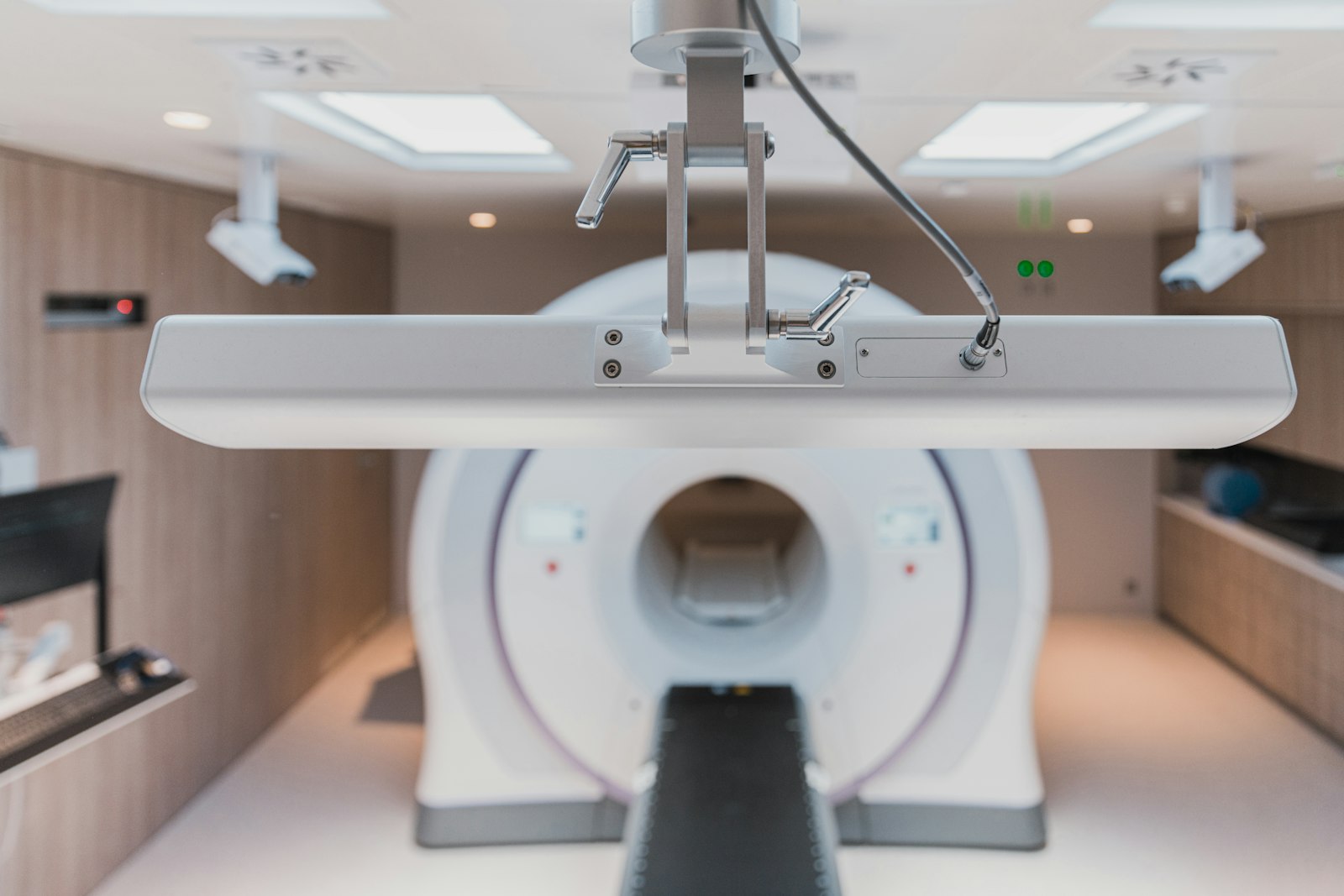
Search for proton therapy in Turkey and you will find agency pages listing Turkish hospitals as proton centres, complete with prices. Read the same pages carefully and the equipment they name — Elekta Versa HD, TrueBeam, Gamma Knife — is photon equipment. None of it delivers protons.
Turkish sources say this plainly. The Turkish Society for Radiation Oncology and Turkish medical reporting both describe proton therapy as a modality Turkey does not yet have, and Turkish patients who need it are referred abroad. A proton facility costs on the order of hundreds of millions of dollars, which is why relatively few exist anywhere.
If a company quotes you a price for proton therapy in Turkey, ask which machine, by which manufacturer, at which hospital. The answer will tell you what you are actually being sold. What Turkey does have is a full range of advanced photon radiotherapy — and for the majority of indications, that is the appropriate treatment anyway.
This is the workhorse of radiation oncology and what most patients receive. A linear accelerator delivers X-ray beams shaped to the tumour, usually in 20 to 35 daily fractions over several weeks. IMRT and VMAT are techniques for shaping and modulating those beams so the dose conforms tightly to the target while sparing surrounding tissue.
It is not the entry-level option. For most tumour types this is the clinically indicated treatment, and the sophistication lies in the planning — the physics team's work — more than in the brand of machine.
Despite the name, no cutting is involved. Around two hundred cobalt sources converge on a single point inside the skull with sub-millimetre precision. It treats brain lesions only — metastases, acoustic neuromas, meningiomas, arteriovenous malformations, trigeminal neuralgia — and typically in a single session with a stereotactic frame fixed to the head.
Its strength is exactly its limitation: extraordinary precision, inside the head, nowhere else.
A linear accelerator mounted on a robotic arm, which moves around the patient and tracks the target during treatment — including compensating for breathing. This lets it treat lesions outside the skull: lung, liver, spine, prostate, pancreas. Treatment is delivered in one to five sessions rather than weeks, which is why it is called stereotactic body radiotherapy.
Cost for a full course runs roughly 8,000–20,000 $ depending on site and number of sessions.
TrueBeam, Versa HD, Halcyon and similar are linear accelerator platforms — the machines that deliver conventional and stereotactic photon radiotherapy. Modern units can perform both routine fractionated treatment and stereotactic work.
These names appear in marketing as though they were distinct therapies. They are not. They are equipment models, and what matters far more than the model is the quality of the planning and the experience of the team operating it.
Protons deposit their dose at a defined depth and stop, rather than continuing through the body as X-rays do. Less dose reaches tissue beyond the tumour. This is a real physical advantage and it matters most for paediatric tumours, where reducing lifetime dose to developing tissue lowers the risk of second cancers decades later, and for tumours immediately adjacent to critical structures such as the base of the skull, spinal cord or eye.
For the majority of adult cancers, well-planned modern photon radiotherapy achieves comparable tumour control. Protons are not a general upgrade, and the evidence for superiority outside specific indications is narrower than the marketing suggests. If your case is one where protons genuinely matter, an honest radiation oncologist should tell you — and should tell you that you will need to travel somewhere other than Turkey for it.
Ask which technique is proposed and why that one. Ask how many fractions and over how long. Ask what dose the surrounding organs will receive and what the expected side effects are, both immediate and long-term. Ask whether the case was discussed at a tumour board.
What you should not ask is which machine is newest. Radiotherapy outcomes rest on target definition, dose planning and quality assurance — the work done by the physicist and the radiation oncologist before the machine is ever switched on.
Is proton therapy available in Turkey?
No. Turkish sources, including the national radiation oncology society, describe it as a modality not yet present in the country, and Turkish patients requiring it are referred abroad. Advertisements offering proton therapy in Turkey are describing photon equipment.
What is the difference between CyberKnife and Gamma Knife?
Gamma Knife treats lesions inside the skull, usually in a single session with a fixed frame. CyberKnife is robot-mounted and treats targets elsewhere in the body over one to five sessions, tracking movement as it goes.
Is stereotactic radiosurgery better than conventional radiotherapy?
Neither is better in general; they suit different situations. Stereotactic treatment suits small, well-defined targets. Larger or more diffuse disease needs conventional fractionated treatment. The choice is clinical, not commercial.
Related reading
Chemotherapy in Turkey: Starting Fresh or Continuing Treatment Begun at Home
Breast Cancer Treatment in Turkey: From Diagnosis to Reconstruction
How Quickly Can Cancer Treatment Start in Turkey? A Realistic Timeline
This page is general information, not medical advice. The choice of radiotherapy technique, dose and schedule is determined individually by a licensed radiation oncologist.
Send us what you already have — the pathology report, imaging on disc, discharge summaries. A specialist at a partner hospital will review it and tell you what is realistic in your case and how quickly treatment could begin. Reviewing your documents costs nothing and commits you to nothing.
Send your documentsUnhappy with a surgery result abroad? How to tell unfinished healing from a real problem, what a revision involves, who pays, and where to go next.
Silicone oil removal after vitrectomy: why the oil is used, how long it stays, how the second operation works and what vision does afterwards.
How children treatment in Turkey actually works: the accompanying parent, documents for a minor, school, language, paediatric specialties and what to send.