What can be corrected after a smile makeover fails, what cannot be undone, and why the second attempt is harder and more expensive than the first.
24.08.2026
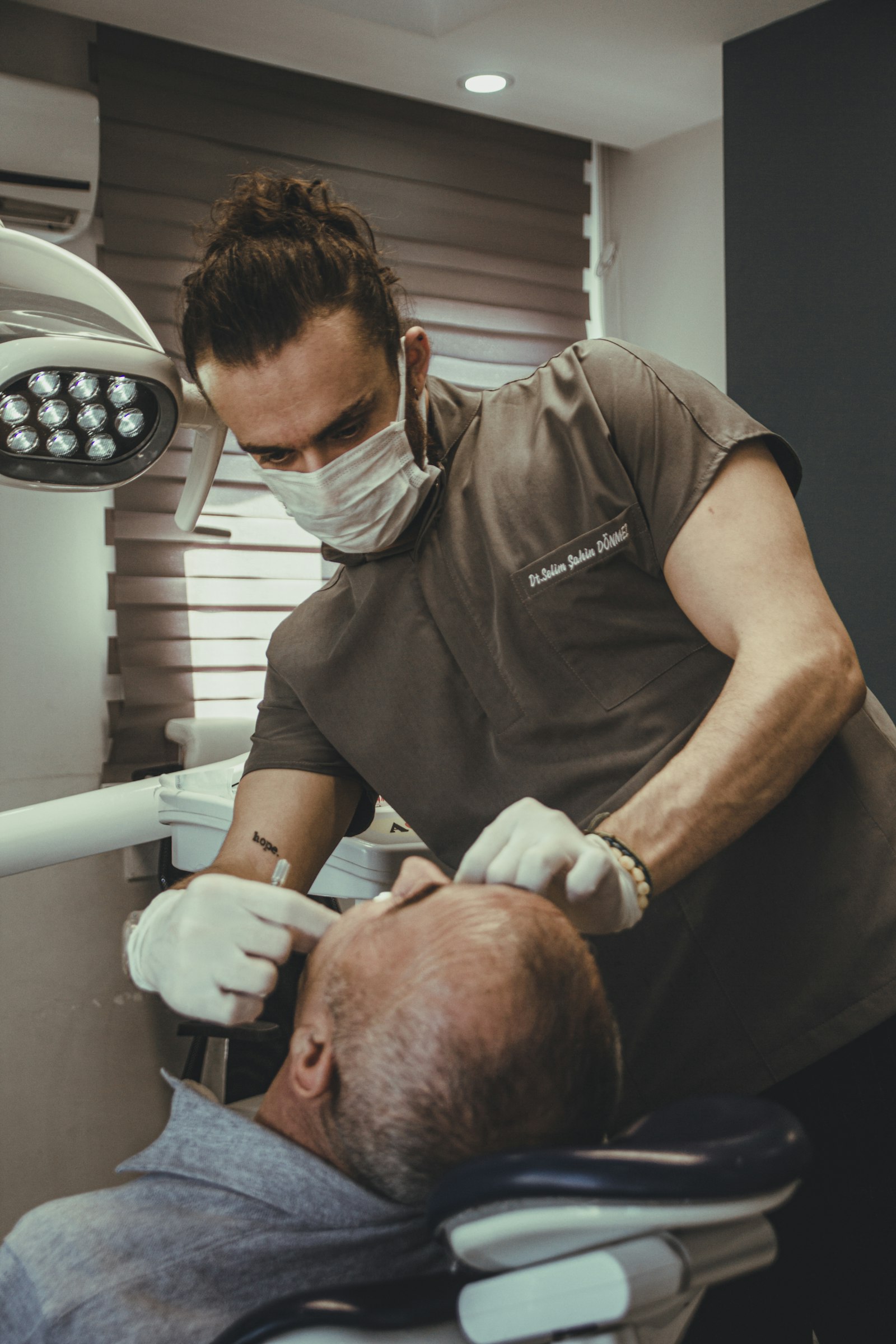
Search for dental work in Turkey and you will find several hundred articles about getting it done. Search for what to do when it has gone wrong and the same clinics fall silent. We reviewed the full blog output of two large Turkish dental groups — roughly 290 articles between them — and found no page on correcting failed work done elsewhere. Not a section, not a paragraph. We take the opposite view, and corrective dental work arranged in Turkey starts by assessing what is already in your mouth rather than by selling a new set of teeth.
Meanwhile it is one of the things patients most need to read about, and one of the more common reasons people contact us.
This article is about what is actually fixable.
"It went wrong" covers several different problems with completely different solutions, and the first job is to separate them.
Aesthetic. The teeth are too white, too large, too uniform, the wrong shape for the face, or the gum line is uneven. Nothing is diseased. This is the most fixable category and the least urgent.
Functional. The bite does not meet properly, there is jaw ache or difficulty chewing, a tooth catches, speech has changed. Often a consequence of restoring many teeth at once without properly re-establishing the bite.
Biological. Persistent pain, sensitivity, swollen or bleeding gums, an abscess, a bad taste, a crown that has come loose. This is the category that needs attention soonest, because something underneath is deteriorating.
The three overlap, and the biological problems have to be resolved before anyone starts improving appearance. A beautifully re-made crown over an infected root fails again.
Crowns and veneers can be remade. They are removed, the tooth underneath is assessed, and new restorations are made. If the underlying teeth are sound, the result can be very good. This is the ordinary case and it usually works.
Bite problems can be rebuilt, though this is slower and more technical than the original work. It often involves a period in temporary restorations while the new bite is tested, sometimes with a splint first. Anyone offering to fix a bite problem in three days should be treated with caution.
Gum problems can often be treated. Inflammation caused by an overhanging crown edge frequently resolves once the edge is corrected. Recession that has exposed a dark margin can sometimes be addressed with a graft, sometimes only by remaking the restoration with a different margin design.
Failed implants can usually be replaced. The failed fixture is removed, the site is allowed to heal, often with grafting, and a new implant is placed months later. It works, but it adds a year to the process.
Root-treated teeth that hurt can often be re-treated rather than extracted, though the success rate for repeat root canal treatment is lower than for the first attempt.
Tooth structure that has been removed does not come back. If a tooth was reduced to a stump for a crown, it will need a crown for the rest of its life. The new one can be better made, better shaped and better fitted — but the tooth stays covered.
A tooth that has had its nerve removed stays non-vital. It can be re-treated, restored and kept for decades, but it will not become a living tooth again.
A tooth that has been extracted is gone; the options are an implant, a bridge or a gap.
This is worth saying plainly because it shapes expectations. Redoing failed work means getting the best available result from the teeth as they now are — not returning to the mouth you had before.
It is a common shock, and the reasons are structural.
Diagnosis is longer. Nobody knows what was done. The work has to be assessed, sometimes partly dismantled, before a plan is possible.
There is often preliminary treatment before restoration can start — periodontal treatment, root canal work, extractions, grafting, a splint phase. Each has its own cost and timeline.
Removing existing crowns is slower than preparing a virgin tooth, and it occasionally damages what remains.
The margin for error is smaller. There is less tooth to work with, so the technical demands are higher.
And it usually cannot be done in a week. Corrective cases with a biological or functional component typically involve staged treatment over months.
Whoever assesses your case needs the same set of things:
A panoramic X-ray, and a CT scan if implants are involved. Photographs of your teeth now — front view, close-up, and smiling. Whatever documentation you have from the original treatment: the plan, the invoice, the itemised list of what was done to which tooth, and the implant passport if there are implants. And a written account of what you are experiencing and when it started.
If you have no documents at all, a case can still be assessed from imaging and photographs. It simply takes longer and involves more uncertainty.
Get an opinion from someone with no involvement in the original work. That includes being cautious about a clinic which is very quick to condemn the previous dentist and equally quick to propose an expensive full replacement — a second independent view is worth the delay.
Can crowns be removed without damaging the teeth?
Usually they can be sectioned and lifted off with minimal further loss, but not always — a tooth already heavily reduced may be damaged during removal, and occasionally a tooth in poor condition is found to be unsalvageable underneath. An honest assessment will flag this possibility beforehand rather than after.
How long does corrective treatment take?
Purely aesthetic replacement can be done in one to two weeks. Anything involving gum treatment, root canals, extractions or implants runs to months, because healing sets the pace. Be wary of a corrective plan compressed into the same week-long slot as a cosmetic makeover.
Should I go back to the clinic that did the original work?
If the work is under guarantee and the relationship is workable, yes — that is the cheapest route and the clinic already has your records. If trust is gone, get an independent assessment first so that you know what is actually wrong before deciding where to have it put right.
Related reading
How Much Tooth Is Removed for Veneers and Crowns
How Veneers and Crowns Look Ten Years On
Dental Warranties Abroad: What They Actually Cover
This page is general information, not medical advice. Whether a restoration can be saved, remade or must be removed is determined by a licensed dentist after clinical examination and imaging.
Send us what you already have — the pathology report, imaging on disc, discharge summaries. A specialist at a partner hospital will review it and tell you what is realistic in your case and how quickly treatment could begin. Reviewing your documents costs nothing and commits you to nothing.
Send your documentsUnhappy with a surgery result abroad? How to tell unfinished healing from a real problem, what a revision involves, who pays, and where to go next.
Silicone oil removal after vitrectomy: why the oil is used, how long it stays, how the second operation works and what vision does afterwards.
How children treatment in Turkey actually works: the accompanying parent, documents for a minor, school, language, paediatric specialties and what to send.