The millimetre figures behind veneers and crowns, why crowns take far more tooth than veneers, and when a healthy tooth ends up needing a root canal.
24.08.2026
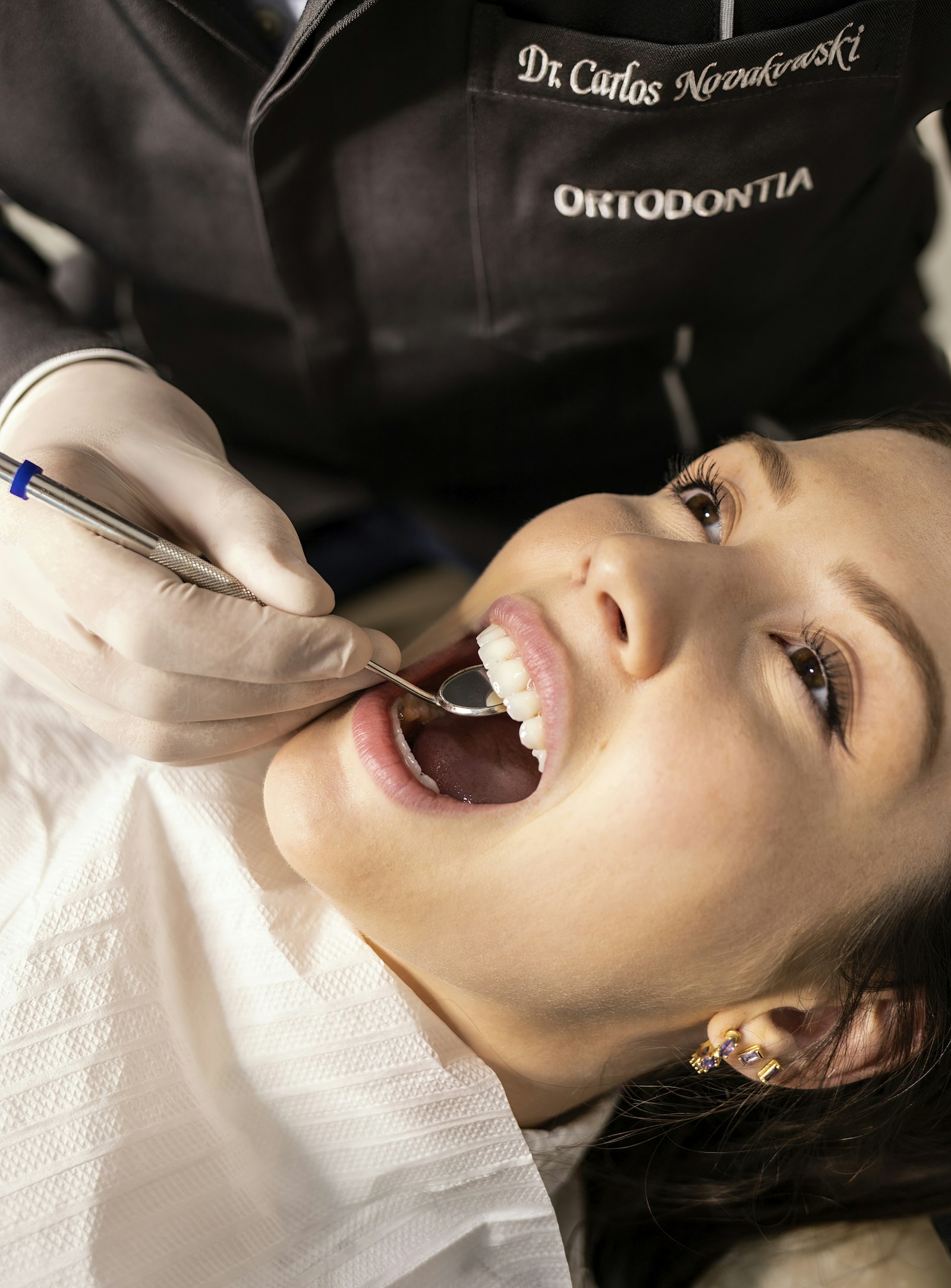
Almost every argument about dental work done abroad comes back to one measurement: how much of your own tooth was ground away to make room for the new one. It is the part that cannot be undone. Materials can be replaced, colour can be redone, a loose crown can be recemented — but enamel does not grow back. That is why our dental treatment service in Turkey starts with a written, tooth-by-tooth plan rather than a booking date.
What makes this hard to research is that the clinics selling the treatment rarely put a number on it. We read through the blogs of two large Turkish dental groups while preparing this article. One gives the figure 0.3–0.7 mm inside a passage describing the procedure as precise and conservative. The other, with roughly 290 published articles including one titled specifically about tooth reduction, does not state a quantity anywhere at all.
So here are the numbers, and what they actually mean for the tooth underneath.
A conventional porcelain veneer covers the front surface of the tooth. To make room for it without leaving the tooth looking bulky, the dentist removes about 0.3 to 0.7 mm of enamel from that front face, sometimes with a small amount at the biting edge and where the tooth meets its neighbours.
Half a millimetre sounds trivial. On a front tooth, enamel at its thickest is around 1 to 1.5 mm on the labial surface and thins considerably towards the gum. So a preparation at the upper end of that range can take a substantial share of the enamel present — and near the gum line, where enamel is thinnest, it can go through it entirely.
This matters because enamel is what a veneer bonds to. Adhesion to dentine, the softer layer beneath, is weaker and less durable. A veneer prepared conservatively and bonded to enamel is a genuinely long-lasting restoration. A veneer bonded largely to exposed dentine is a different proposition, and it is not one you can assess by looking at the finished result.
A crown is a cap. For it to fit over the tooth, the tooth has to be reduced on all surfaces — front, back, both sides, and the top. Typical reduction is roughly 1 to 2 mm depending on the surface and the material, which in volume terms means a large proportion of the visible tooth is removed and what remains is a tapered stump.
British dentists who publish on cases they have taken over describe preparations where the majority of the crown of the tooth had been removed — figures of 60 to 70 per cent appear repeatedly in that literature. Whether that reflects the average case or the worst cases that get written about is impossible to know from outside. What is not in dispute is the direction: a crown always costs more tooth structure than a veneer, by a wide margin.
Crowns and veneers are frequently discussed as though they were two flavours of the same cosmetic treatment. Clinically they are not close. A crown is a restoration for a tooth that is already badly damaged — heavily filled, cracked, worn down, or root-treated. A veneer is a cosmetic facing for a tooth that is essentially sound.
The reason this blurs is practical. Crowns are more forgiving to make. They mask colour completely, they correct alignment more aggressively, they can be produced faster in a lab, and the finished result looks uniform and dramatic in a way that suits a rapid transformation. If a whole set of front teeth is being changed in under a week, crowns make that timeline achievable in a way that carefully bonded veneers on healthy teeth often do not.
None of that makes a crown wrong. It makes a crown a bigger decision, and it means the choice between them should follow from the state of the tooth, not from the calendar.
This is the part almost nobody publishes, and it is the reason the whole subject is contentious.
Removing tooth structure generates heat and comes closer to the pulp — the nerve and blood supply at the centre of the tooth. The more that is removed, and the more it is removed in one long session, the higher the chance the pulp becomes irreversibly inflamed. When that happens, the tooth needs root canal treatment, sometimes weeks or months later, and sometimes through a crown that has just been fitted.
A second route to the same place is deliberate. If teeth are crooked and are being made straight by crowning them rather than by moving them, the required reduction on some teeth is severe enough that the nerve has to be removed first. This is a known technique, not an accident. But a patient who agreed to a smile makeover and later discovers that several living teeth were devitalised in order to achieve the alignment has, reasonably, a complaint about consent rather than about dentistry.
A root-treated tooth is not a lost tooth. It is, however, more brittle, no longer able to signal pain, and dependent on the crown over it for the rest of its life.
Ask which teeth are being veneered and which are being crowned, tooth by tooth, and why that tooth specifically needs the more invasive option. A plan where every tooth gets the same treatment deserves a follow-up question.
Ask how many teeth are planned for root canal treatment as part of the plan, and for what reason. The answer should be a clinical one about the state of each tooth, not a general reassurance.
Ask whether orthodontics — aligners or braces — could achieve part of what is being proposed. Moving a tooth costs no tooth structure at all. It takes months, which is precisely why it rarely appears in a treatment plan built around a one-week visit, but it is worth knowing whether it was ever on the table.
Ask to see your prepared teeth photographed before the temporaries go on. Any clinic taking digital records has these images. They are the only honest record of what was removed.
Are veneers reversible?
No. Once enamel has been removed the tooth needs permanent coverage of some kind. The only genuinely reversible option is a no-preparation veneer, which requires little or no reduction but is only suitable for a narrow set of cases — usually teeth that are small or set slightly back to begin with.
Is more tooth reduction ever the right choice?
Yes. A tooth with a large old filling, a crack, extensive wear or previous root canal treatment genuinely needs full coverage; a veneer on it would fail. The problem is not crowns. The problem is crowns on teeth that did not need them.
How do I know how much was taken off after the fact?
Ask for your pre-treatment photographs, your X-rays or CT scan, and any images of the prepared teeth. Bring them to a dentist at home for an independent reading. Without records, nobody can tell you retrospectively what your teeth looked like before.
Related reading
Eight Units or Twenty-Eight?
How Veneers and Crowns Look Ten Years On
Redoing Dental Work That Went Wrong
This page is general information, not medical advice. Whether a tooth needs a veneer, a crown or neither can only be determined by a licensed dentist who has examined you and reviewed your imaging.
Send us what you already have — the pathology report, imaging on disc, discharge summaries. A specialist at a partner hospital will review it and tell you what is realistic in your case and how quickly treatment could begin. Reviewing your documents costs nothing and commits you to nothing.
Send your documentsUnhappy with a surgery result abroad? How to tell unfinished healing from a real problem, what a revision involves, who pays, and where to go next.
Silicone oil removal after vitrectomy: why the oil is used, how long it stays, how the second operation works and what vision does afterwards.
How children treatment in Turkey actually works: the accompanying parent, documents for a minor, school, language, paediatric specialties and what to send.