A realistic day-by-day recovery timeline after flap-free SMILE laser eye surgery in Turkey, from the blurry first evening to fully settled vision.
26.08.2026
SMILE corrects short-sightedness through a 2-4mm incision instead of a LASIK flap, and that single difference shapes the whole recovery. At our partner hospitals in Turkey, SMILE starts from €2,390 for both eyes. There is no flap to dislodge, fewer corneal nerves are cut, and dry-eye symptoms tend to be milder. What surprises people is the shape of the curve: vision comes back fast, then wobbles a little for a few weeks before settling for good. Here is what the days and weeks after a SMILE procedure in Turkey actually look like.
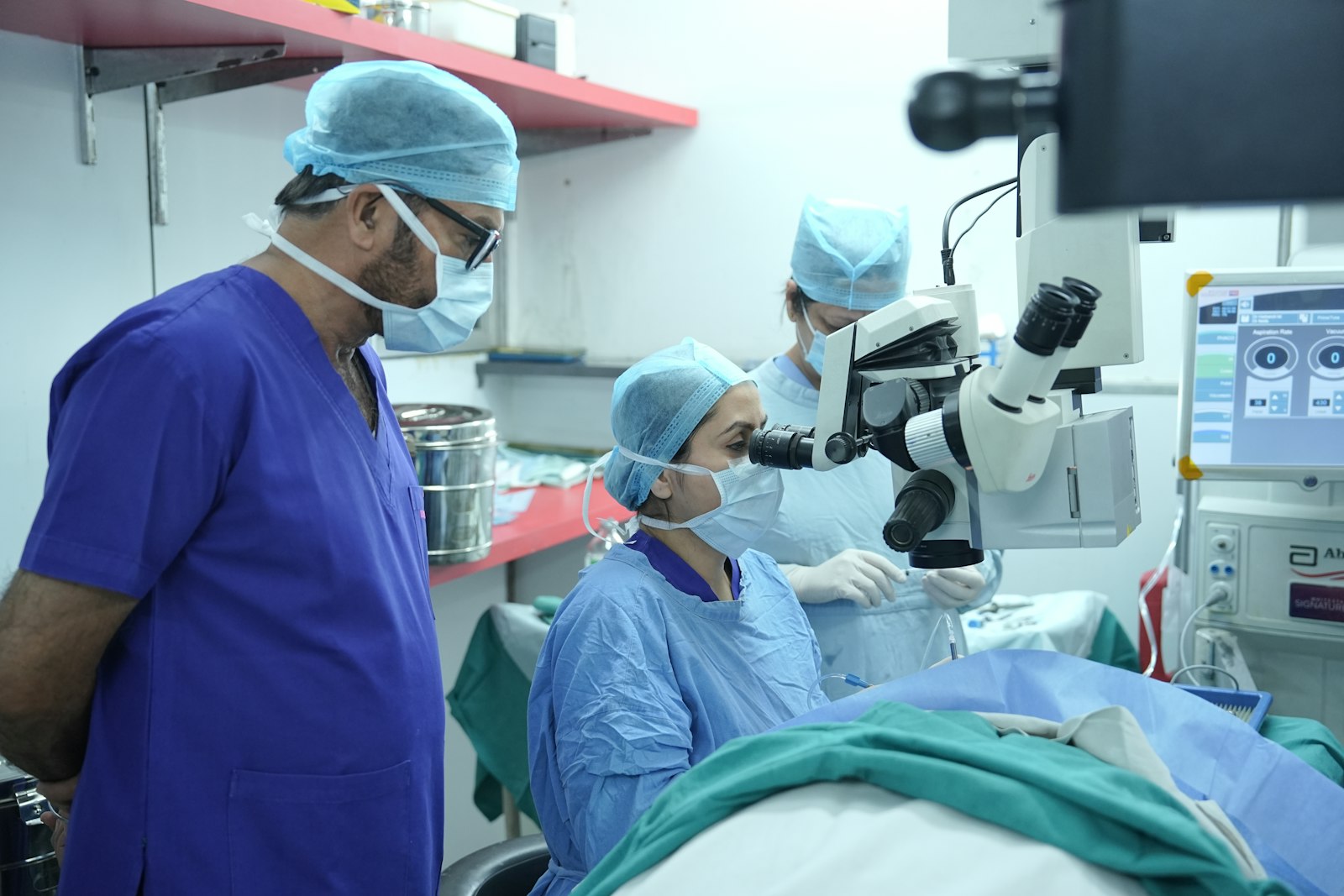
The procedure itself takes around 10-15 minutes for both eyes, most of it preparation — the laser runs for roughly 25 seconds per eye. Straight afterwards your vision will be foggy, as though you are looking through a steamed-up window, and your eyes will water, sting and feel gritty. This is normal and it peaks in the first few hours. The single most useful thing you can do is sleep it off: go back to your hotel, keep your eyes closed, and let the surface settle. Someone will need to drive or accompany you — you will not be fit to navigate on your own.
Most people wake up on day one with a striking improvement, and many are already at or near driving standard. You will attend a post-operative check at the clinic that morning, where the surgeon confirms the incision is sealing properly and measures your vision. Expect some light sensitivity and halos around bright lights, especially at night. You will be given lubricating drops and a short course of antibiotic and anti-inflammatory drops; use them exactly on schedule, as this is the part of recovery that is entirely in your hands.
Vision continues to sharpen, but not in a straight line — good days and slightly hazy days alternate, and it is common for one eye to lag behind the other for a while. Dryness is the main complaint this week, so keep preservative-free artificial tears with you and use them liberally. Do not rub your eyes, however tempting. Avoid swimming pools, the sea, hammams and dusty environments, and skip eye makeup. Screen work is allowed from day two or three, but blink deliberately and take breaks; screens do not damage healing eyes, they just dry them out.
SMILE has one of the shortest travel windows of any eye procedure. Once your surgeon has cleared you at the day-one check, flying is usually fine — cabin air is dry, so bring your drops in your hand luggage and use them every hour or so in the air. Most patients plan three to four nights in Turkey: arrival and examination, procedure day, next-day check, then home. Because there is no flap, the small risk of trauma-related complications that makes LASIK patients cautious about early activity does not apply in the same way.
By the end of the second week the dryness has usually eased noticeably and night-time halos are fading. You can return to the gym, though keep sweat out of your eyes, and non-contact sport is fine. Swimming is generally cleared at around two to four weeks — confirm the exact date with your surgeon. Most people have stopped thinking about their eyes by week four, apart from the occasional reach for drops at the end of a long day.
The cornea keeps remodelling quietly for about three months, and that is when your prescription is considered stable. Occasional fluctuation before then is expected and is not a sign that something has gone wrong. A small number of patients end up slightly under- or over-corrected; if that is still the case at three months, an enhancement can be discussed, usually with a surface laser procedure. It is also worth remembering that SMILE corrects distance vision — it does not prevent the age-related need for reading glasses from your mid-forties onwards.
Contact your clinic or a local ophthalmologist promptly if you have pain that worsens rather than improves after day one, a sudden drop in vision, increasing redness, thick discharge, or a persistent sensation that something is stuck in your eye beyond the first few days. MedAgent stays in contact with you after you fly home and can arrange for your surgeon to review symptoms remotely or coordinate an urgent local appointment if needed.
How soon can I drive after SMILE?
Most patients meet the legal vision standard by the day-one check, but you should only drive once your surgeon has confirmed it and you feel confident, particularly at night.
Is the dry eye after SMILE permanent?
For the large majority it is temporary and improves steadily over the first one to three months. Because SMILE cuts fewer corneal nerves than a flap procedure, symptoms are usually milder and shorter-lived than after LASIK.
Can I wear contact lenses again if my vision changes later?
Yes, though the corneal shape is altered, so a specialist fitting may be needed. Most patients never require them again after a stable correction.
What does SMILE laser eye surgery cost in Turkey?
At our partner hospitals it starts from €2,390 for both eyes. Full package details are here.
This page is general information, not medical advice. Suitability, technique and results are determined individually by a licensed doctor.
Send us what you already have — the pathology report, imaging on disc, discharge summaries. A specialist at a partner hospital will review it and tell you what is realistic in your case and how quickly treatment could begin. Reviewing your documents costs nothing and commits you to nothing.
Send your documentsUnhappy with a surgery result abroad? How to tell unfinished healing from a real problem, what a revision involves, who pays, and where to go next.
Silicone oil removal after vitrectomy: why the oil is used, how long it stays, how the second operation works and what vision does afterwards.
How children treatment in Turkey actually works: the accompanying parent, documents for a minor, school, language, paediatric specialties and what to send.