Who can travel with the child, documents for a minor, where families live, and continuing a protocol started at home.
23.08.2026
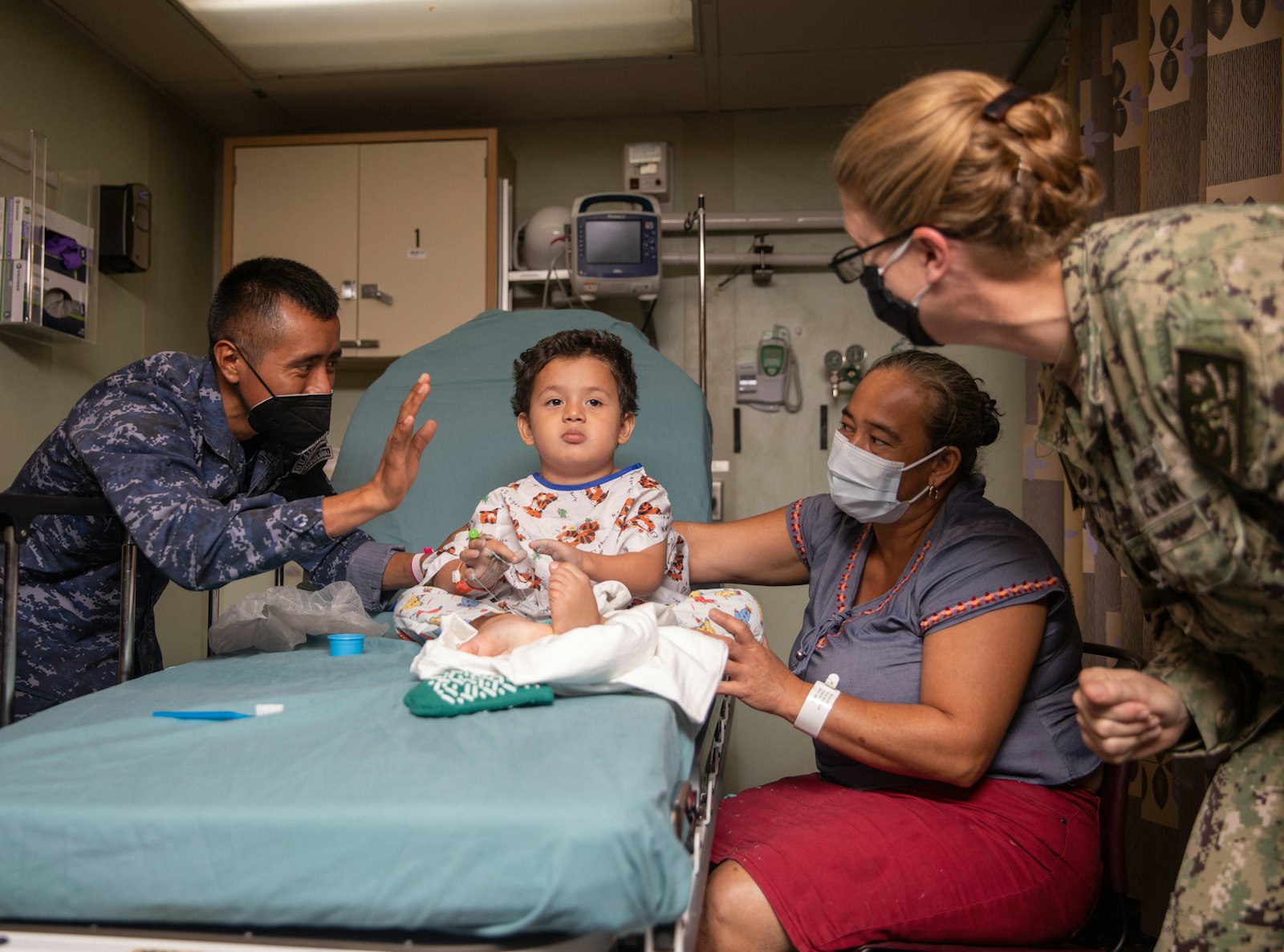
Parents researching paediatric cancer treatment abroad find endless pages listing hospitals and describing chemotherapy. What they cannot find is the practical detail: whether both parents can come, what happens to the other children at home, where a family lives for four months, whether the treatment already started at home can simply continue. This article is about that side of it.
Plan for two adults if at all possible. Paediatric oncology treatment runs for months, involves long inpatient stretches, and one parent alone cannot sustain the night shifts, the administrative load and the emotional weight simultaneously. Hospitals normally allow one parent to stay overnight in the room with the child; the second adult handles everything outside the ward.
Where two parents cannot travel, a grandparent or adult relative as the second person is common. What matters is that the child is never left without a familiar adult, and that the accompanying adults can rotate.
Requirements depend on the child's citizenship, so verify with the Turkish consulate for your country rather than relying on a general list. In broad terms you will need the child's passport, the birth certificate, and — critically — notarised consent from the non-travelling parent where only one parent accompanies the child. This last document is the one families forget, and it is the one that stops people at the border.
Where the parents are divorced or one parent is unreachable, resolve the documentation before booking anything. It takes longer than you expect and no clinic can help you with it.
Most families arriving from Kazakhstan, Uzbekistan and Azerbaijan are not starting from zero — treatment has already begun and something has gone wrong: a drug is unavailable, a relapse has occurred, or the next stage cannot be delivered locally.
Paediatric oncology protocols are largely international. A child on a standard leukaemia protocol is on a regimen a Turkish paediatric oncologist recognises immediately. Continuity is usually possible, but it depends entirely on documentation quality. Bring every discharge summary, every drug name with dose and date, all blood counts, the original histology and any imaging on disc. Gaps in the record are what force teams to repeat invasive tests on a child who does not need them.
Hotels are the wrong model for a four-month stay, both financially and practically. Families need a kitchen, because a child on chemotherapy has unpredictable appetite and specific food safety requirements, and a laundry, because hospital stays generate constant washing.
Serviced apartments near the hospital are the normal solution, and monthly rates are far below nightly hotel pricing. Proximity matters more than comfort: neutropenic fever means going to hospital immediately, at any hour, and a thirty-minute taxi ride at 3 a.m. is a different experience from a five-minute walk.
Extended treatment means an extended gap in school. Many families arrange remote enrolment with the school at home, and larger paediatric oncology departments run play and education programmes on the ward. Ask what exists rather than assuming there is nothing — hospital schooling is normal in paediatric oncology and it matters for the child's sense of continuity.
The siblings left at home are the part nobody plans for. Whoever is caring for them needs authority to make decisions, and the children need regular contact with the absent parent. Set up a fixed video call time and hold to it — predictability helps children far more than reassurance does.
Turkish paediatric oncology departments generally complete diagnostic workup within days rather than weeks, because imaging, pathology and the oncology team are in one building. For a family that has spent months getting to a diagnosis, this pace is disorienting, and it is worth knowing in advance that decisions may be proposed quickly.
You are entitled to ask for the reasoning, to ask what alternatives were considered, and to take a day. A department that cannot explain its plan in terms you understand is a department to reconsider, however fast it moves.
Can both parents stay in the hospital room?
Usually one parent stays overnight with the child; the second parent visits during the day. Policies differ between hospitals and wards, so confirm with the specific department.
How long should we plan for?
It depends entirely on the diagnosis and protocol. A course of chemotherapy may run several months with cycles; a transplant means roughly three months minimum. Ask for an expected duration in writing before travelling.
What should we send before travelling?
Everything: histology, all discharge summaries, the complete treatment record with drug names, doses and dates, blood counts over time, and imaging on disc. For a child, also send current weight and height — paediatric dosing depends on them.
Related reading
Children Treatment in Turkey: the trip, the documents and the paediatric specialties
Getting a Second Opinion on a Cancer Diagnosis from Another Country
Bone Marrow Transplant in Turkey: Types, Timelines and What It Costs
How Much Does Cancer Treatment in Turkey Cost? A Breakdown by Stage
This page is general information, not medical advice. Diagnosis, treatment planning and prognosis for a child are determined individually by a licensed paediatric oncologist after reviewing the full medical record.
Send us what you already have — the pathology report, imaging on disc, discharge summaries. A specialist at a partner hospital will review it and tell you what is realistic in your case and how quickly treatment could begin. Reviewing your documents costs nothing and commits you to nothing.
Send your documents
A practical guide to the liquid, puree and soft-food stages after a gastric sleeve, plus the lifelong supplements and habits that protect your results.
Unhappy with a surgery result abroad? How to tell unfinished healing from a real problem, what a revision involves, who pays, and where to go next.
Silicone oil removal after vitrectomy: why the oil is used, how long it stays, how the second operation works and what vision does afterwards.