A practical day-by-day aftercare guide for the first two weeks after a hair transplant: washing, sleeping, sun, and what to avoid.
22.10.2026
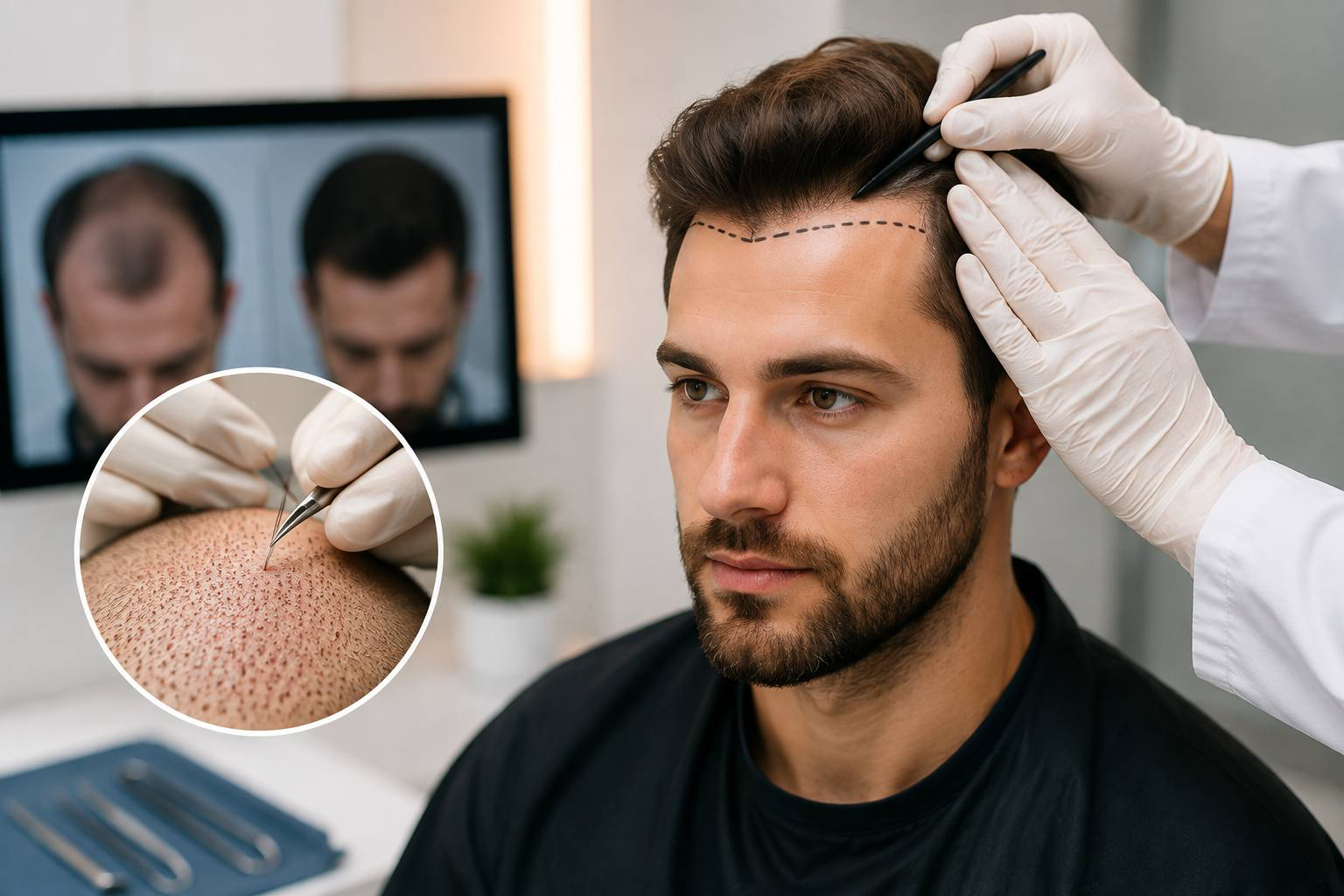
Once the procedure is over, the grafts are in place but not yet anchored. For roughly the first ten days they are fragile, which is why clinics are so specific about washing, sleeping and sun. At our partner clinics, hair transplant packages start from €2,000 and include the aftercare kit and the first supervised wash, so you leave knowing exactly what to do. Here is the two-week routine in plain terms.
Expect a tight, tender scalp and some swelling. Most clinics ask you to sleep semi-upright, on your back, with a travel pillow so the donor and recipient areas do not touch the bed. The next day the clinic removes the donor-area bandage and carries out the first wash, showing you the technique you will repeat at home.
You will usually be asked to wash once or twice a day with the lotion and shampoo from your kit, using foam and lukewarm water poured over the scalp rather than a direct shower jet. No rubbing, no fingernails. Scabs form around each graft and must come off on their own; picking is the single most common cause of lost grafts.
By the end of the first week the scabs start to soften, and around day ten most have flaked away. Your clinic will tell you when you can begin massaging the shampoo in more firmly. The scalp may still look red and the new hairs may look like small dots, which is normal at this stage.
Keep the scalp out of direct sun for the first weeks and wear a loose, clean hat only if your surgeon allows it. Avoid saunas, hot tubs, the sea and pools until cleared. Gym sessions and physical work are usually restricted for two to four weeks, in line with what your surgeon confirms.
From about week two to six the transplanted hairs shed, while the follicle stays in place. This is expected and is not a sign of failure. Keep following the routine until your clinic tells you the grafts are secure, and keep your follow-up check-ins by message or video call.
Redness, itching and scabbing are normal. Contact your clinic if you notice spreading redness, pus, fever, severe swelling that is increasing after day three, or pain that gets worse instead of better.
When can I wash my hair normally?
Usually after about ten days, once the scabs have gone. Your clinic will give you the exact date for your case.
Can I sleep on my side?
Not at first. Most clinics ask for back-sleeping, semi-upright, for the first several nights.
Is it normal for the donor area to feel numb or tight?
Yes, mild numbness and tightness in the donor area is common and settles over the following weeks.
For the full timeline up to the 12-month result, read our hair transplant recovery guide, or see details on the Hair Transplant page.
This page is general information, not medical advice. Suitability, technique and results are determined individually by a licensed doctor.
Send us what you already have — the pathology report, imaging on disc, discharge summaries. A specialist at a partner hospital will review it and tell you what is realistic in your case and how quickly treatment could begin. Reviewing your documents costs nothing and commits you to nothing.
Send your documents
Implants add size and shape, but sagging tissue may need a lift too — here is how surgeons decide which option fits in Turkey.
How a hair transplant for women differs from the male procedure, who is a good candidate, and what recovery looks like in Turkey.
How adjustable sutures work in adult strabismus surgery, and what to expect from double vision, redness and alignment in the first weeks.