Comparing a hair transplant in Skopje with Turkey: in-person follow-up and no flight against case volume and all-inclusive packages from €2,000.
10.09.2026
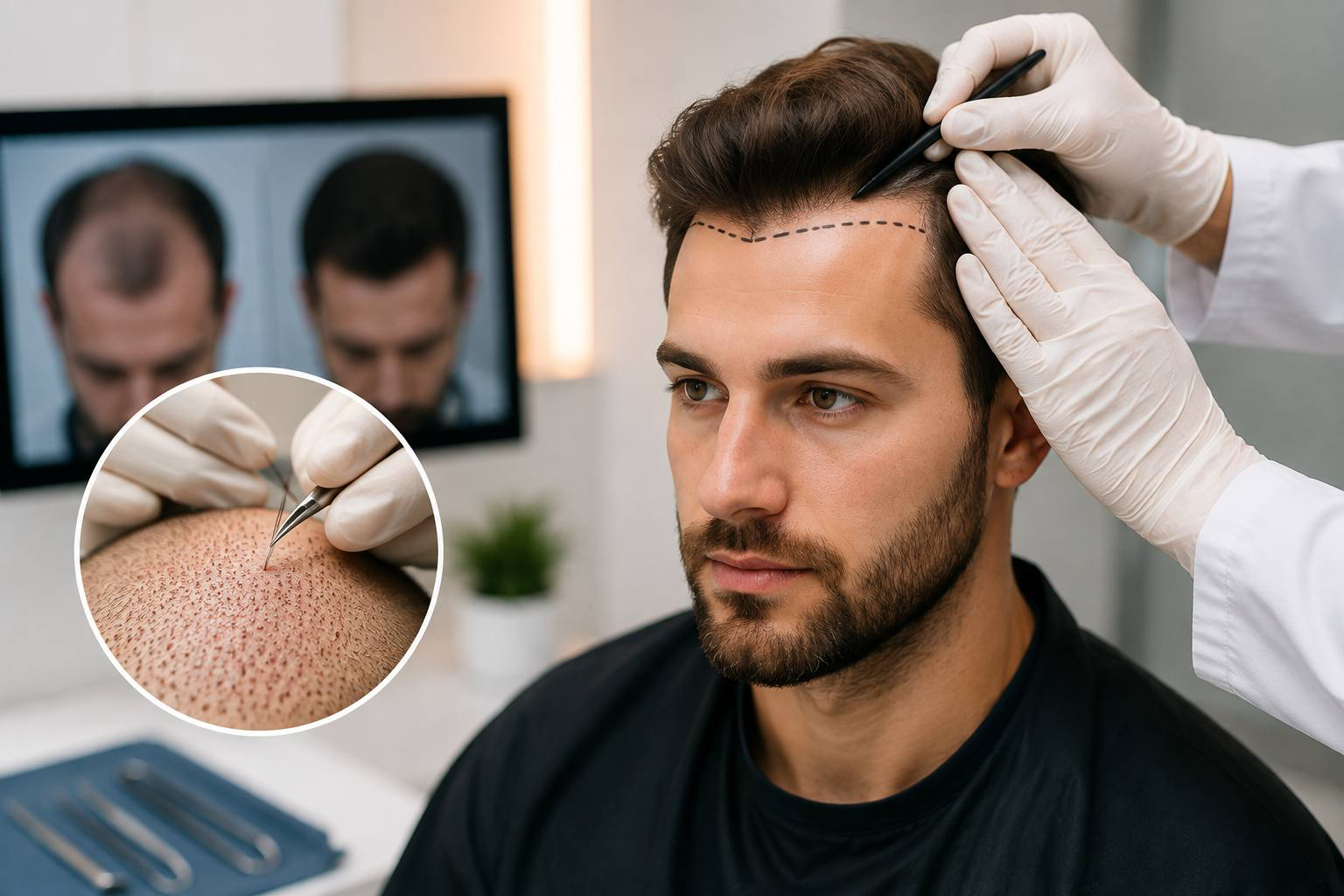
If you live in North Macedonia and are choosing between a clinic in Skopje and flying to Turkey, the honest answer is that neither is automatically correct. One buys you proximity and accountability you can reach on foot. The other buys you case volume and a package price. This article sets out what each side genuinely gives you, what it costs you, the questions that apply equally to both, and the cases where staying in Skopje is the better decision.
We do not name or rate any clinic in either country. What follows is how to compare them yourself.
Go where the surgeon and the plan are right, not where the country is cheaper. If a Skopje clinic can show you the surgeon who will operate, a graft number based on a proper examination of your donor area, and a follow-up path through month twelve, the argument for a flight weakens considerably. If it cannot, distance is not your main problem.
The reverse is also true. A Turkish package is only an advantage if the clinic behind it is licensed, the surgeon is identifiable, and someone answers you in your own language at week four when the shedding starts.
These advantages are real and they are routinely understated by everyone selling medical travel.
These advantages are also real, and they are not only about price.
If you are still deciding between techniques rather than countries, DHI or FUE covers where each one is actually the better choice.
Price is one row in this table, not the table.
| Factor | Skopje | Turkey |
|---|---|---|
| Travel | None | Return flight, not included in the package |
| Time away | The procedure day plus recovery at home | Typically two to three nights |
| What the price covers | Usually the procedure; ask what else is inside it | Package from €2,000 including hotel, transfers, first wash, aftercare kit and coordinator |
| Price basis | Ask whether it is per graft or per session, in writing | Package, quoted after a photo assessment |
| Language | Your own, throughout | Coordinator in your language; confirm this covers clinical conversations, not only logistics |
| Access to the operating surgeon | In person, before and after | Must be established before booking, not assumed |
| Case volume | Varies by clinic — ask for the annual number | Generally high |
| First wash and early aftercare | At the clinic, then at home | At the clinic before you fly home |
| Follow-up at months 6 and 12 | In person | By photograph, with a defined schedule and a named contact |
| If a complication appears | Seen locally, immediately | Assessed remotely first; ask in advance who examines you locally if needed |
| A second session | Same clinic, no travel | Another trip; ask the price now, not in a year |
Turkish package pricing looks implausible until you see what the same procedure costs where the market is structured differently. In the United States in 2026, FUE runs at $4–$10 per graft and FUT at $3–$7; a 1,000–2,000 graft session is $4,000–$10,000, 2,000–3,000 grafts is $7,000–$13,000, and 3,000–4,500 or more is $10,000–$15,000 and upwards. Most American patients pay $6,000–$12,000.
In the United Kingdom the average is around £3.25 per graft — roughly £6,500 at 2,000 grafts, £9,750 at 3,000 and £13,000 at 4,000. In one analysis of quotes gathered for the same patient, the lowest was £1,995 and the highest £15,000, which tells you how loosely the number relates to the surgery in any market.
The Turkish figure reflects volume, lower operating costs and packages built for travelling patients — not a different operation. The full breakdown is in our comparison of hair transplant costs in Turkey, the UK and the USA. A local Skopje quote should be requested directly and in writing, with the graft basis stated, so that you are comparing like with like.
This is the part that decides the outcome. Ask a Skopje clinic and a Turkish clinic exactly the same things, and compare the answers rather than the prices.
The licensing question is answerable for a Turkish clinic — how to check whether a Turkish clinic is licensed shows you where to look. Apply the same standard at home: a clinic that will not answer these questions in writing has told you something.
This is the honest weak point of medical travel, and it is manageable only if it is arranged before you fly, not after.
A properly organised follow-up is a schedule, not a promise. It means photographs taken to a defined protocol at set intervals — typically at the end of the first month, then at three, six and twelve months — sent to a named person who replies, with the clinic reviewing them and telling you whether what you are seeing is expected. Shedding at weeks two to six is expected. So is the flat period through month three, regrowth from month three to four, thickening through months six to nine, and an honest verdict on density at twelve months.
What a good coordinator arranges is the boring, decisive part: your medication and aftercare instructions in your own language, a contact who answers within a working day, an escalation route to the surgeon for anything clinical, and — crucially — clarity in advance about what happens if you need to be physically examined in Skopje. Ask who pays for that and who the clinic expects you to see. A clinic that has never been asked will not have an answer, and that itself is information.
There are cases where we would tell you not to fly, and it costs us nothing to say so.
The reviews you read about either option deserve the same scepticism — how to verify hair transplant clinic reviews sets out how to tell a verifiable account from a marketing one. If you want a Turkish package assessed against your own photographs, that is what our hair transplant service does, and the assessment is free.
Is a hair transplant cheaper in Turkey than in Skopje?
Turkish partner clinics quote all-inclusive packages from €2,000, with the final figure set after a photo assessment. A Skopje clinic should give you its own written quote with the graft basis stated. Compare the totals including flights, and compare what each price includes, not just the number.
What does the €2,000 package include?
Consultation and hairline design, the FUE or DHI procedure, medication and an aftercare kit, the first wash at the clinic, hotel, airport–clinic–hotel transfers and a coordinator in your language. Flights, PRP or mesotherapy sessions, medication continued at home and any later second session are not included.
How many days do I need to stay in Turkey?
Most hair transplant patients stay two to three nights — arrival and consultation, the procedure day, and the first wash before flying home.
What happens if something goes wrong after I fly back to Skopje?
Agree the answer before you book. A serious clinic gives you a named contact, a defined photo follow-up schedule and a route to the surgeon. Ask specifically what happens if you need a physical examination at home, and who arranges it.
Do I need to speak English or Turkish?
No. Coordinators work in the patient's language. Confirm that this covers clinical conversations with the surgeon, not only transfers and hotel arrangements.
Is it safer to have it done locally?
Safety follows the clinic, the surgeon and the licence — not the border. What staying local genuinely gives you is faster access if something needs to be looked at, which matters more for some patients than for others.
Prices quoted here are approximate 2026 market figures that change with exchange rates and clinic policy. This page is general information, not medical or legal advice; eligibility, technique and the outcome you can expect are determined individually by a licensed physician.
Send us what you already have — the pathology report, imaging on disc, discharge summaries. A specialist at a partner hospital will review it and tell you what is realistic in your case and how quickly treatment could begin. Reviewing your documents costs nothing and commits you to nothing.
Send your documents
Implants add size and shape, but sagging tissue may need a lift too — here is how surgeons decide which option fits in Turkey.
How a hair transplant for women differs from the male procedure, who is a good candidate, and what recovery looks like in Turkey.
How adjustable sutures work in adult strabismus surgery, and what to expect from double vision, redness and alignment in the first weeks.