A practical guide to graft counts for a hair transplant in Turkey: what a graft is, typical numbers by hair-loss pattern, what your donor area allows, and why "unlimited grafts" is a warning sign.
08.09.2026
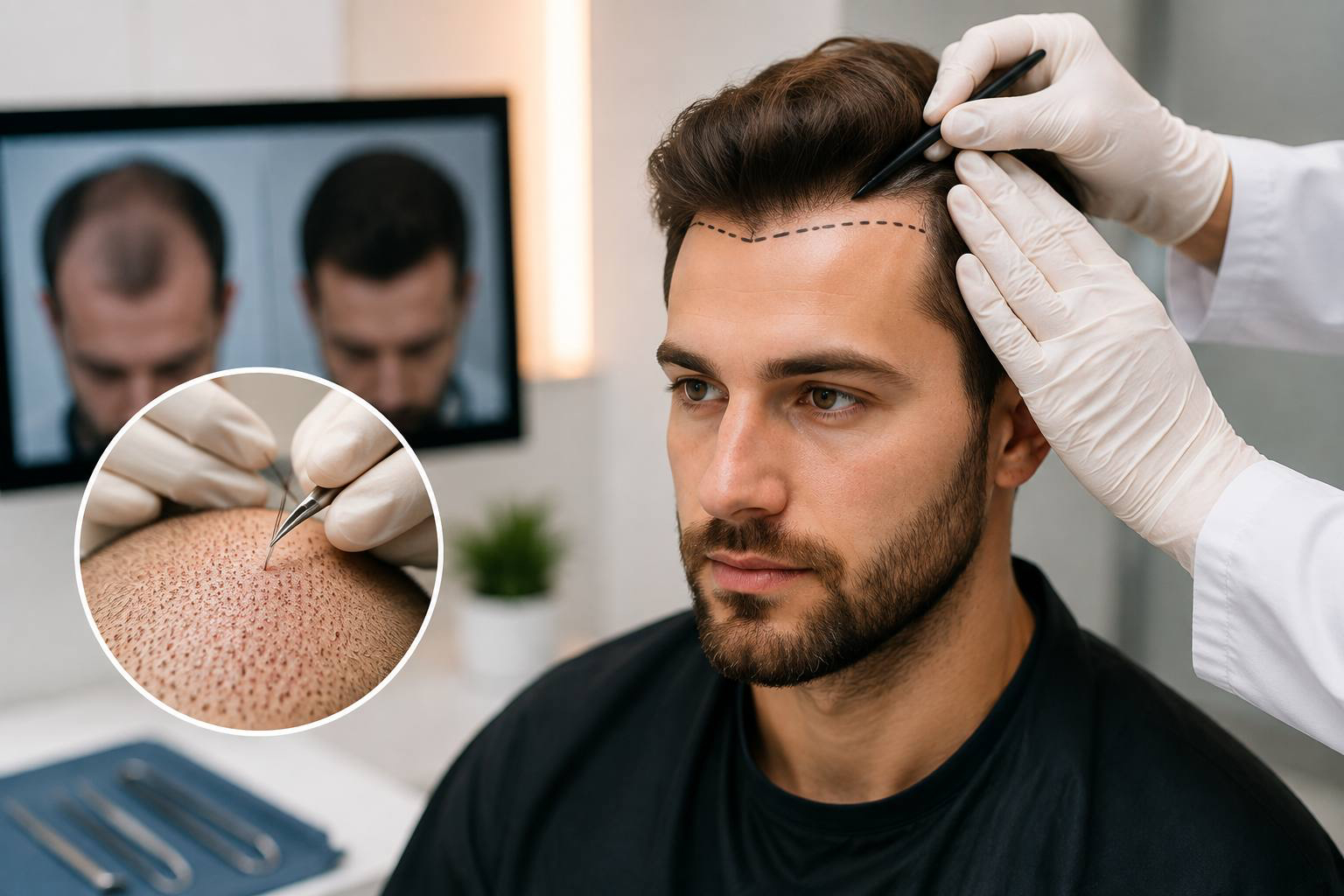
Almost every quote you receive from Turkey will be built around grafts. Change the graft count and the price changes, the length of the operation changes, and so does what your hairline can realistically look like in a year. Yet many patients book without ever being told a firm figure, or are handed a number so large it could not physically come from their own head. This guide explains how the number is arrived at, what is normal for each pattern of hair loss, and what to ask before you pay a deposit.
A graft is a follicular unit: a small piece of tissue containing one, two, three or occasionally four hairs that grow together naturally. This is why 3,000 grafts is not 3,000 hairs — depending on your hair, it is usually somewhere between 6,000 and 7,500 hairs. Some clinics quote in hairs rather than grafts precisely because the bigger number reads better in an email. When you compare two quotes, make sure both are counting the same thing, and ask for the expected average hairs per graft.
Real cases vary, but the working ranges surgeons use are fairly consistent. A receding hairline and temples usually needs 2,000–2,500 grafts. The crown, which is a circular area and needs density from every direction, typically takes 1,500–2,500 on its own. A full restoration of the front, mid-scalp and crown lands at 4,000 or more, and is often the point at which a surgeon starts talking about two sessions. A small refinement — softening a mature hairline, filling a scar, thickening a temple point — can be done with 800–1,500.
The grafts have to come from somewhere: the back and sides of your head, where hair is genetically resistant to thinning. That zone holds a finite lifetime supply, usually in the region of 5,000–7,000 grafts across all sessions, and taking too much at once leaves the donor area visibly thin — a result that is far harder to fix than a sparse recipient area. A surgeon assessing your photos is measuring donor density as carefully as the bald area. If your donor is modest, the honest answer is a smaller, well-placed transplant rather than a large one.
Packages advertised as unlimited or "maximum grafts" sound generous and mean the opposite: the clinic, not you, decides the number on the day, and the fixed price gives them no reason to be conservative. Over-harvesting is the classic outcome. A quote worth trusting states a specific graft count, or a narrow range, in writing before you fly, along with what happens to the price if the surgeon finds on the day that fewer or more are appropriate.
Beyond roughly 4,000–4,500 grafts in a sitting, most surgeons prefer to split the work. Two sessions spaced nine to twelve months apart let the donor area recover, let everyone see how the first pass has grown, and allow the second session to be planned against a real result rather than an estimate. If your pattern clearly needs more than one session, you want to know that at the quote stage — including whether the second is priced separately, which it almost always is.
The sequence that protects you is simple. You send clear photos of the hairline, top, crown and donor area in good light. The surgeon — not a sales coordinator — estimates the graft count and the technique, FUE or DHI, and that estimate goes into a written quote. On arrival, the hairline is drawn and agreed with you in a mirror before anything begins, and the final graft count is confirmed at that point. Nothing about the number should be a surprise on the operating table.
Can I just ask for the maximum number of grafts?
You can ask, but a good surgeon will decline. The limit is your donor supply and how much of it should be spent now versus kept in reserve for hair loss that continues over the next decade.
Two clinics quoted me very different graft counts for the same photos. Who is right?
Usually the lower one. Inflated counts are a sales tactic, and the physical ceiling of a donor area does not change between clinics. Ask each to explain how they arrived at the figure and what the donor density is.
Does a higher graft count mean a better result?
No. Placement, angle and density distribution matter more than volume. A well-designed 2,500-graft hairline looks better than a poorly planned 4,000.
Related reading
Hair transplant recovery week by week
Is your Turkish clinic licensed?
Hospital, clinic or agency: who are you buying from?
This page is general information, not medical advice. Suitability, technique and results are determined individually by a licensed surgeon.
Send us what you already have — the pathology report, imaging on disc, discharge summaries. A specialist at a partner hospital will review it and tell you what is realistic in your case and how quickly treatment could begin. Reviewing your documents costs nothing and commits you to nothing.
Send your documents
Realistic minimum waiting times before flying home after the most common procedures in Turkey, why surgeons set them, and how to book flights that can move.

A realistic recovery timeline after intracorneal ring segment implantation for keratoconus in Turkey, from the first blurry days to when vision finally settles.

A realistic recovery timeline after strabismus surgery in Turkey, from the red eye and double vision of the first days to the point where the alignment finally settles.