Why smile makeover plans differ so widely in size, how far back the smile line really goes, and how to tell a clinical reason from a commercial one.
24.08.2026
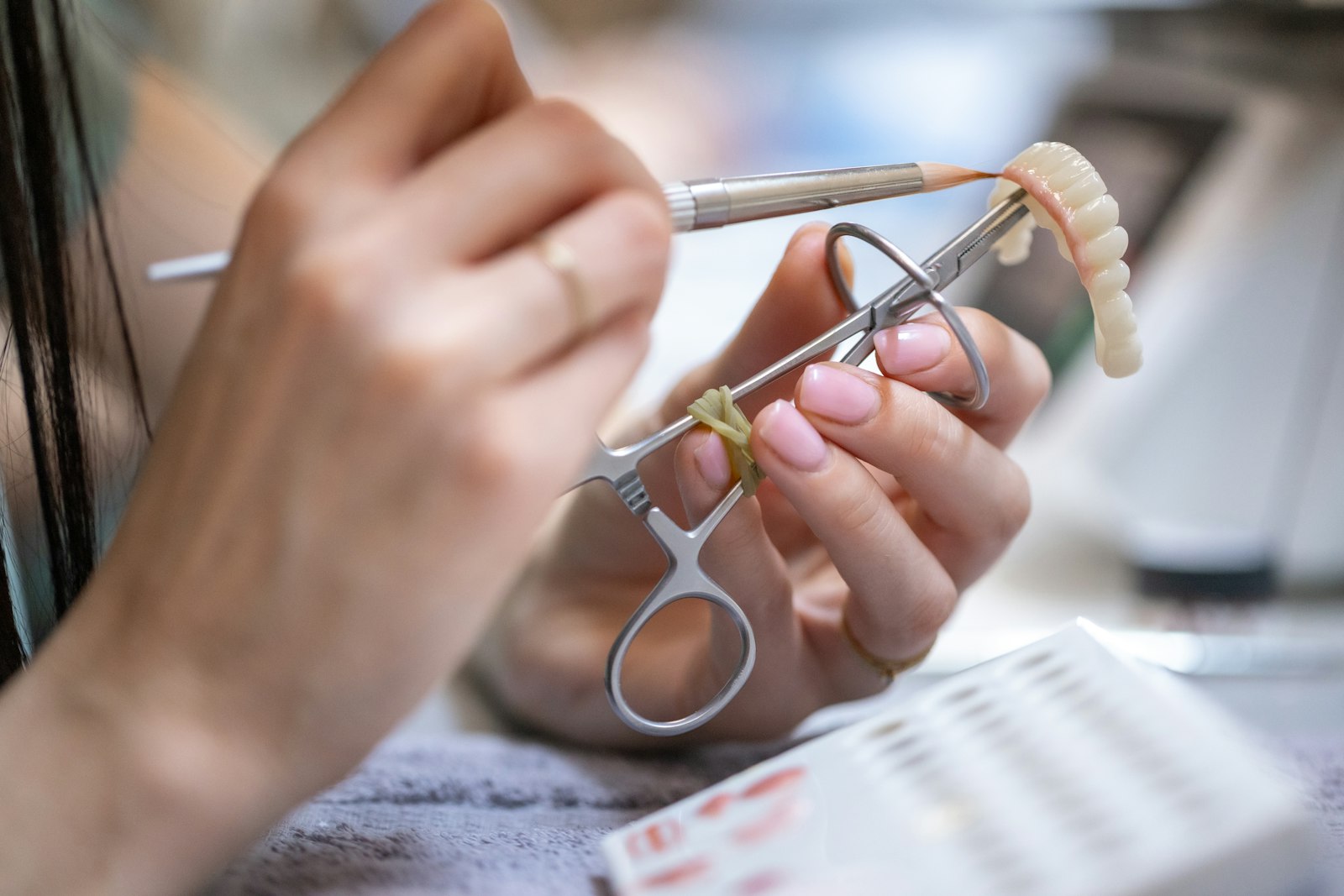
Send photographs of your teeth to several clinics and the quotes that come back will often disagree not about price per unit but about how many units you need. One proposes eight. Another twenty. A third suggests twenty-eight — every visible tooth, both jaws. Because the unit count is the plan, a veneer and crown package in Turkey should name each tooth it covers before you agree to anything.
Since each unit is a permanent alteration to a tooth, this is a more consequential disagreement than the price. Here is what actually drives the number.
The teeth visible when you smile are usually the front six to ten in the upper jaw. Beyond the first premolars, visibility depends on how wide your smile is, the shape of your lips and the width of your dental arch. Some people show second premolars and first molars at full smile; many do not.
This is measurable. Photographs at rest, at conversational smile and at full smile show precisely which teeth appear. A clinic proposing to restore teeth that never show should be able to explain what that achieves.
The lower teeth are a separate question again. They show far less in most people, and restoring the upper arch alone is a common and entirely legitimate plan.
Not every large plan is overselling. Several sound reasons make a bigger number correct.
Shade matching. Ceramic and enamel reflect light differently, and matching a restoration to a neighbouring natural tooth is one of the harder things in dentistry. If you want a substantially lighter shade than your natural teeth, the mismatch has to end somewhere less conspicuous — which is why plans extend to the premolars rather than stopping at the canines. Extending the plan is a real solution to a real problem. It is also a problem created by choosing a shade far from your own.
The bite. If restoring the upper teeth changes how the jaws meet, the lower teeth may need adjustment or restoration to establish a stable bite. Genuine, and it should be explained in terms of your specific bite rather than as a general principle.
Teeth that need treatment anyway. A back tooth with a large failing filling or a crack may need a crown for its own sake. That is dentistry rather than cosmetics, and it should be identified as such on the plan.
Correcting alignment without orthodontics. Making crooked teeth look straight by restoring them requires working across enough teeth to redistribute the alignment. This is where plans expand most, and it is where the trade-off deserves the most attention — because moving teeth with aligners costs no tooth structure at all, and restoring them costs a great deal.
A plan that does not vary tooth by tooth. Real mouths are uneven, and a proposal to treat every tooth identically usually reflects a product rather than a diagnosis.
A number quoted before any examination or imaging. "Twenty units" arriving in reply to a photograph is a price list, not a plan.
Package pricing by arch. Where the price is per jaw rather than per tooth, the incentive runs towards restoring the whole jaw, since a smaller plan costs the clinic the same and earns less.
No mention of alternatives. Whitening, bonding, gum contouring, aligners, or replacing a few old fillings can address a great deal at far lower biological cost. A plan that has not considered them has skipped a step.
Enthusiasm for treating healthy teeth. A sound tooth, correctly positioned, with good colour, has nothing to gain from a crown and a great deal to lose.
Whitening costs no tooth structure at all and is reversible in the sense that nothing has been removed. If the complaint is colour, this is the first conversation.
Composite bonding adds material to the tooth rather than removing it, and can close small gaps, repair chips and reshape edges. It stains sooner than porcelain and needs maintenance, but very little is sacrificed.
Aligners. If the complaint is crooked teeth, moving them costs nothing biologically. The reason this is rarely the recommendation in a travel context is duration — months of treatment, not a week. Some patients combine aligners at home with a small number of restorations afterwards, which produces a better result with a fraction of the tooth reduction.
Gum contouring. Where the problem is a gummy smile or an uneven gum line, reshaping the gum rather than the teeth may be the whole answer.
Replacing old fillings. Sometimes discoloured front teeth are simply carrying discoloured old composite. Renewing it is a far smaller intervention than a crown.
Ask each one to specify, tooth by tooth, which teeth are treated, whether each receives a veneer or a crown, and the clinical reason for that particular tooth. A plan that survives this question is a plan.
Then compare on the same basis. The cheaper quote for twenty-eight units is not cheaper than a considered quote for ten — it is a different treatment.
Ask what would happen if you restored fewer teeth. There is usually an honest answer, sometimes cosmetic, sometimes functional. Being told simply that fewer is not possible is less informative than being told what the compromise would be.
Is twenty-eight units ever appropriate?
In a mouth with generalised wear, extensive existing restorations or a collapsed bite, full-mouth rehabilitation is a recognised treatment and can be the right one. What makes it appropriate is the condition of the teeth, not the desired appearance of the front eight.
Can I start with fewer and add more later?
Often yes, and it is a reasonable approach — restore what shows, live with it, and extend later if the boundary is visible. Shade matching to work fitted years earlier is harder, so ask how the clinic would handle that.
How do I know if my teeth are healthy enough not to need crowns?
Through examination and radiographs, from a dentist with no stake in the treatment plan. A check-up at home before you commit to anything abroad is inexpensive and gives you an independent baseline for what is actually wrong with your teeth.
Related reading
How Much Tooth Is Removed for Veneers and Crowns
How Veneers and Crowns Look Ten Years On
Healing after implants and veneers
This page is general information, not medical advice. How many teeth require restoration, and which type, is determined by a licensed dentist after clinical examination and radiographs.
Send us what you already have — the pathology report, imaging on disc, discharge summaries. A specialist at a partner hospital will review it and tell you what is realistic in your case and how quickly treatment could begin. Reviewing your documents costs nothing and commits you to nothing.
Send your documentsUnhappy with a surgery result abroad? How to tell unfinished healing from a real problem, what a revision involves, who pays, and where to go next.
Silicone oil removal after vitrectomy: why the oil is used, how long it stays, how the second operation works and what vision does afterwards.
How children treatment in Turkey actually works: the accompanying parent, documents for a minor, school, language, paediatric specialties and what to send.