How full-arch implant options differ, what happens when one implant fails in each design, and the long-term complications worth knowing about in advance.
24.08.2026
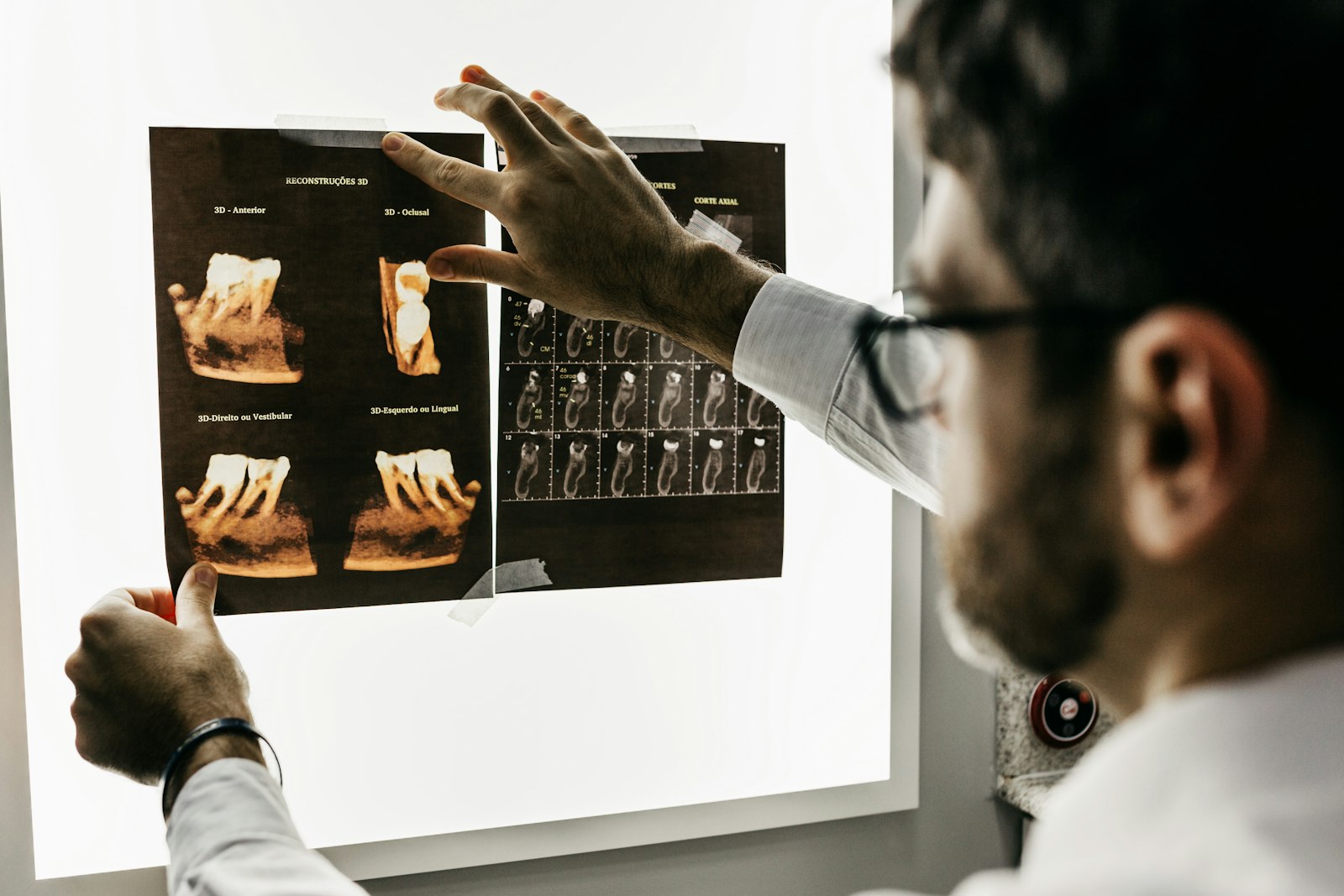
Full-arch implant treatment replaces every tooth in an upper or lower jaw with a single fixed bridge, supported by four, six or occasionally eight implants. For someone with failing teeth or existing dentures it can be transformative, and it is one of the most-requested treatments in dental tourism. It is worth being clear, then, about what a full-arch dental package in Turkey actually covers, because the photographs never show the stages behind them.
The marketing tends to stop at the transformation. What follows covers how the designs differ, what happens when something goes wrong, and what maintaining one of these looks like over twenty years.
All-on-4 places four implants per arch: two at the front, set vertically, and two towards the back, angled to catch bone that is available without entering the sinus. All-on-6 uses six, generally more evenly distributed.
One useful detail, which one of the Turkish clinics states openly: "All-on-4" often is not four. On the upper jaw, where bone is softer and loads are different, that same clinic describes placing five or six implants under an all-on-4 label. The name has become a category rather than a count. If it matters to you how many implants you are receiving — and it should — ask for the number, not the name.
This is the part most worth understanding, and to their credit one of the clinics we reviewed explains it plainly.
With six implants, losing one still leaves five. The bridge usually stays supported while that site heals and a replacement implant is placed. Treatment continues around the problem.
With four, losing one is the collapse of the support scheme. The remaining three cannot reliably carry a full arch, so the bridge typically comes out until the site is regrafted, healed and a new implant integrated. That is months in a temporary, and it is why the four-implant design demands more of both the bone and the surgeon.
Four is not a bad option. It exists because it lets many patients avoid grafting entirely, and in the right bone it performs well. It is a design with less redundancy, and that trade-off should be an explicit part of the conversation rather than a discovery.
Angling the rear implants is what allows all-on-4 to avoid a sinus lift in many upper jaws. Where bone volume is genuinely inadequate, grafting or a sinus lift is still needed, and the effect on the schedule is significant: one clinic gives three to five days in Turkey for the grafting procedure itself, and adds three to six months to the overall healing timeline before the permanent prosthesis can be made.
That is the difference between a two-trip plan and a plan running well over a year. It is decided by your CT scan, not by the package you selected, which is why a treatment plan issued without a CT scan is not a treatment plan.
Success rates quoted for implants are high — the range published across the sector runs from roughly 93 to 98 per cent depending on procedure — and those figures are broadly sound. They describe the implant integrating and surviving, not the prosthesis being trouble-free.
Peri-implantitis. Inflammation and progressive bone loss around an implant, driven by bacteria and hard to reverse once established. It is the leading cause of late implant loss. On a full arch it is also harder to detect early, because the bridge covers everything.
Ceramic chipping. Fractures of the ceramic surface of the bridge are among the most frequent mechanical complications in full-arch work. Small chips are polished; larger ones need the bridge removed and repaired or remade.
Screw loosening. Routine, expected, and easily fixed by a dentist who can access the screw holes. This is a further argument for a screw-retained rather than cemented design, and for keeping records of the system used.
Framework fracture. Rare, serious, and usually meaning a new prosthesis.
Prosthesis wear. The bridge itself is a wearing part. Acrylic-based prostheses commonly need replacement after roughly ten to fifteen years even when every implant is perfectly healthy. The implants are the permanent element; the teeth on top are not.
A full-arch bridge is fixed — you cannot take it out — and it sits slightly above the gum, with a space underneath that has to be cleaned daily with specific tools: a water flosser, superfloss or interdental brushes threaded beneath the bridge. Ordinary brushing does not reach it.
Professional maintenance means periodic removal of the bridge for cleaning and inspection underneath, typically annually. Plan for who will do this near where you live, and confirm they can work with your system, before you commit to treatment abroad.
Is All-on-6 better than All-on-4?
Not universally. Six gives more redundancy and better load distribution; four may avoid grafting and shorten treatment. The right answer comes from your bone volume and density on a CT scan, your bite forces and your medical history — not from a package tier.
How long does a full-arch bridge last?
The implants can last decades. The bridge on top typically needs replacing after ten to fifteen years, sooner with heavy grinding. Budget for that replacement as part of the true lifetime cost.
Can I get a full arch if I have been told I have insufficient bone?
Frequently yes — through angled implants, grafting, or in selected cases zygomatic implants anchored in the cheekbone. These are more complex procedures requiring specific surgical experience, so ask how many the surgeon performs and see the CT-based plan before committing.
Related reading
Bone Grafting and Sinus Lifts Before Implants
Dental Implants: One Trip or Two?
How Veneers and Crowns Look Ten Years On
This page is general information, not medical advice. Suitability for full-arch treatment, the number of implants required and the need for grafting are determined individually by a licensed implant surgeon after CT imaging.
Send us what you already have — the pathology report, imaging on disc, discharge summaries. A specialist at a partner hospital will review it and tell you what is realistic in your case and how quickly treatment could begin. Reviewing your documents costs nothing and commits you to nothing.
Send your documentsUnhappy with a surgery result abroad? How to tell unfinished healing from a real problem, what a revision involves, who pays, and where to go next.
Silicone oil removal after vitrectomy: why the oil is used, how long it stays, how the second operation works and what vision does afterwards.
How children treatment in Turkey actually works: the accompanying parent, documents for a minor, school, language, paediatric specialties and what to send.