Why some jaws need rebuilding before implants can be placed, how much time grafting adds, and what it does to a treatment plan booked around one flight.
24.08.2026
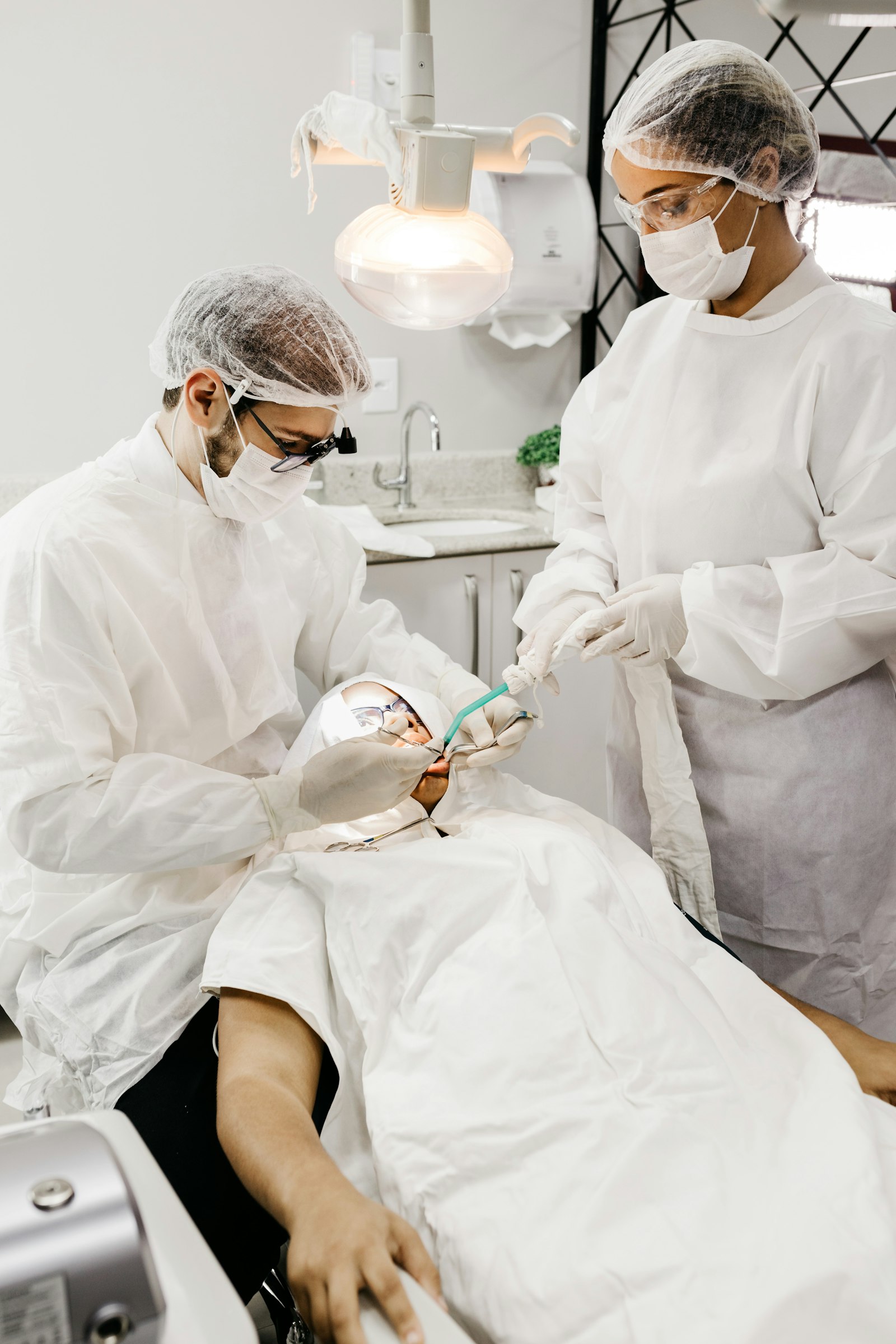
An implant is only as stable as the bone holding it. Where a tooth has been missing for years, the bone that once surrounded its root shrinks — in width, in height, or both. Sometimes there is enough left to work with. Sometimes there is not, and the bone has to be rebuilt first. Which of those two you are is a CT scan question rather than a brochure question, and it is the first thing settled when planning staged implant work in Turkey.
That rebuilding is the single most common reason a dental trip abroad turns out longer, more expensive and more complicated than the version in the quote. It is also entirely predictable from a CT scan, which is why the scan should come before the plan and before any deposit.
Bone around a tooth root exists because the root loads it. Remove the tooth and the stimulus goes with it. Resorption is fastest in the first year after extraction and continues, more slowly, indefinitely.
Gum disease accelerates it, because periodontitis destroys the supporting bone before the tooth is even lost. Long-term denture wearing contributes too — a denture rests on the gum and does not load the bone the way a root does. This is why people who have worn full dentures for many years often have the least bone available for the implants they now want.
Socket preservation. Graft material placed into the socket at the moment of extraction, to limit the shrinkage that would otherwise follow. Adds very little to the appointment, and often removes the need for a larger graft later. If you are having teeth removed with implants planned, ask about it before the extraction, not after.
Guided bone regeneration. Graft material plus a membrane placed alongside a ridge that is too narrow or too short. Used for localised deficiencies, and frequently done at the same time as implant placement when the shortfall is modest.
Block grafting. A block of bone, taken from elsewhere in the jaw or from a donor source, fixed in place with screws to rebuild a substantially deficient ridge. The most invasive option and the slowest — one clinic quotes roughly four extra months before implants can follow.
Sinus lift. Specific to the upper back jaw, where the sinus cavity sits directly above where the implant needs to go. The sinus membrane is lifted and graft material placed beneath it to create height. A closed or internal lift is done through the implant site itself and is relatively minor. An open or lateral lift is a separate surgical procedure through a window in the side of the jaw, and needs months of healing before implants can be placed.
Four categories, all in routine use: your own bone, harvested from another site in your jaw; human donor bone from a tissue bank, processed and sterilised; animal-derived bone, usually bovine, processed to remove all organic material; and fully synthetic material.
Each has an established evidence base. Which is chosen depends on the defect, the surgeon's preference and sometimes on the patient's own beliefs — donor and animal-derived materials matter to some people for religious or personal reasons, and it is a reasonable question to ask in advance rather than to discover on an invoice.
These are the figures published by Turkish clinics themselves, and they are consistent with international practice:
Sinus lift — five to ten days of initial healing, four to six months for the bone to fuse before implants can be loaded. Bone grafting — seven to fourteen days of initial healing; implants placed anywhere from three to nine months later depending on the extent. Block graft — approximately four additional months on top of the standard implant timeline. Overall, one clinic states plainly that grafting or a sinus lift extends the healing timeline by three to six months.
Add that to the three to six months implants need to integrate, and a case requiring a staged graft runs from roughly nine months to over a year from first appointment to final teeth. That is not a complication or a delay — it is the normal duration of that treatment, and any plan that does not reflect it has not accounted for the grafting.
Grafting is frequently outside the advertised package. Graft material is billed by volume, membranes separately, sinus lifts as their own procedure, and the extra visits and imaging on top.
The practical problem is sequencing: the need for grafting is sometimes identified only once surgery has begun, which is the worst possible moment to be presented with a price. Ask, before travelling, what a graft would cost if one turns out to be needed, and get the figure in writing. A clinic that has read your CT scan can answer that question.
Smoking is the big one — it impairs blood supply to the graft, and grafting is the procedure where this matters most. Clinics commonly ask for at least two weeks without smoking before implant surgery; for grafting, longer is better.
Uncontrolled diabetes, certain bone medications including bisphosphonates, previous radiotherapy to the jaw, and active gum disease all affect outcomes, and all need to be disclosed at the planning stage. Bisphosphonates in particular, whether current or historical, must be mentioned — this is not information a clinic can guess at.
Can I avoid a bone graft?
Sometimes. Angled implants, shorter implants, or in the upper jaw zygomatic implants anchored in the cheekbone can use available bone rather than creating new bone. Whether any of these applies is a question for the CT scan and for a surgeon experienced in the specific technique.
Is a sinus lift dangerous?
It is a routine procedure with high success rates in experienced hands — published survival figures for implants placed in lifted sinuses run in the region of 93 to 97 per cent. The main risk is perforation of the sinus membrane, which is usually repaired during the same procedure. Sinus infection and graft failure are less common outcomes.
Will I know before I travel whether I need grafting?
You should. A CT scan taken locally and sent for review allows the clinic to plan properly and to quote realistically. If a clinic will produce a full treatment plan and a fixed price without ever seeing a 3D scan, that plan carries a risk it has not disclosed.
Related reading
Dental Implants: One Trip or Two?
All-on-4, All-on-6 and Full-Arch Implants
What a Dental Package Does Not Include
This page is general information, not medical advice. The need for grafting, the choice of technique and healing times are determined individually by a licensed implant surgeon after CT imaging and medical review.
Send us what you already have — the pathology report, imaging on disc, discharge summaries. A specialist at a partner hospital will review it and tell you what is realistic in your case and how quickly treatment could begin. Reviewing your documents costs nothing and commits you to nothing.
Send your documentsUnhappy with a surgery result abroad? How to tell unfinished healing from a real problem, what a revision involves, who pays, and where to go next.
Silicone oil removal after vitrectomy: why the oil is used, how long it stays, how the second operation works and what vision does afterwards.
How children treatment in Turkey actually works: the accompanying parent, documents for a minor, school, language, paediatric specialties and what to send.