The best hair transplant result is decided by donor density, hairline design and the agreed graft number — not by which clinic ranks first in your search.
10.09.2026
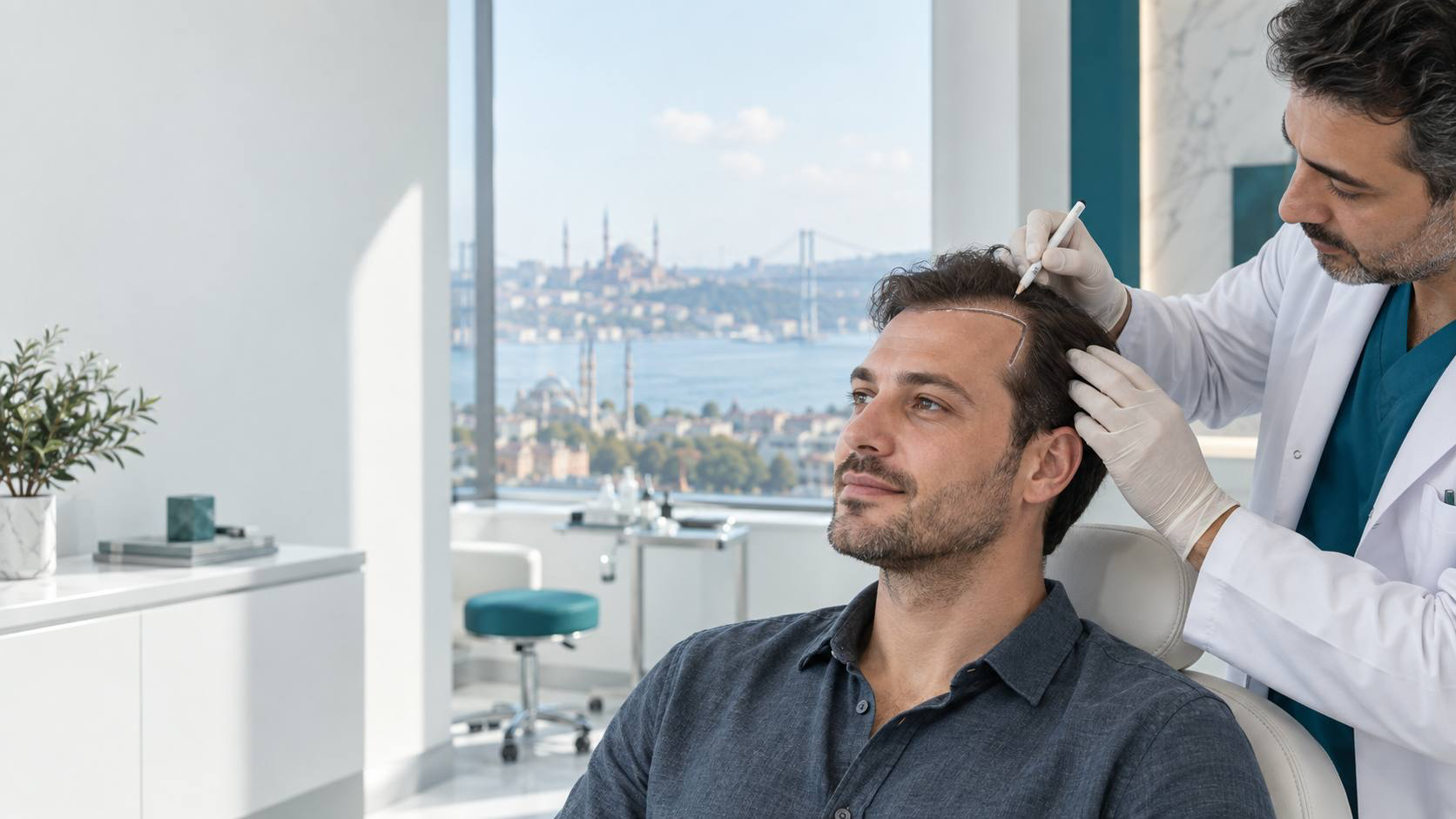
Two of the most common searches in this field — best hair transplant and hair transplant near me — return the answers that ranking and geography produce, not the answers that surgical outcomes produce. Neither term describes anything that changes what grows on your head twelve months later. Cost behaves the same way: our partner clinics in Turkey work from an all-inclusive package starting at €2,000, but the figure on the quotation is not what decides the outcome either. This article sets out the factors that actually decide the result, which of them are fixed before you book anything, and what to ask for in writing instead.
There is no best clinic in a field where the outcome depends on your donor area, your pattern of loss and a plan built for your head. A clinic that produces excellent work on a 2,000-graft hairline may be the wrong choice for a 4,500-graft restoration, and the reverse is equally true. “Best” also ranks the pages that invest in ranking, which is a marketing budget, not a surgical record.
“Near me” fails differently. Proximity is worth something — follow-up is easier, a complication is easier to review in person — but it is a convenience factor, not a quality factor, and it is a weak one against how far quotes for the same operation vary. In one analysis of UK quotes given to the same patient the lowest was £1,995 and the highest £15,000. Price spread of that size within a single country tells you that the market is not sorted by quality in any way a search engine can read.
The useful searches are narrower: how to verify a clinic's licence, who performs which stage of the operation, how many grafts a specific surgeon proposes for your specific photographs.
The single largest variable in your result was set at birth. A transplant moves follicles from the permanent zone at the back and sides of the scalp to the thinning area. How many can be moved, and how much coverage they produce, depends on quantities no clinic controls:
An honest consultation begins here, with an assessment of your donor area, and gives you a realistic maximum for a lifetime rather than for one session. A clinic that quotes a graft number before looking properly at the donor area is selling a session, not planning a result.
The hairline is the part of the operation that is permanent in the most literal sense: grafts placed too low or too straight cannot be un-placed, and correcting them costs donor hair you will not get back.
A well-designed hairline sits where a mature hairline sits, follows the shape of your face, keeps the temporal recessions rather than filling them square, and uses single-hair grafts at the leading edge so the transition is soft rather than a line. It is designed for the head you will have at fifty, with further native loss behind it, not for the photograph you want next year.
Ask to see the design drawn on your own photograph, agreed before the operating day and not sketched on your scalp an hour before the anaesthetic. If a clinic will not commit the design to writing, that tells you who is making the decision.
“As many as needed” is not a plan. It leaves the clinic free to place fewer grafts than you assumed and equally free to over-harvest the donor area, which is the more damaging of the two.
Typical requirements give you a scale to check any quotation against: a receding hairline usually needs 2,000–2,500 grafts, the crown 1,500–2,500, and a full restoration 4,000 or more. If your quotation says something very different from the range for the area you are treating, the difference should be explained in the consultation, not discovered in theatre. The same applies to technique — the arguments for and against each are in our comparison of DHI and FUE, and the technique should follow the plan rather than the price list.
| Factor | Who or what controls it | How to check it before you book |
|---|---|---|
| Donor density and hair characteristics | Your biology; fixed before you book anything | A written donor assessment and a realistic lifetime graft estimate |
| Hairline design | The surgeon | The design marked on your own photograph and agreed in advance |
| Graft number | The plan, limited by the donor area | A figure in the quotation, never “as many as needed” |
| Who performs each stage | The clinic's staffing model | Ask who opens the channels and how many patients the surgeon has that day |
| Aftercare and native-hair treatment | You and the clinic together | A written protocol, plus a medical plan for the hair you still have |
| Touch-up policy | The contract | In writing before the deposit: what qualifies, when, and who pays |
| Distance from your home | Nothing about the surgical result | Weigh it for travel and follow-up only |
In most high-volume clinics the surgeon consults, designs the hairline and opens the recipient channels, while trained technicians extract and place the grafts. This is standard practice and a stable, experienced team is an asset. The problem is not delegation; it is undisclosed delegation, and the patient who believed a named surgeon would perform the whole operation.
Put the question directly and expect a direct answer:
Verify the setting as well as the people: our guide to checking whether a Turkish clinic is licensed covers how to confirm the facility and the physician independently of what the website says.
Photographs are the main evidence most clinics offer and the weakest evidence available. Even honest ones are shaped by variables that have nothing to do with surgery:
What is worth asking for: full sets from one patient in the same lighting and angle at the same time point, cases with a starting pattern like yours, and results photographed at twelve months rather than at three. Patient-reported outcomes have their own pitfalls, which we set out in how to read and verify hair clinic reviews.
Density is judged at twelve months. Not at three, when almost nothing has grown, and not at six, when the result is half-built. Transplanted hairs shed at weeks two to six, regrowth starts at month three to four and thickens through months six to nine. Anyone who judges their result before a year has passed is judging an unfinished operation, and the full pattern is set out in our week-by-week recovery timeline.
Two things in that year are within your control. The first is aftercare: washing as instructed, sleeping position, avoiding friction, sun and heavy exertion in the early weeks. The second matters more and is skipped more often — a transplant redistributes hair, it does not cure androgenetic alopecia, so the native hair around the transplanted zone keeps thinning unless it is treated. A plan for that hair should be part of the consultation. Without it, a good result at year one can look patchy at year five for reasons the surgery never addressed.
Finally, the touch-up policy. Most large restorations are staged, and small areas sometimes need refinement after the twelve-month assessment. Get in writing before you pay a deposit what counts as a touch-up, how long the offer lasts, who decides whether you qualify, and whether the second procedure, the travel and the accommodation are covered. Verbal reassurance from a coordinator is not a policy. What a package does and does not include — accommodation, transfers, aftercare kit, the first wash — is set out on our hair transplant service page.
Some patients are asking for something surgery cannot deliver, and the surgeon who says so plainly is the one to trust.
If the donor area cannot supply what the recipient area demands — advanced loss with a thin donor zone — no technique, price or country changes the arithmetic. The realistic offer is improved framing of the face, not the density of your twenties, and a clinic promising full coverage in that situation is planning to over-harvest your donor area or to leave you with thin coverage spread too widely.
Other situations where the honest answer is not yet or not at all: rapid ongoing loss in a young patient, where medical treatment and a stable pattern should come first; hair loss that has not been diagnosed, including scarring alopecia, patchy loss and shedding after illness or medication; an untreated scalp condition; and an expectation set by a photograph of someone with different hair on a different head. Being told this before you pay is worth more than any guarantee offered after.
Which clinic gives the best hair transplant results?
There is no single answer, because the result depends on your donor area and the plan built for it. Compare the specifics — donor assessment, hairline design, agreed graft number, who operates, touch-up policy — rather than a ranking.
Should I choose a clinic near me?
Proximity makes follow-up easier and is worth something, but it says nothing about surgical quality, and prices for the same operation vary enormously within one country. Decide on the plan and the people first, then weigh travel.
How many grafts do I need?
Broadly, 2,000–2,500 for a receding hairline, 1,500–2,500 for the crown and 4,000 or more for full restoration — but the figure that matters is the one a surgeon proposes after assessing your donor area and puts in the quotation.
When can I judge whether my transplant worked?
At twelve months. Transplanted hairs shed at weeks two to six, regrowth begins at month three to four and thickens through months six to nine.
Are before-and-after photos reliable?
Only in a limited way. Lighting, angle, wet versus dry hair and styling change apparent density, and every clinic publishes its best cases. Ask for full sets from one patient, taken under the same conditions at twelve months.
What should a touch-up policy say?
What qualifies as a touch-up, the time limit, who decides, and whether the procedure, travel and accommodation are included — all of it in writing before the deposit.
Prices quoted here are approximate 2026 market figures and change with exchange rates and clinic policy. This page is general information, not medical or legal advice; eligibility, technique and outcome are determined individually by a licensed physician.
Send us what you already have — the pathology report, imaging on disc, discharge summaries. A specialist at a partner hospital will review it and tell you what is realistic in your case and how quickly treatment could begin. Reviewing your documents costs nothing and commits you to nothing.
Send your documents
Implants add size and shape, but sagging tissue may need a lift too — here is how surgeons decide which option fits in Turkey.
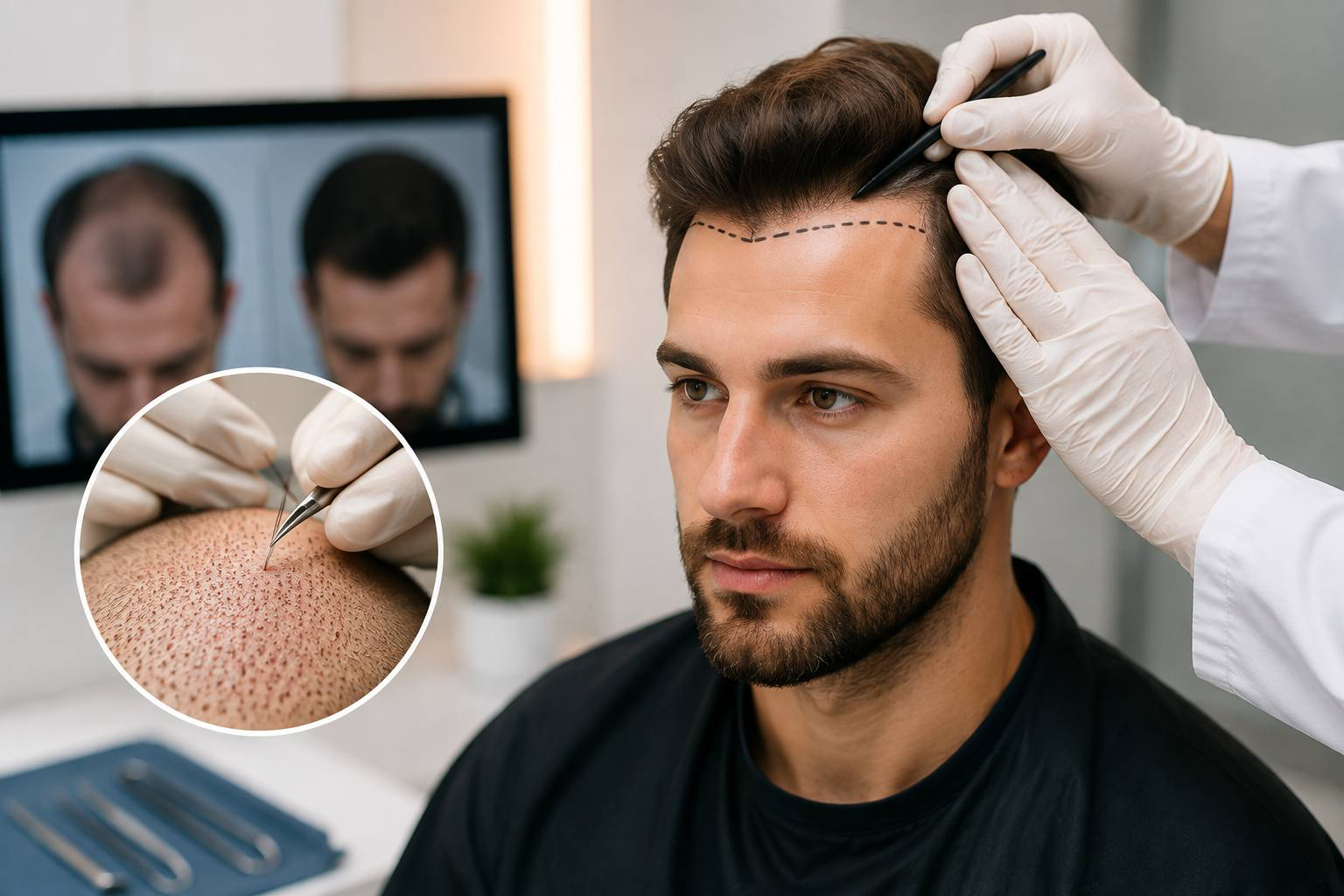
How a hair transplant for women differs from the male procedure, who is a good candidate, and what recovery looks like in Turkey.

How adjustable sutures work in adult strabismus surgery, and what to expect from double vision, redness and alignment in the first weeks.