SMILE Relex starts from €2,390 and LASIK from €1,390 for both eyes in Turkey, and this comparison sets out exactly what the €1,000 difference buys and who actually needs it.
16.09.2026
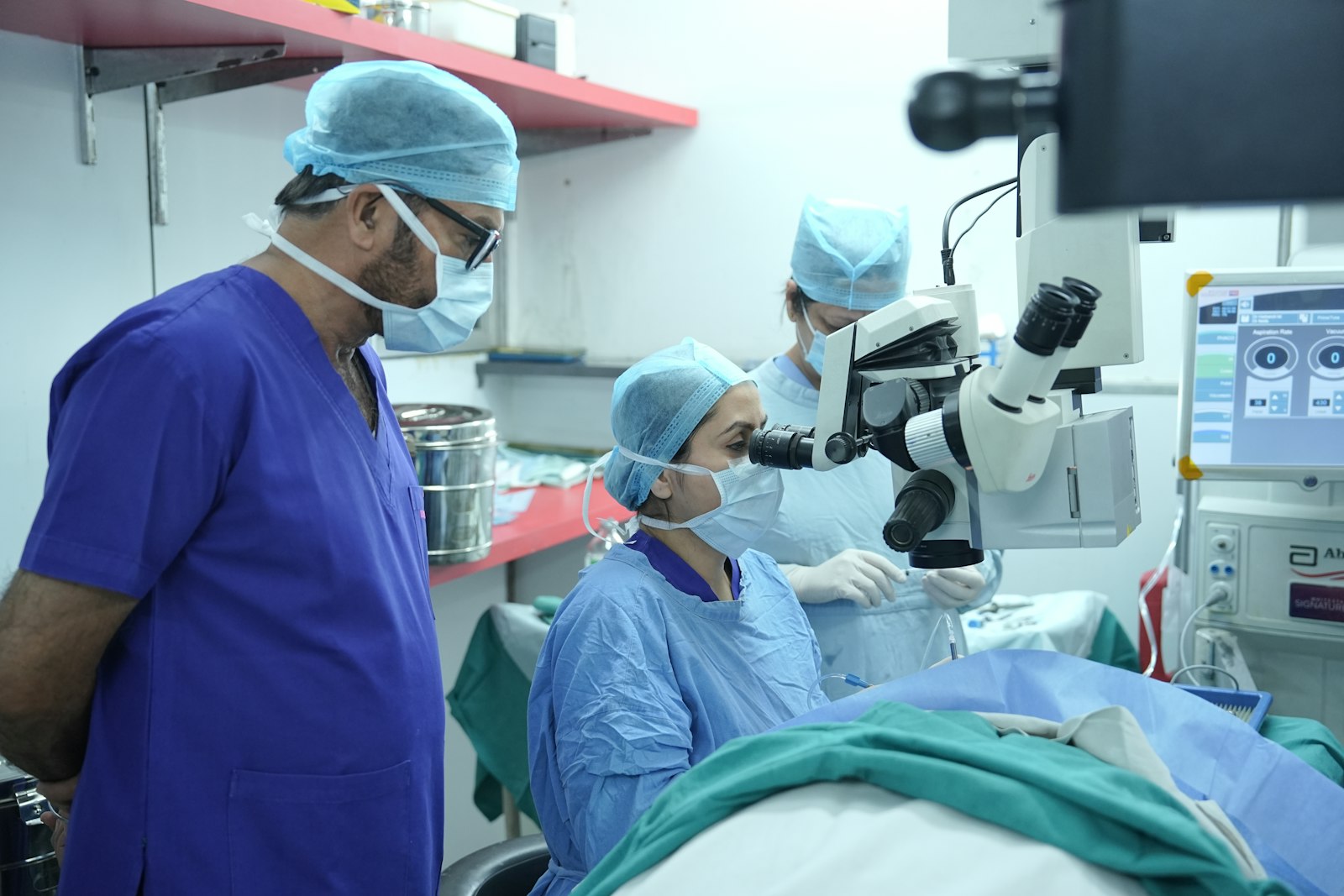
At our partner hospitals in Turkey, iLASIK, LASIK and wavefront PRK start from €1,390 for both eyes, and SMILE Relex starts from €2,390 for both eyes. Both are package prices, and both are fixed until 31 December 2026. The gap is €1,000, and patients reasonably want to know what it delivers. The short answer is that it buys a flapless technique, a smaller incision and a gentler effect on the corneal nerves. For some patients that matters a great deal. For many others it changes nothing they will ever notice, and the cheaper procedure is the correct one.
LASIK begins with a thin hinged flap cut in the front of the cornea. The flap is folded back, an excimer laser reshapes the tissue underneath, and the flap is laid back down, where it seals without stitches.
SMILE works inside a cornea that is never opened as a flap. A femtosecond laser cuts a small disc of tissue, a lenticule, within the cornea, and that disc is drawn out through a 2-4mm incision at the edge. Removing it changes the curvature of the cornea in the same way that removing tissue with an excimer laser does.
PRK sits in a third place. It has no flap either, but the surface layer of the cornea is removed and has to grow back, which takes several days and is more uncomfortable than the first days after LASIK or SMILE. It remains a sensible option for thinner corneas, and it is included at the same €1,390 starting price.
The first difference is the absence of a flap. A LASIK flap heals but never regains the full strength of untouched cornea, so a direct blow to the eye years later carries a small risk of displacing it. If you box, do judo, play rugby, or work where a hand or an airbag could strike your face, that risk is not theoretical, and removing it has value.
The second is dry eye. Cutting a LASIK flap divides a ring of corneal nerves; the small SMILE incision cuts fewer of them. In practice this tends to mean that dry-eye symptoms after SMILE are milder and settle sooner. Both procedures can cause dry eye, and it usually improves over the first months in either case, but if your tear film is already borderline, the difference is one you are likely to feel. We have written separately about dry eye after laser eye surgery and how it is managed.
It is equally important to say what the €1,000 does not buy. It does not buy sharper vision: in the prescriptions where both are suitable, neither procedure is inherently more accurate. It does not buy faster early recovery either, since many LASIK patients see functionally well the morning after surgery while SMILE vision often takes a few days longer to sharpen. Our article on SMILE recovery sets out that timeline.
If you have a moderate prescription, a healthy tear film, and no contact sport or occupational concern about a flap, LASIK at €1,390 for both eyes is the correct procedure, and paying €1,000 more buys you nothing you need. That is not a budget version. It is the same class of result from a technique with a longer track record and a wider range of use.
That wider range matters. SMILE currently treats short-sightedness and myopic astigmatism. It does not treat long-sightedness. If you are hyperopic, SMILE is not on the table at any price, and LASIK or PRK is what the surgeon will consider. Certain astigmatism patterns and corneal findings also point towards LASIK or PRK.
Paying for SMILE makes sense when one of its specific advantages lines up with your life. Short-sighted patients who already have dry, gritty eyes by the end of a working day, contact lens wearers who cut their wearing time short because of dryness, people in contact sports or in police, military and security work, and anyone whose job carries a real chance of a knock to the face all have something concrete to gain.
What none of this decides is whether you are a candidate. That is determined by the surgeon after corneal mapping and a full examination, which measures corneal thickness, curvature, pupil size, tear film quality and the stability of your prescription. A refractive check-up starts from €800 and is what turns this comparison into a recommendation for your eyes.
| LASIK / iLASIK / wavefront PRK | SMILE Relex | |
| Price, both eyes | From €1,390 | From €2,390 |
| Corneal flap | Flap in LASIK; no flap in PRK | No flap, 2-4mm incision |
| Dry eye | More corneal nerves cut, symptoms common in the first months | Fewer nerves cut, symptoms tend to be milder and shorter |
| Prescriptions treated | Short-sightedness, long-sightedness and astigmatism | Short-sightedness and myopic astigmatism only |
| Speed of visual recovery | LASIK often functional the next day; PRK several days of surface healing | Usually a few days to sharpen |
| Enhancement later | The existing flap can often be lifted | Usually done as a surface procedure, with a surface recovery |
A small number of patients need a second, fine-tuning treatment. After LASIK the surgeon can often lift the original flap, which makes the enhancement straightforward. After SMILE there is no flap to lift, so an enhancement is usually performed as a surface procedure in the PRK style, with a slower and less comfortable recovery. This rarely changes the first decision, but it belongs in an honest comparison.
This is the point most often misunderstood. Laser surgery corrects the distance prescription you have now. It does nothing about presbyopia, the age-related stiffening of the eye's natural lens that makes close work difficult from roughly the mid-forties onwards. A 30-year-old who has SMILE today will still need reading glasses in their forties, like everyone else.
If you are already around 40 or older, do not assume laser is the answer. Discuss lens-based options with the surgeon, because at that age the arithmetic changes: lens replacement surgery addresses both distance and the lens itself, and for patients whose corneas are unsuitable for any laser procedure, ICL starts from €4,700. Which of these is appropriate is again a decision the surgeon makes after examination, not one to make from a price list.
Both the €1,390 and the €2,390 packages include airport and city-to-hospital transfers, the standard pre-operative tests, the operation itself, follow-up checks for one month after surgery, and two nights in hospital with one companion. The figures are starting prices for both eyes and are held until 31 December 2026.
Is SMILE more accurate than LASIK?
No. In the prescriptions where both are suitable, neither technique is inherently more accurate than the other. The difference is how the cornea is opened and how the eye feels afterwards. No procedure can promise a specific result for an individual eye.
I am long-sighted. Can I have SMILE?
Not at present. SMILE treats short-sightedness and myopic astigmatism. Long-sightedness is treated with LASIK or PRK, from €1,390 for both eyes, if the surgeon finds your corneas suitable after mapping and examination.
Will either procedure mean I never need glasses again?
It should not be framed that way. Both aim to correct your current distance prescription, and neither prevents presbyopia, so reading glasses from the mid-forties remain likely regardless of which you choose. Your eyes also continue to change with age.
What if the examination shows I am not suitable for either laser?
That happens, most often with thin corneas or very high prescriptions. The usual alternative is an implantable lens: ICL starts from €4,700 for both eyes. The refractive check-up from €800 establishes which route applies to you.
Put plainly: SMILE is the better procedure for a specific group of short-sighted patients, and for everyone else LASIK at €1,390 does the same job for €1,000 less. Bring your prescription and your daily life to the consultation, and let the corneal maps decide.
This page is general information, not medical advice. Suitability, technique and results are determined individually by a licensed doctor.
Send us what you already have — the pathology report, imaging on disc, discharge summaries. A specialist at a partner hospital will review it and tell you what is realistic in your case and how quickly treatment could begin. Reviewing your documents costs nothing and commits you to nothing.
Send your documents
ICL is an implantable lens for people refused laser correction because of thin corneas or a high prescription — how it works, what the examination has to confirm, and what it costs in Turkey from €4,700 for both eyes.
Cataract surgery in Turkey runs from €3,400 to €5,500 for both eyes, and what moves the price is the intraocular lens, not the operation itself.
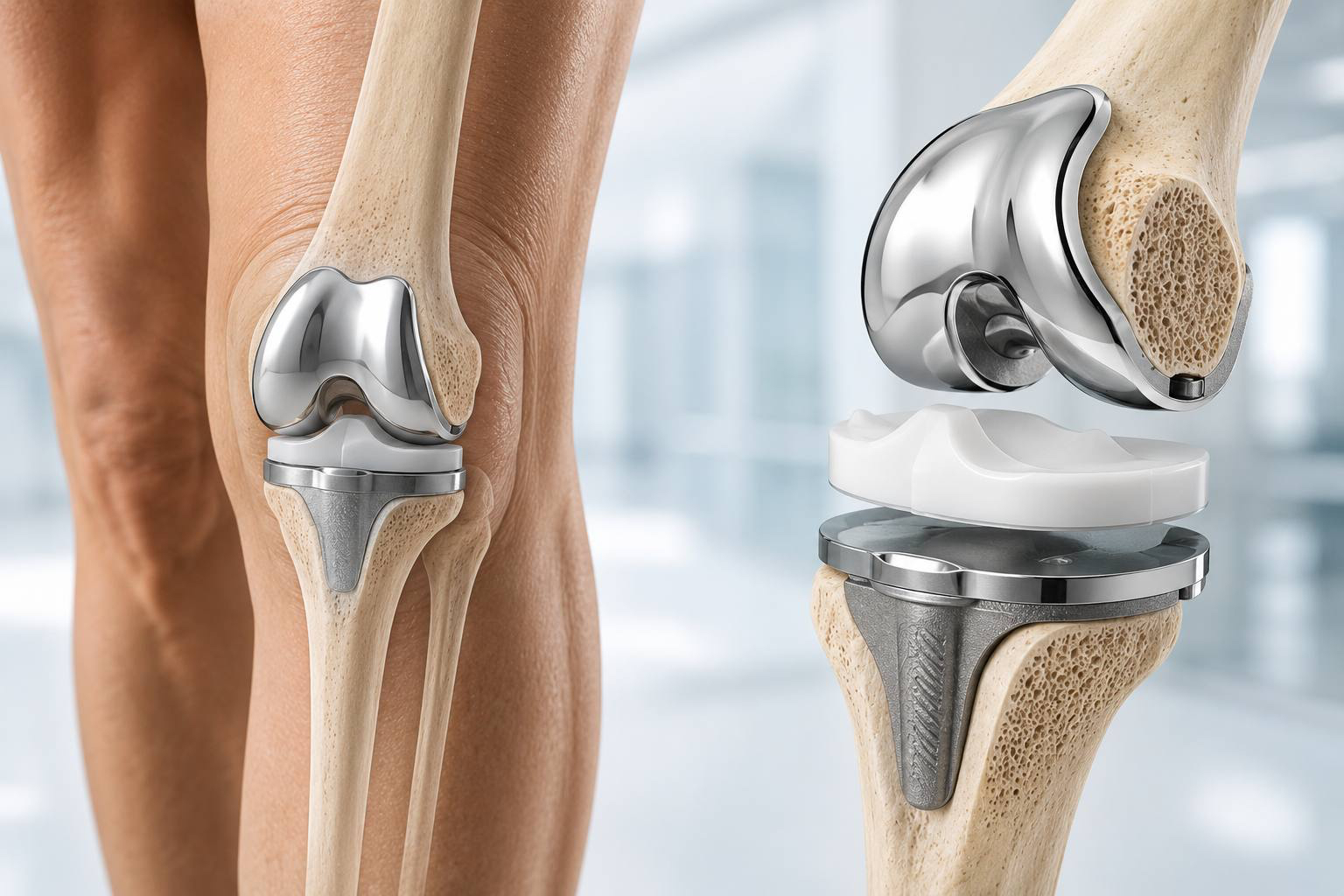
A practical guide to preparing for knee replacement surgery in Turkey, from sending your imaging to what happens on the day of surgery.