Lazy eye laser eye surgery rarely restores lost acuity: what amblyopia means for LASIK, SMILE and ICL in Turkey, and when correction is still worth it.
17.09.2026
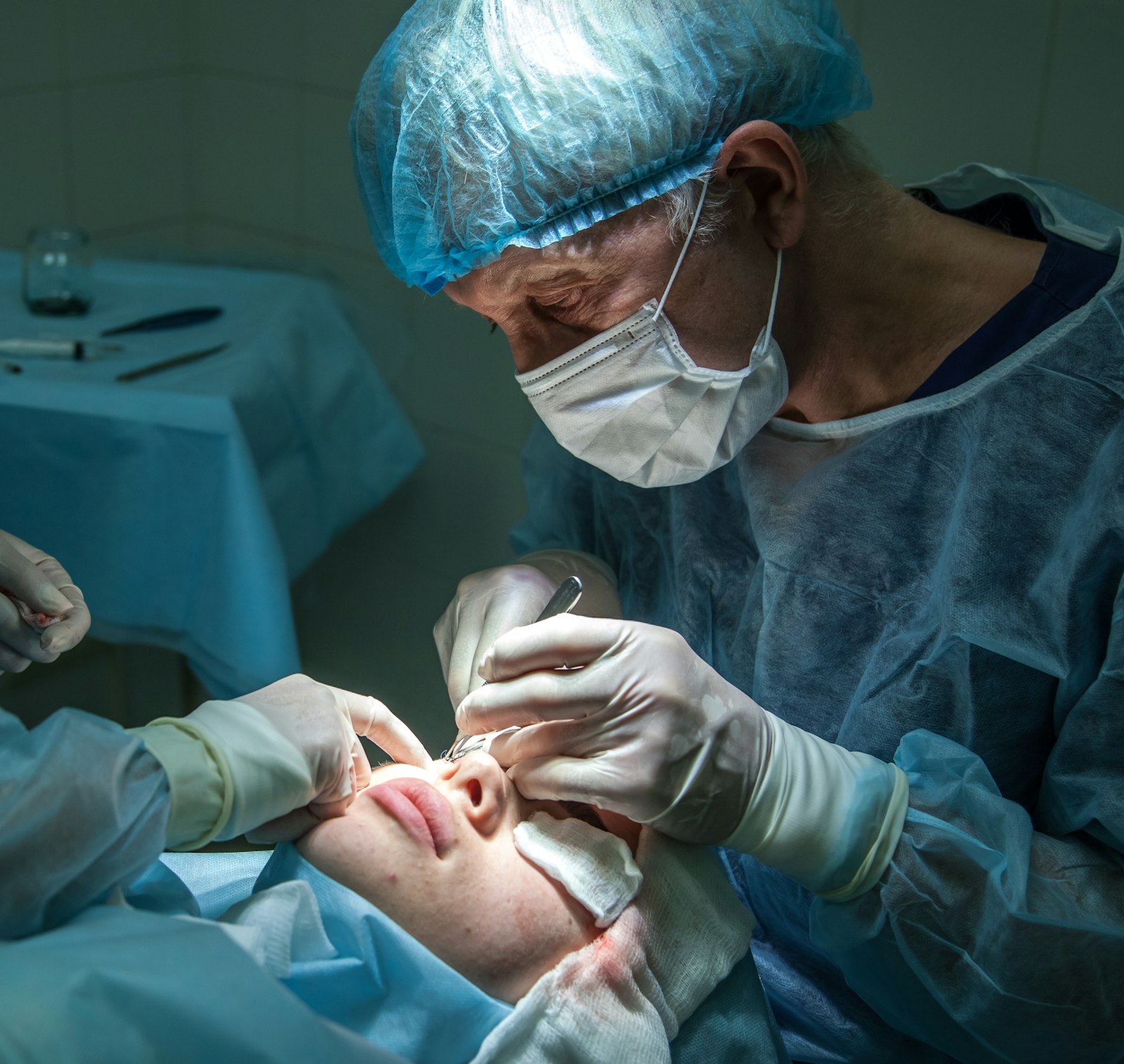
Two people wrote to us in the same week asking whether laser could repair an eye that has been weak since childhood. Both had read that laser restores vision. Amblyopia, the clinical name for a lazy eye, is not an optical problem, and laser correction changes optics and nothing else. That does not make an examination pointless: iLASIK and wavefront LASIK start from €1,390 for both eyes at our partner hospitals in Antalya, and there are situations where correction is still right for someone with amblyopia. But the reason has to be the right one, and it is rarely the one people arrive with.
Amblyopia is a developmental problem of the visual pathway rather than a fault in the eye itself. In early childhood the brain learns to interpret the signals arriving from each eye. If one eye delivers a blurred or conflicting image during that period, the brain comes to rely on the other one, and the connections serving the weaker eye never fully mature.
Three causes account for most cases. Anisometropia, a large difference in prescription between the two eyes, means one eye focuses sharply while the other sends a permanently soft image, and the child never notices, because the sharp eye covers for it. Strabismus, where the eyes point in different directions, leads the brain to suppress one image to avoid double vision. A congenital obstacle, such as an early cataract or a drooping eyelid, blocks the image path before the pathway has formed.
In all three the eye itself can be anatomically normal. The retina works, the optic nerve works, and what did not develop is the processing behind them.
Generally, no. LASIK, PRK and SMILE all reshape the cornea so that light lands correctly on the retina. That is the whole mechanism. In an adult with long-standing amblyopia, laser can remove the refractive error in that eye: short-sightedness, long-sightedness and astigmatism are measurable and correctable there as in any other eye. What it does not do is restore acuity that never developed, because the limitation is not in the focusing.
The practical test is best-corrected visual acuity: what the eye reads with the best possible lens in front of it. If it reads well through the right lens, the problem was refractive and correction will help. If it still reads poorly with perfect correction, the deficit sits behind the optics, where reshaping the cornea does not reach.
Because the treatment and the problem are in different places. Vision-development treatment — patching the stronger eye, atropine drops, structured visual work — pushes the brain to use the weaker eye while the pathway is still forming. That window, the critical period, is in childhood. In adults it is largely closed, which is why patching an adult eye does not do what it does in a six-year-old. Research continues and a specialist assesses each case individually, but nobody should travel abroad expecting laser to reopen that window.
Often this is the more useful question. If one eye carries most of your daily vision, that is the eye whose prescription actually limits you, and correcting it changes ordinary life in a way that treating the weak eye cannot.
It also has to be said plainly that a person with one weak eye has more at stake in elective surgery on the strong eye. If something goes wrong there is no equivalent fallback. A responsible surgeon takes that seriously, and it may mean a longer discussion, a different technique, or a recommendation against operating at all. Treating the amblyopic eye as the reserve eye is exactly why some surgeons are conservative about the good one. A surgeon who waves that concern away is telling you something about how they practise.
This is a real option and it does not contradict anything above. Correcting the refractive error in the weaker eye can remove the need for glasses or contacts to manage a large difference between the eyes, even when acuity does not improve. Some patients value that; others decide it is not worth surgery for a change they will barely register. It is a personal calculation, made after a surgeon has examined both eyes and said what is achievable.
Where the prescription is too high for corneal laser, an implantable lens may be discussed instead: ICL for myopia starts from €4,700 for both eyes, and the details are set out in our guide to ICL lens implant cost in Turkey. None of this is a promise of improvement; it describes what is on the table once a surgeon has the measurements.
Best-corrected visual acuity in each eye separately comes first: the number that separates genuine amblyopia from a refractive error nobody ever corrected properly, and the most informative line in the file. After that, corneal topography and thickness, which decide whether the cornea can safely take a laser procedure at all; refraction stability over time, because an unstable prescription is a reason to wait; a dilated retinal examination, to rule out causes of reduced vision unrelated to amblyopia; and a squint assessment where strabismus is present or suspected.
One more point worth making: running an old report through automatic text recognition is not a diagnosis. Figures differ between documents, and an eye measured years ago may measure differently today. Only a fresh examination settles it. A refractive check-up starts from €800.
All prices below are for both eyes at our partner hospitals in Antalya. iLASIK, LASIK and wavefront PRK start from €1,390. SMILE starts from €2,390. ICL for myopia starts from €4,700, relevant where the prescription is beyond the safe range for corneal laser. A refractive check-up starts from €800. If you are weighing the first two against each other, our SMILE versus LASIK cost comparison sets out the difference.
The package covers airport and city-to-hospital transfers, standard pre-operative tests, the operation itself, follow-up checks for one month, and two nights in hospital with one companion. These prices are fixed until 31 December 2026. Recovery is a separate subject, described in our article on dry eye after laser eye surgery.
Will laser surgery make my lazy eye see better?
In an adult with long-standing amblyopia, generally not. Laser can correct the refractive error in that eye, but the acuity limit comes from how the brain processes the image, and a corneal procedure does not change that. Your own case can only be judged after an examination; our LASIK page, from €1,390 for both eyes, sets out what that assessment covers.
I was told as a child that it was too late for patching. Is that still true as an adult?
The critical period for visual development falls in childhood, and in adults the window is largely closed. An ophthalmologist who has examined you is the only person who can say what applies to your eyes.
Is it riskier to have laser on my good eye because the other one is weak?
The surgical risk itself is the same, but the consequences of a poor outcome are not, because there is no equally strong second eye to fall back on. That asymmetry is a legitimate reason for a surgeon to be cautious or to decline.
Can you tell from my old prescription whether I have amblyopia?
No. An old prescription shows the refractive error, not what each eye can read once that error is corrected. Best-corrected visual acuity, taken eye by eye in a current examination, answers the question.
If you have had a weak eye since childhood, the useful step is not hunting for a procedure that restores it, but getting a current, separate measurement of each eye and asking a surgeon what correction would and would not change. Send us your recent report and we will arrange an assessment in Antalya, including the answer that surgery is not worth it, when that is the answer.
This page is general information, not medical advice. Suitability, technique and results are determined individually by a licensed doctor.
Send us what you already have — the pathology report, imaging on disc, discharge summaries. A specialist at a partner hospital will review it and tell you what is realistic in your case and how quickly treatment could begin. Reviewing your documents costs nothing and commits you to nothing.
Send your documents
A practical guide to how surgeons in Turkey help patients choose the right implant size, type and placement for breast augmentation.
Refused laser eye surgery? The six medical reasons a surgeon says no — thin cornea, high prescription, keratoconus, age — and the alternative for each.
ICL is an implantable lens for people refused laser correction because of thin corneas or a high prescription — how it works, what the examination has to confirm, and what it costs in Turkey from €4,700 for both eyes.