ICL is an implantable lens for people refused laser correction because of thin corneas or a high prescription — how it works, what the examination has to confirm, and what it costs in Turkey from €4,700 for both eyes.
16.09.2026
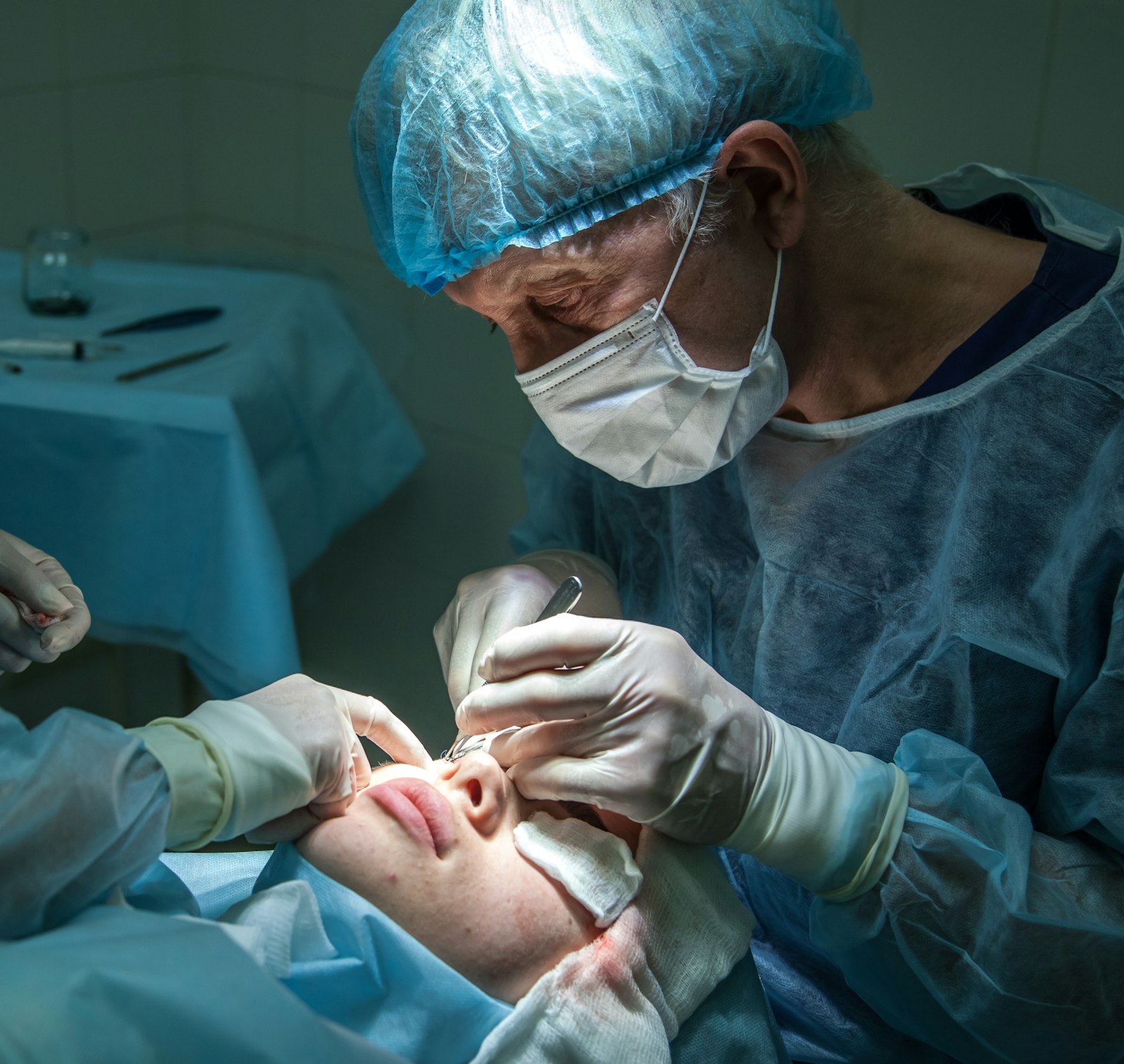
The sentence that ends most laser consultations is short: your cornea is too thin, or your prescription is too high. Most people hear it as a statement about their eyes and stop there. It is really a statement about one technique. Laser correction reshapes the cornea by removing tissue, so a cornea that is thin to begin with, or a prescription that would require removing too much of it, disqualifies the method rather than the patient. An implantable contact lens works the other way round — it adds a lens instead of removing tissue. At our partner ophthalmology hospitals in Turkey, ICL starts from €4,700 for both eyes. Here is how it works, what the four price tiers cover, and what an examination has to establish before any surgeon will call you a candidate.
LASIK and SMILE both correct vision by removing a measured amount of corneal tissue, and the surgeon has to leave a safe residual thickness behind. That creates a fixed budget. A high prescription consumes more of it, a naturally thin cornea starts with less of it, and the two together are the most common reason a patient is refused. Irregular corneal shape is the other: where topography suggests keratoconus or a cornea prone to it, removing tissue is the wrong direction of travel, and the priority becomes stabilising the cornea — corneal cross-linking is a separate treatment aimed at exactly that, and a different question from correcting the prescription. None of these refusals says the eye cannot be corrected. They say the cornea cannot be the place where the correction happens.
An ICL is a soft, foldable lens made from a biocompatible material, implanted inside the eye through a small incision and positioned behind the iris, in front of your own natural lens. Your natural lens stays where it is; nothing is removed, and the cornea is not reshaped. That is the whole reason corneal thickness stops being the limiting factor — the correction no longer depends on how much tissue there is to spare. Each lens is manufactured to the power and dimensions calculated for your individual eye, which is why there is a lead time between measurement and surgery. Toric versions correct astigmatism at the same time. The lens is intended to stay in place indefinitely, but a surgeon can remove or exchange it if the prescription changes substantially or there is a clinical reason to do so, and that reversibility is a genuine difference from any procedure that permanently alters tissue. Whether an ICL is appropriate for you is decided by the surgeon after examination, not from a prescription written on paper.
MedAgent's package prices are fixed until 31 December 2026, and every figure below is for both eyes.
| Procedure | Price from, both eyes |
|---|---|
| ICL for myopia (short-sightedness) | from €4,700 |
| ICL toric for myopia (with astigmatism) | from €5,500 |
| ICL for hyperopia (long-sightedness) | from €6,250 |
| ICL toric for hyperopia | from €7,500 |
Each package includes airport and city-to-hospital transfers, the standard pre-operative tests, the operation itself, follow-up checks for one month after surgery, and two nights in hospital with one companion. For comparison within the same list, LASIK, iLASIK and PRK start from €1,390 and SMILE from €2,390, and a refractive check-up on its own is €800. ICL sits higher because the lens is a custom-manufactured implant and the procedure is performed inside the eye rather than on its surface. Which tier applies depends on whether you are short- or long-sighted and whether you have astigmatism, which the examination confirms.
ICL has physical requirements that a prescription alone cannot tell you about. The eye needs adequate anterior chamber depth — enough space between the iris and the natural lens for the implant to sit without crowding the structures around it — and a healthy corneal endothelium, the single layer of cells that keeps the cornea clear and does not regenerate. Both are measured directly: anterior segment imaging for chamber depth and white-to-white dimensions, specular microscopy for endothelial cell count. The work-up also covers corneal topography, pupil size, intraocular pressure, a dilated retinal examination, and confirmation that your prescription has been stable. A shallow chamber or a borderline endothelial count is the point at which a careful surgeon declines, and being declined there is the system working. The surgeon decides after examination; anything said before that measurement is no more than a probability.
ICL corrects distance vision. It does not prevent presbyopia, the age-related loss of near focus that begins in the mid-forties, so if you are thirty now you should still expect reading glasses in your forties, exactly as you would have without surgery. It is also intraocular surgery, which carries considerations that surface procedures do not. Intraocular pressure can rise, most often in the early period, which is why pressure is checked repeatedly afterwards. Cataract formation in the natural lens is a recognised long-term possibility, more so where the implant sits closer to it than intended. Infection inside the eye is rare but serious. A lens occasionally needs repositioning or exchange. Some patients report halos around lights at night. None of this makes ICL a poor option for someone with no laser alternative — it makes follow-up non-negotiable, including an annual check for the rest of your life. Dryness follows a different pattern than after laser, since corneal nerves are not divided the same way; our note on dry eye after laser eye surgery explains that contrast. No surgeon can promise a particular result.
A typical stay begins with the measurement day: the full work-up, a consultation with the surgeon, and the decision on whether to proceed and with which lens. Surgery itself takes roughly fifteen to twenty minutes per eye under anaesthetic drops, with sedation if needed, and whether both eyes are treated on the same day or on separate days is the surgeon's judgement. Vision often begins to settle quickly, but fluctuation in the first days is normal and your surgeon will tell you what to expect. You will be given drops on a schedule, asked not to rub your eyes, and told to avoid swimming, dust and heavy exertion for a defined period. Follow-up checks are included for one month after surgery, and MedAgent coordinates the remote reviews with your surgical team once you have flown home, and helps arrange local ophthalmic care if something needs attention sooner.
I was told my corneas are too thin for laser. Does that rule out ICL?
Not in itself — thin corneas are one of the main reasons patients are directed towards ICL, because no corneal tissue is removed. Suitability depends on different measurements, chiefly anterior chamber depth and endothelial health, and the surgeon decides after examination.
Can the lens be taken out again?
Yes. An ICL is designed to remain in place indefinitely, but a surgeon can remove or exchange it, for example if your prescription changes significantly or a cataract later needs treating. That is a planned procedure, not an emergency reversal.
Will I still need reading glasses?
Most likely, from your mid-forties onwards. ICL corrects distance vision and does not stop the natural lens losing its near-focusing ability with age. Any plan for near vision is a separate discussion with the surgeon.
What does ICL cost in Turkey and what is included?
From €4,700 for both eyes for myopia, from €5,500 toric, from €6,250 for hyperopia and from €7,500 toric for hyperopia, each including transfers, pre-operative tests, the operation, one month of follow-up checks and two nights in hospital with a companion. Full package details are here.
If laser correction has already been ruled out for you, the useful next step is a measurement appointment rather than another opinion on the same technique. MedAgent arranges the examination, the surgeon consultation and the stay at our partner ophthalmology hospitals in Antalya — see the full ICL package and prices.
This page is general information, not medical advice. Suitability, technique and results are determined individually by a licensed doctor.
Send us what you already have — the pathology report, imaging on disc, discharge summaries. A specialist at a partner hospital will review it and tell you what is realistic in your case and how quickly treatment could begin. Reviewing your documents costs nothing and commits you to nothing.
Send your documents
Cataract surgery in Turkey runs from €3,400 to €5,500 for both eyes, and what moves the price is the intraocular lens, not the operation itself.
SMILE Relex starts from €2,390 and LASIK from €1,390 for both eyes in Turkey, and this comparison sets out exactly what the €1,000 difference buys and who actually needs it.
A practical guide to preparing for knee replacement surgery in Turkey, from sending your imaging to what happens on the day of surgery.