Refused laser eye surgery? The six medical reasons a surgeon says no — thin cornea, high prescription, keratoconus, age — and the alternative for each.
17.09.2026
Being refused laser eye surgery is a finding about the eye in front of the surgeon, not a verdict on the person. A surgeon who says no to LASIK is saying that this procedure, on this cornea, carries more risk than it should. At our partner hospitals in Turkey, LASIK, iLASIK and PRK start from €1,390 for both eyes, and the same assessment that prices the operation is the one that can rule it out. Below are the six reasons surgeons give most often, and what each usually leads to instead. Which applies to any individual eye is something only an examination can establish.
| Reason for refusal | Usual alternative | From, both eyes |
|---|---|---|
| 1. Cornea too thin | ICL implantable lens | €4,700 |
| 2. Prescription too high | ICL, toric version for astigmatism | €4,700 |
| 3. Prescription still changing | Wait, re-measure, reassess | Check-up from €800 |
| 4. Keratoconus or irregular cornea | Cross-linking, then ring segments if indicated | €2,700 and €2,900 |
| 5. Significant dry eye | Treat the ocular surface first, then reassess | Check-up from €800 |
| 6. Age around 40 and above | Refractive lens exchange or cataract surgery | €3,400 to €5,500 |
All prices are for both eyes and include transfers, standard pre-operative tests, the operation, one month of follow-up checks, and two nights in hospital with one companion. They are fixed until 31 December 2026.
Laser correction works by removing corneal tissue to change the curvature of the front surface of the eye, and every dioptre of correction costs thickness. Surgeons plan around a residual stromal bed — the untouched layer left under the treatment — and keep it above a safety threshold, because a cornea taken below it can lose structural stability and begin to bulge forward in the years afterwards. Pachymetry measures thickness, topography maps shape, and if the arithmetic does not leave enough tissue the surgeon declines. The usual alternative is an implantable collamer lens, which places a thin lens in front of the natural lens and removes no corneal tissue at all: ICL for myopia starts from €4,700 for both eyes, and the cost detail is set out in our article on ICL lens implant cost in Turkey. SMILE removes tissue as well, so it is not a way around a genuinely thin cornea.
This is the same arithmetic from the other direction. The stronger the correction, the more tissue has to go, and beyond a certain point the removal required outruns what the cornea can spare. Very deep treatments also tend to degrade optical quality, particularly contrast and night vision, so surgeons set their working limit well short of what is technically possible. Above that limit the lens route is the usual answer: an ICL corrects high myopia without touching corneal thickness, and toric versions correct astigmatism at the same time. Lens power and design are chosen after the eye is measured.
Surgeons generally want to see roughly a year of stable refraction before treating. Laser reshapes the cornea to match the prescription measured today, so if the eye is still changing, the correction drifts away from the target over the following years. Instability is common in the late teens and early twenties, and prescriptions also move during pregnancy and in some medical conditions. This is a postponement rather than a refusal: wait, be re-measured, come back. Several years of old prescriptions often answer the question faster than any single measurement.
Keratoconus is a progressive thinning and steepening of the cornea, and laser removes tissue from a structure that is already losing strength. Topography can reveal early or suspicious patterns in people with no symptoms, so a refusal for laser is sometimes the first time the subject comes up. The response is to treat the disease first, not the refractive error. Corneal cross-linking starts from €2,700 for both eyes and is used to stiffen the tissue and halt progression; intracorneal ring segments start from €2,900 for both eyes and are used to reshape and flatten an irregular cornea. Neither is a vision-correction procedure in the way laser is. Correction is a separate question, considered only once the cornea is stable and only if a surgeon judges it possible.
Laser treatment divides corneal nerves that help drive tear production, and tear output is reduced for weeks to months afterwards in most patients. An eye already short of tears starts that period from a deficit, and the recovery is harder. An assessment therefore includes tear break-up time, tear volume, and examination of the lid margins and meibomian glands. Where the surface is significantly compromised, the usual path is to treat it first — lid hygiene, drops, meibomian gland treatment — and then re-measure, which is usually a delay rather than a permanent no. Our article on dry eye after laser eye surgery covers what the post-operative period involves.
This reason is the subtlest and the most often missed. Laser corrects distance vision and does nothing about presbyopia, the age-related loss of near focus that begins in the mid-forties as the natural lens stiffens. A patient of 46 who has LASIK for distance can end up reading road signs perfectly and still reaching for reading glasses at a restaurant — and a short-sighted patient may have been able to read without glasses beforehand. Separately, where the natural lens has begun to cloud, operating on the cornea treats the wrong structure: the cornea is corrected, the lens goes on clouding, and cataract surgery follows anyway. For that reason a patient over 40 who says "I just want to stop wearing glasses" should be assessed for a lens-based option rather than promised laser. Replacing the lens itself addresses distance and near together: cataract surgery and refractive lens exchange start from €3,400 for both eyes with a monofocal lens and reach €5,500 for a multifocal toric femto lens, and the lens types are compared in our article on cataract surgery cost and lens choice. Age by itself does not rule laser out, and many people over 40 have it understanding clearly what it will and will not do. The surgeon decides after examination.
A surgeon also checks, as a matter of routine, for conditions that make any elective eye operation unwise for now or for good. Uncontrolled systemic disease — poorly controlled diabetes, active autoimmune or connective tissue disease — affects healing. Pregnancy and breastfeeding postpone elective correction, because hormonal changes move the refraction and some peri-operative medication is avoided. Active infection or inflammation of the eye or lids must be resolved first.
A real answer needs an examination, and it is worth knowing what one looks at: corneal topography and thickness, refraction measured both with and without dilating drops, tear-film assessment, pupil size in dim light, a dilated retinal examination, and the history of the prescription over time. No online form or photograph replaces those measurements. A refractive check-up starts from €800 and is where a specific answer comes from.
One clinic refused me. Is a second assessment reasonable?
Yes, particularly if the first consultation was brief or the measurements were never shown to you. Ask for your topography and pachymetry results, so a second surgeon has something to work from. The opposite pattern is the one to worry about: a clinic that approves every patient who walks through the door. A refusal usually means the measurements were read seriously.
Does being refused laser mean I cannot have any vision correction?
No. Laser is one route among several. Depending on the finding, the alternatives include an implantable lens, cross-linking and ring segments for an unstable cornea, or lens replacement. Some refusals are temporary and lift once a prescription settles or an ocular surface is treated. Which option is open in a given case is decided by the surgeon after examination.
Would SMILE be possible if LASIK was refused?
It depends on the reason. SMILE creates no flap and is sometimes discussed where flap-related concerns dominate, and SMILE starts from €2,390 for both eyes. But it still removes corneal tissue, so it is not a solution for a cornea that is too thin or a prescription that is too high. The two are compared in our article on SMILE versus LASIK.
What happens if I travel for an assessment and I am told no?
You are told which finding ruled the procedure out and which alternatives, if any, your eyes allow — information you can take to any surgeon anywhere. Nothing surgical is committed before the examination, and a refractive check-up starts from €800.
A refusal is a measurement, not a judgement. The cornea is a given thickness, the prescription a given strength, the lens a given age, and a surgeon who reads those numbers honestly is doing the job properly. In most of the six situations above there is a route that works with the eye as it is rather than against it — and in two of them the answer is simply to wait and be measured again.
This page is general information, not medical advice. Suitability, technique and results are determined individually by a licensed doctor.
Send us what you already have — the pathology report, imaging on disc, discharge summaries. A specialist at a partner hospital will review it and tell you what is realistic in your case and how quickly treatment could begin. Reviewing your documents costs nothing and commits you to nothing.
Send your documents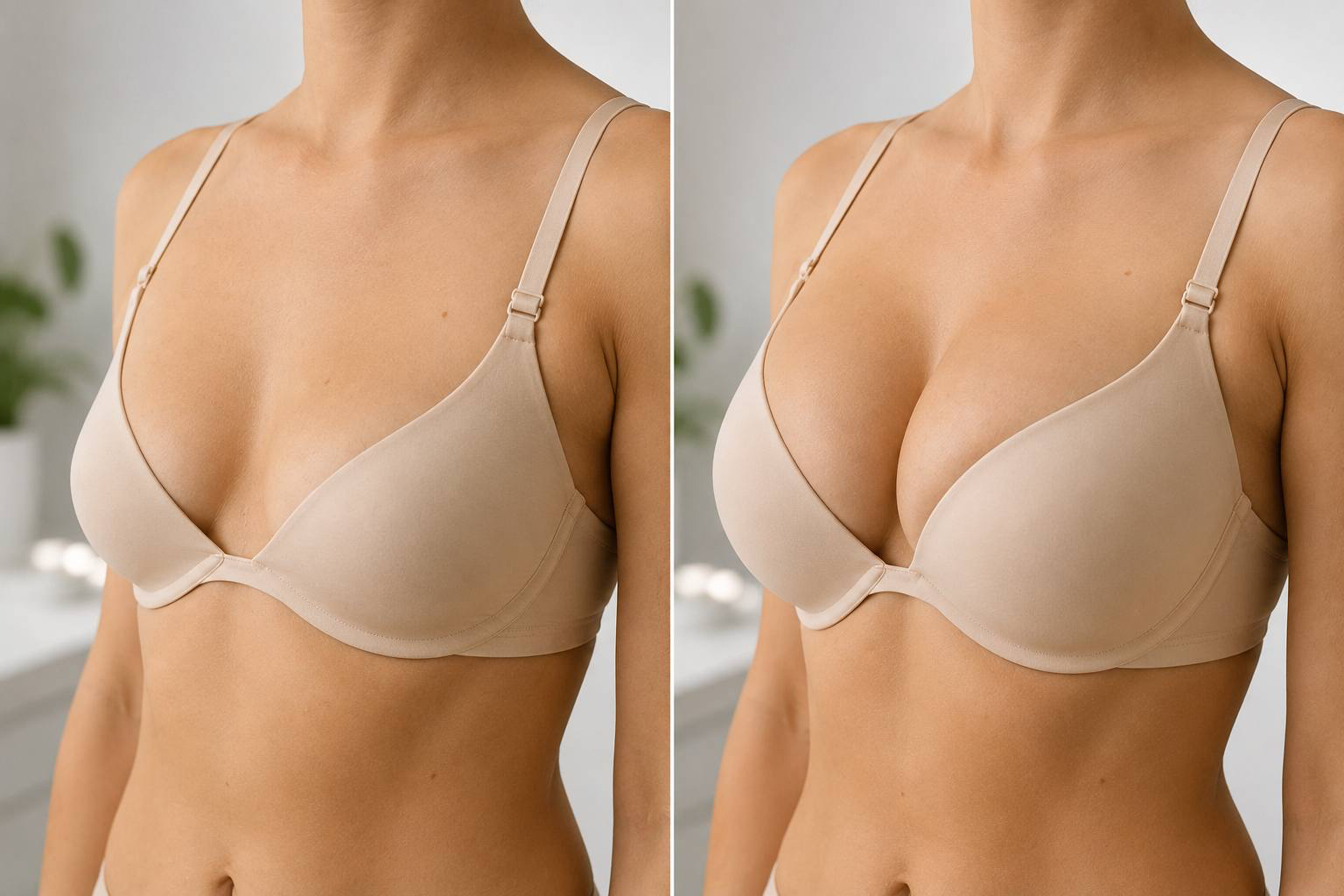
A practical guide to how surgeons in Turkey help patients choose the right implant size, type and placement for breast augmentation.
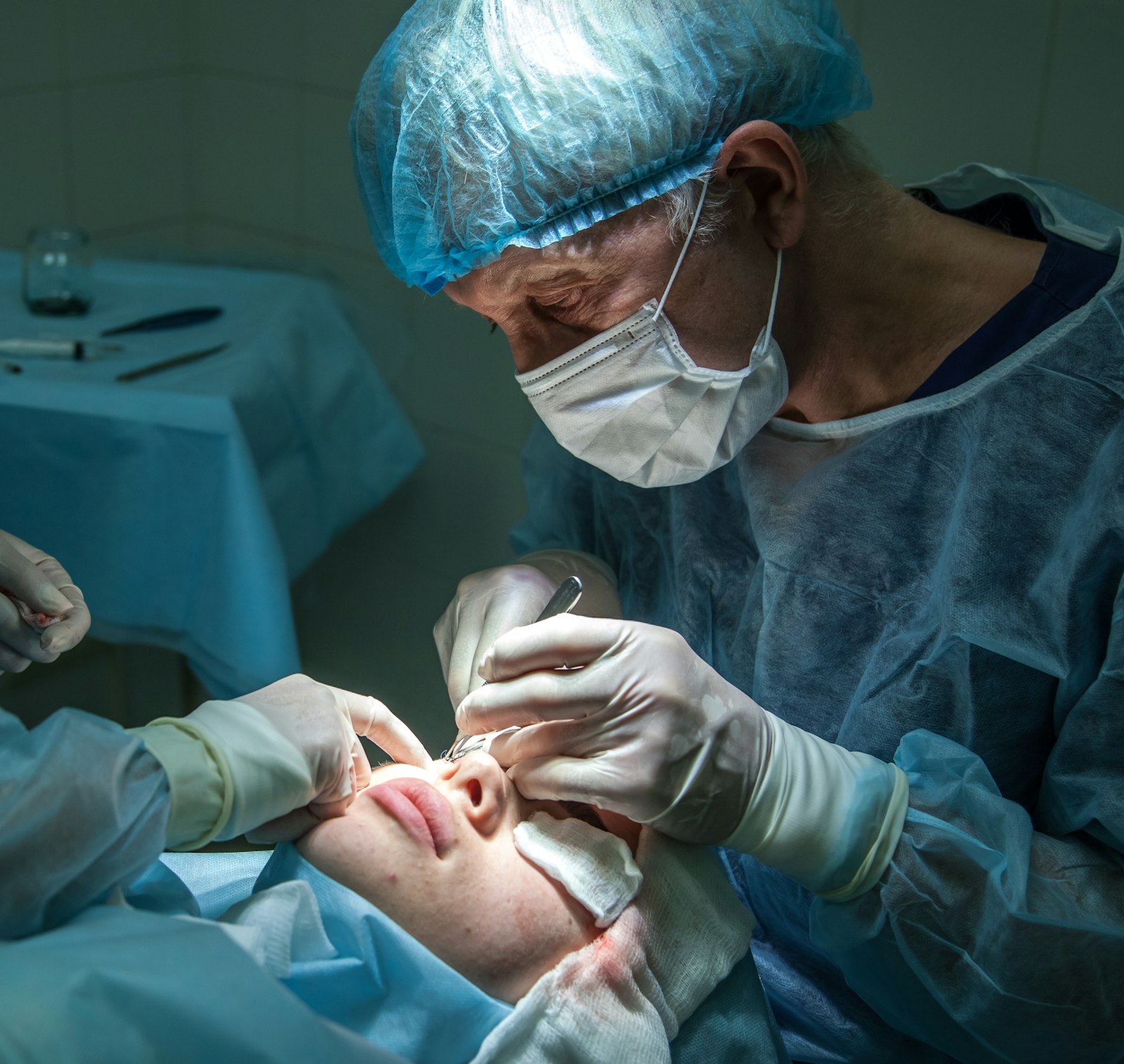
Lazy eye laser eye surgery rarely restores lost acuity: what amblyopia means for LASIK, SMILE and ICL in Turkey, and when correction is still worth it.
ICL is an implantable lens for people refused laser correction because of thin corneas or a high prescription — how it works, what the examination has to confirm, and what it costs in Turkey from €4,700 for both eyes.